
How much is my motorhome worth? Twelve things that affect its value
It’s one of the first questions every owner asks when they’re thinking about selling - and one of the hardest to answer. Two motorhomes that look almost identical can differ in value by several thousand pounds.

By Gary CheethamFounder, Motorhome Pig · 30+ years in the motor trade · MCEA Registered · Licensed MOT tester · AWS NCC Trained Mobile Caravan Engineer
· Last updated 13 July 2026 · 8 min read
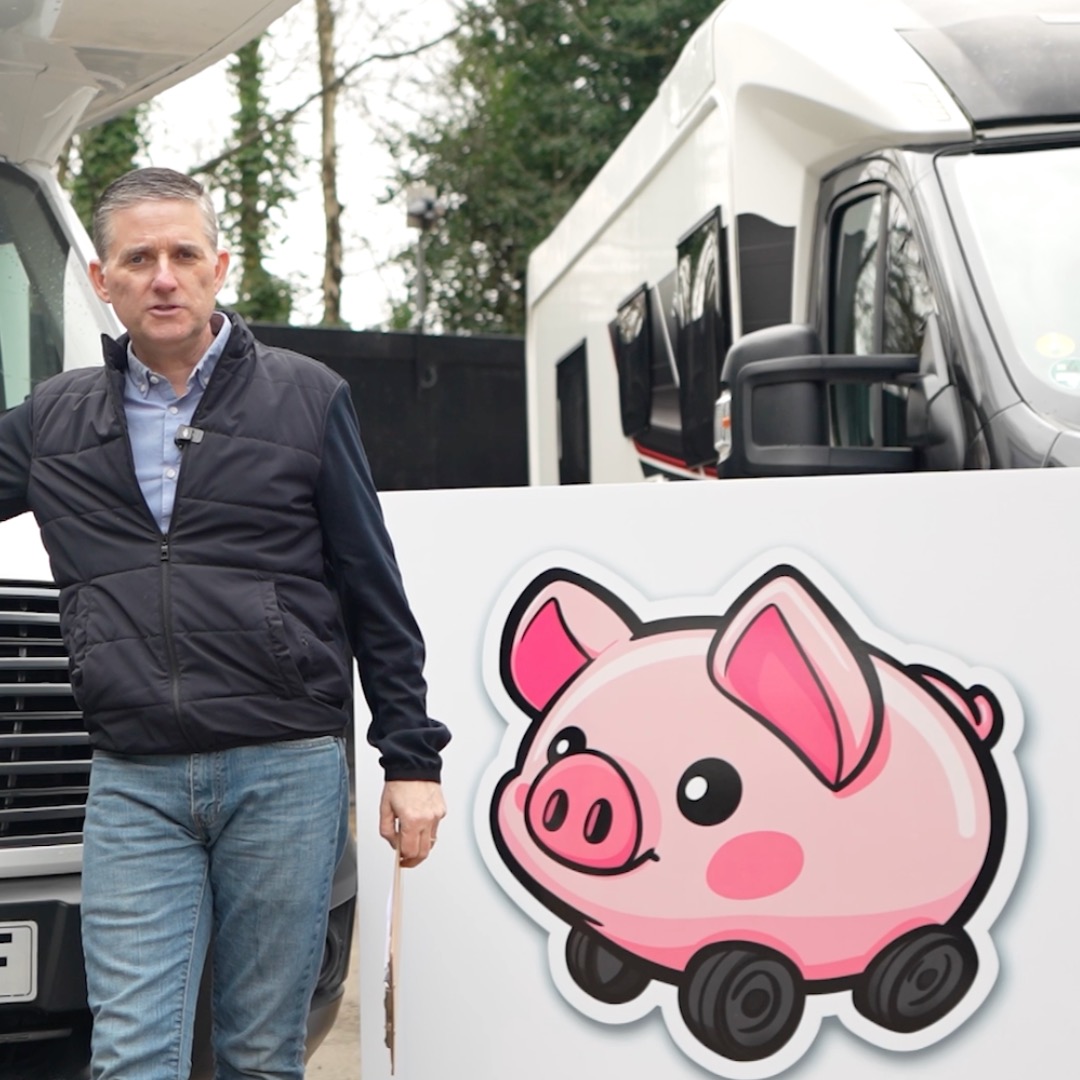
There’s no single number - two near-identical motorhomes can differ by several thousand pounds. Value comes down to age, mileage and service history, overall condition, damp and habitation checks, layout, specification, brand, the time of year, how it’s presented, and above all who values it. An online tool is a useful starting point, but an accurate figure comes from a specialist assessing the whole vehicle.
At Motorhome Pig we value motorhomes every single day. Over the years we’ve learnt that achieving the best possible price isn’t about guessing or relying on online valuation tools - it’s about understanding what buyers are actually looking for and how the market is changing. Here are twelve of the biggest factors that influence the value of your motorhome.
If you’d like a free, no-obligation estimate before reading on, use our free motorhome valuation tool. It only takes a couple of minutes and gives you an initial indication of your motorhome’s value before speaking to one of our specialists. The estimate is a great place to start - but it’s only part of the picture. Learn more about our AI motorhome valuation.
- There’s no single “book price” - condition, history and specification can swing value by thousands of pounds.
- Service history and how a motorhome has been cared for often matter more to buyers than raw mileage.
- Upgrades rarely add pound-for-pound value, but the right ones (automatic gearbox, lithium, solar) make a motorhome far more desirable.
- Timing, presentation and fast replies to enquiries all affect what a motorhome achieves.
- Online tools are a starting point only - an accurate figure comes from a specialist assessing the whole vehicle.
The vehicle: age, mileage and condition
Age, mileage and condition are the first things buyers notice - but none of them tells the whole story on its own. A well-maintained older motorhome with an excellent history often commands a stronger price than a newer one that’s been poorly looked after.
1. Age
Age is often the first thing buyers notice, but it rarely tells the whole story. A well-maintained ten-year-old motorhome with an excellent history can often command a stronger price than a newer vehicle that’s been poorly looked after. That’s why experienced valuers always look beyond the registration plate.
2. Service history matters more than mileage
One of the biggest myths in the motorhome industry is that lower mileage automatically means a higher value. In reality, buyers are often far more interested in how a motorhome has been cared for than exactly how many miles it’s travelled. A regularly serviced motorhome that’s completed its habitation checks and been used consistently can be more desirable than one with very low mileage that’s spent years sitting unused. At Motorhome Pig, mileage is always considered as part of the wider picture - alongside servicing, maintenance, condition and buyer demand.
3. Overall condition
First impressions matter. Small cosmetic issues won’t necessarily stop a sale, but signs of neglect can quickly reduce buyer confidence. Before marketing your motorhome, it’s worth considering:
- Interior cleanliness
- Exterior presentation
- Upholstery condition
- Tyres
- Minor repairs
Buyers are purchasing confidence as much as they are purchasing a vehicle.
The evidence: paperwork, habitation checks and damp
Complete paperwork and a clean, recent habitation check are among the most reassuring things a buyer can see. They prove a motorhome has been cared for properly - and few things concern buyers more than damp, so evidence that it’s been checked and dealt with honestly builds real confidence.
4. Paperwork
Complete paperwork adds value because buyers want reassurance that a motorhome has been cared for properly. Having organised records for servicing, habitation checks, MOTs and maintenance helps buyers feel confident they’re making a safe purchase - and it makes the selling process much smoother.
5. Habitation checks and damp
Few things concern buyers more than damp. A recent habitation check with no major issues can provide valuable reassurance and strengthen buyer confidence. If problems have been identified previously, being honest about what’s been repaired is almost always better than hoping buyers won’t notice. Trust plays a huge part in achieving a successful sale.
Layout, specification and brand
Layout, specification and brand are where buyer demand really shows. Certain layouts and manufacturers command stronger prices depending on what’s popular, and the right upgrades can make a motorhome far more desirable - though upgrades rarely add pound-for-pound to the price.
6. Layout
Not every layout appeals to every buyer. Some are looking for fixed island beds, others prioritise rear lounges, family bunks or additional travelling seats. Demand changes over time, meaning certain layouts naturally command stronger prices depending on what’s popular in the market. Understanding current buyer demand is one of the reasons specialist knowledge makes such a difference when valuing a motorhome.
7. Specification and upgrades
The right specification can make a real difference to both your motorhome’s value and how quickly it sells. It’s important to remember that upgrades rarely add pound-for-pound value - a £2,000 upgrade won’t necessarily increase your motorhome’s value by £2,000 - but the right specification can make your vehicle far more desirable to buyers. Some of the upgrades that typically have the greatest impact include:
| Upgrade | Buyer demand | Why buyers value it |
|---|---|---|
| Automatic gearbox | ★★★★★ | Highly desirable; widens the buyer pool |
| Lithium battery system | ★★★★★ | Sought after for off-grid touring |
| Solar panels | ★★★★☆ | Cuts reliance on hook-ups |
| Air conditioning | ★★★★☆ | Adds comfort, especially for Europe |
| Reversing camera | ★★★☆☆ | Expected by many buyers |
| Awning | ★★★☆☆ | Adds usable outdoor living space |
| Bike rack | ★★☆☆☆ | Nice-to-have; rarely moves value alone |
| Satellite system | ★★☆☆☆ | Fading as streaming takes over |
The pattern is clear: the upgrades buyers reward most are the ones that make touring easier and more independent - an automatic gearbox, lithium power and solar - while older “premium” extras have quietly lost their pull. At Motorhome Pig we look at how each feature influences buyer demand in today’s market, because that’s often very different from what was considered premium just a few years ago.
8. Brand and model
Some manufacturers consistently attract stronger demand than others, and certain models develop loyal followings that hold their value particularly well. This doesn’t mean lesser-known brands aren’t desirable - it simply means understanding market demand is essential when setting realistic expectations.
Curious what your motorhome's spec is really worth today?
Sell my motorhomeTiming, presentation and fast answers
When and how you sell matters as much as what you’re selling. Seasonal demand, professional presentation and how quickly buyers get answers all influence what a motorhome achieves - and a good broker manages all three rather than relying on peak-season luck.
9. Seasonal demand
Timing matters. Spring and early summer are often popular times for buyers preparing for holidays, while demand can soften during the winter months. That doesn’t necessarily mean you shouldn’t sell outside peak season - an experienced broker understands how to market your motorhome effectively throughout the year rather than relying solely on seasonal demand.
10. Presentation
Professional photographs, accurate descriptions, complete specifications and well-organised paperwork all influence how buyers perceive a motorhome before they’ve even arranged a viewing. At Motorhome Pig we believe marketing should do justice to the vehicle, which is why we invest time in presenting every motorhome professionally to the right audience from day one.
11. How quickly buyers receive answers
Today’s buyers expect immediate responses, and waiting until the next working day can sometimes mean losing interest altogether. That’s one of the reasons Co-Founder Lewis Cheetham developed Alison, Motorhome Pig’s in-house AI assistant. Every enquiry receives an immediate response before being passed to our experienced team, ensuring buyers get answers quickly while our advisers have more time to provide expert guidance. Great marketing creates enquiries; fast, knowledgeable communication helps convert them into sales.
12. Who values your motorhome
Perhaps the biggest factor of all isn’t the motorhome - it’s who’s valuing it. Online tools can provide a useful starting point, but they can’t assess condition, layout, upgrades, buyer demand or the story behind every vehicle. That’s why every valuation at Motorhome Pig starts with a conversation.
Co-Founder Gary Cheetham has spent decades helping people buy and sell vehicles, continually investing in his own expertise as a licensed MOT tester and AWS NCC-trained mobile caravan engineer. Rather than relying on a pricing algorithm alone, Gary combines that technical knowledge with an understanding of today’s market to recommend a valuation strategy that’s right for your motorhome and designed to achieve the best possible outcome.
An online tool can give you a number. It can’t see the condition, the layout, the upgrades or the story behind your motorhome - and that’s why every valuation we do starts with a conversation.
Why the right valuation isn’t always the highest one
Many owners naturally focus on the highest possible valuation, but the right valuation isn’t the highest one - it’s the most accurate one. Overpricing can leave a motorhome sitting on the market for months, while undervaluing it could mean leaving thousands of pounds on the table.
So we help you understand your motorhome, today’s market and the best route to achieving the strongest possible outcome. Every motorhome is different - from its condition and its history through to its specification and its story - which is why no online tool can replace expert advice. If you’re thinking about selling and would like an honest, no-obligation valuation, we’d be happy to help.
An accurate price is only half the job - the other half is getting your motorhome in front of the right buyers and answering them fast. See how selling with us works, or read real customer case studies to see the figures our sellers have achieved.
Frequently asked questions
How much is my motorhome worth?
There's no single number - two near-identical motorhomes can differ by several thousand pounds. Value comes down to age, mileage and service history, overall condition, damp and habitation checks, layout, specification, brand, the time of year, how it's presented, and above all who values it. An online tool gives a useful starting point, but an accurate figure comes from a specialist assessing the whole vehicle.
Does low mileage increase a motorhome's value?
Not automatically. One of the biggest myths in the industry is that lower mileage always means higher value. In reality, buyers are often more interested in how a motorhome has been cared for. A regularly serviced motorhome with complete habitation checks that's been used consistently can be more desirable than a very low-mileage one that's sat unused for years.
Do upgrades add value to a motorhome?
The right ones can, but rarely pound-for-pound - a £2,000 upgrade won't necessarily add £2,000 of value. What upgrades do is make your motorhome more desirable and quicker to sell. An automatic gearbox, lithium battery system and solar panels are among the most sought-after features today, while extras like satellite systems have faded as streaming has taken over.
When is the best time to sell a motorhome?
Spring and early summer are often the busiest times, as buyers prepare for holidays, while demand can soften over winter. That doesn't mean you shouldn't sell outside peak season - an experienced broker knows how to market your motorhome effectively throughout the year rather than relying on seasonal demand alone.
Are online motorhome valuation tools accurate?
They're a useful starting point, but they can't assess condition, layout, upgrades, buyer demand or the story behind a vehicle. That's why an accurate valuation starts with a conversation. A specialist combines the market data with a real assessment of your motorhome to recommend a price designed to achieve the best possible outcome, rather than relying on an algorithm alone.
Keep reading
Should you use a broker?
The four ways to sell, weighed up honestly.
Choosing a broker
The 10 questions every seller should ask.
Selling safely
Avoiding scams, timewasters and costly mistakes.
Written by the Motorhome Pig team and bylined to founder Gary Cheetham, who has spent more than 30 years in the motor trade (MCEA Registered, licensed MOT tester, AWS NCC-trained mobile caravan engineer). The upgrade demand ratings reflect our own day-to-day experience of what today’s buyers ask for; any sale figures we quote come from our own completed sales and link to the full case study. Published 13 July 2026.
Find out what your motorhome is really worth
Start with a free online estimate, then talk to a specialist. No upfront cost, and only pay when it sells.
No upfront cost · No sale, no fee · One central UK team, 7 days a week