
Motorhome selling scams: how to spot the fake vehicle check
Most motorhome scams are after the motorhome. This one is only after your card details, and it works because being asked to prove your vehicle is genuine sounds like the reasonable thing a decent seller would agree to. Martin Gerrish met it twice in three weeks while advertising his Roller Team himself, and got as far as the form before something stopped him. This is exactly how it arrives, how to recognise it in one question, and what to do if you have already filled it in.
Written by the Motorhome Pig team · Halifax, West Yorkshire · Reviewed by the Motorhome Pig team
Based on Motorhome Pig's CRM and listing records and a recorded interview with the seller.
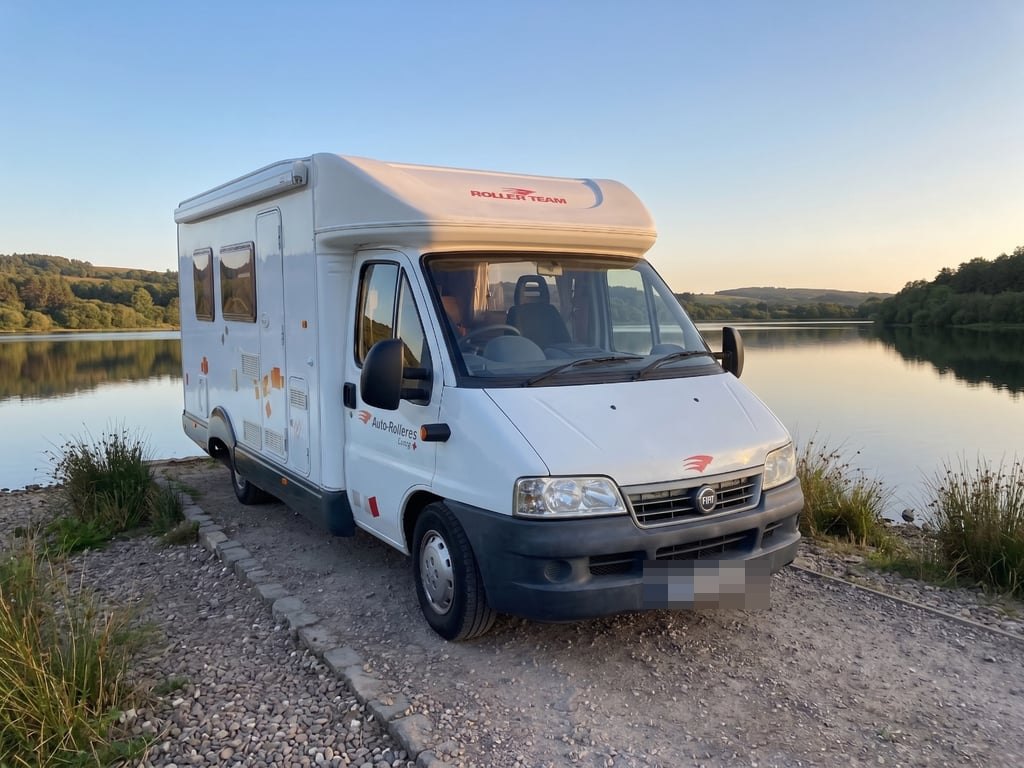
Summary: In the fake vehicle check scam, a supposed buyer insists the seller runs a history check through a website of the scammer's choosing, and the form at the end of that link harvests the seller's card details. It is recognisable by one question, because a genuine vehicle history check is bought by the buyer, about the vehicle, using a registration already printed on the advert, and needs nothing at all from the seller. Any request that the seller pay for a check is the scam.
The seller: Martin Gerrish, in Dunoon, Argyll, advertising a 2004 Roller Team Auto-Roller 15 at £14,000 on a members' selling site.
What arrived: Two approaches with a warm backstory and one condition - run a check through this company first, here is the link. The form asked for his card details. He reached it before stopping. A third caller booked a viewing, never came, and texted £8,000.
The rule that defeats it: A vehicle history check is bought by the buyer, about the vehicle, from the registration on the advert. It needs nothing from the seller. So a buyer asking the seller to pay for a check is the scam, every time, however it is dressed up.
What happened next: He stopped advertising alone and listed with Motorhome Pig. Three genuine, screened enquiries followed in ten days, none of them reaching his phone. He then sold to a local contact of his own, cancelled inside his first 14 days, and was charged £0.
The scams at a glance
- Fake vehicle-check approaches in three weeks
- 2Fake vehicle-check approaches in three weeks
- Texted by a no-show on a £14,000 advert
- £8,000Texted by a no-show on a £14,000 advert
- Screened enquiries once Motorhome Pig took over
- 3Screened enquiries once Motorhome Pig took over
- Charged when he sold privately
- £0Charged when he sold privately
What he met while selling alone
- Where he was advertising
- A members' selling site, for two or three weeks
- Advertised price
- £14,000
- Approach 1 and 2
- A warm introduction, then a demand that he run a vehicle check through their nominated company, using their link. The form asked for his card details
- How close it came
- He reached the form before stopping
- Approach 3
- A caller booked a viewing, never arrived, and texted an offer of £8,000 against the £14,000 advert
- Genuine buyers found while advertising alone
- None
- What he did next
- Stopped advertising himself and listed with Motorhome Pig on 14 August 2026
- Enquiries once Motorhome Pig handled them
- Three, all genuine, none reaching his phone or address directly
The motorhome
- Make & model
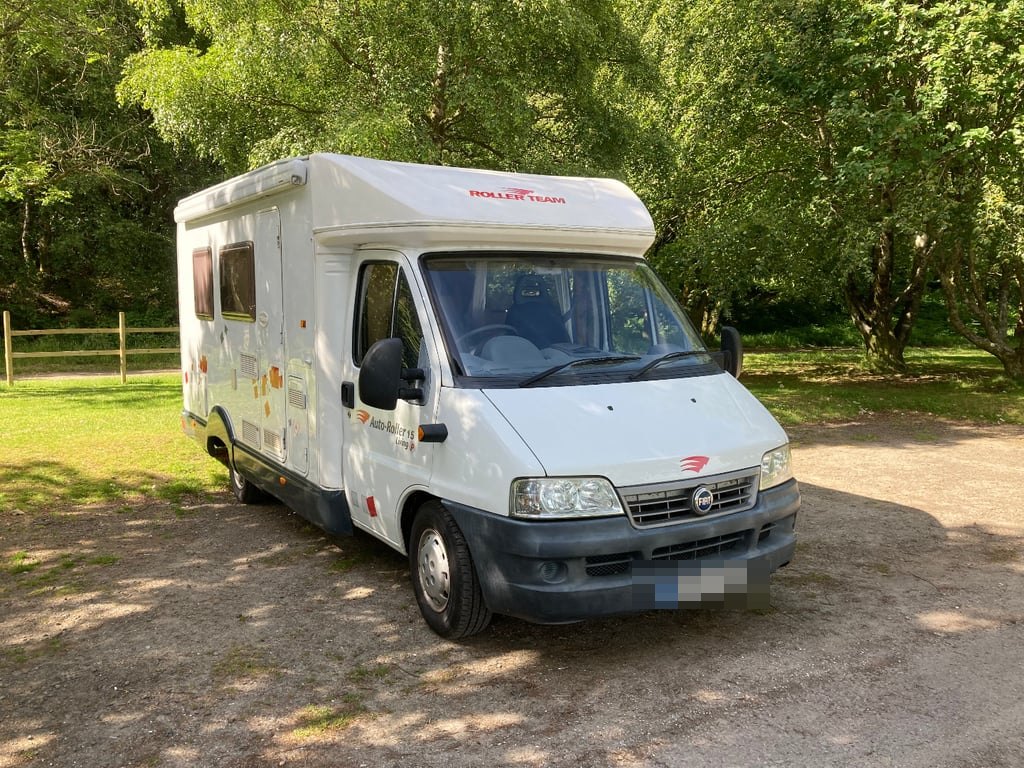
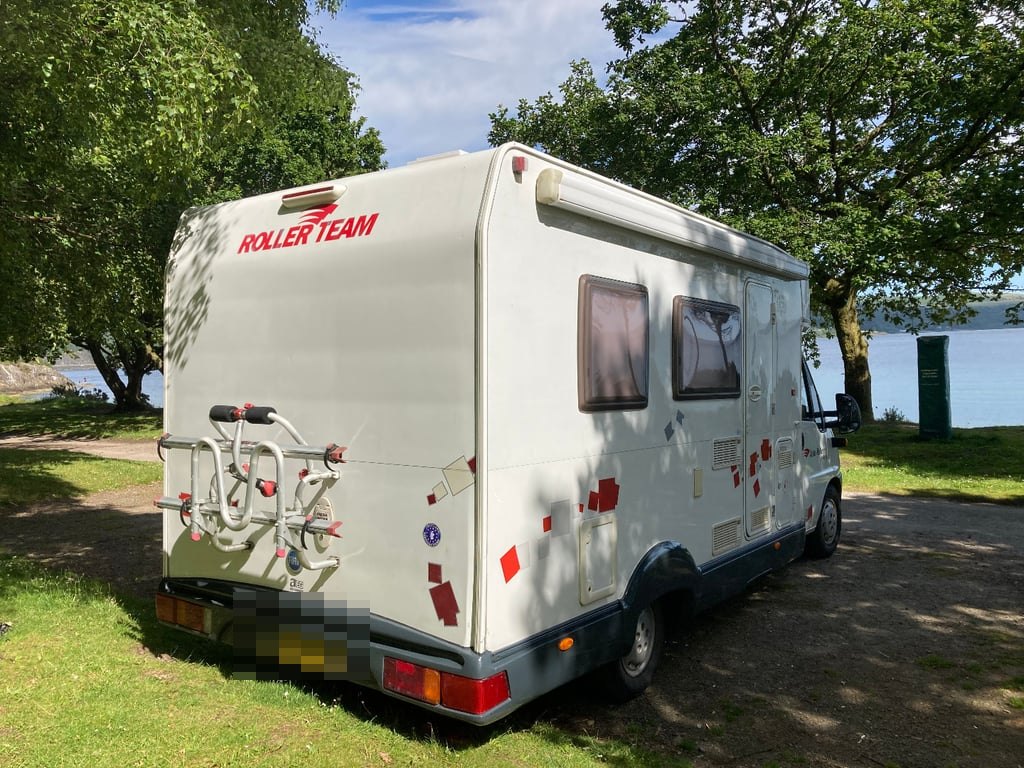
- 2004 Roller Team Auto-Roller 15 LivingP (coach-built motorhome)
- Base vehicle
- Fiat Ducato, diesel, manual
- Layout
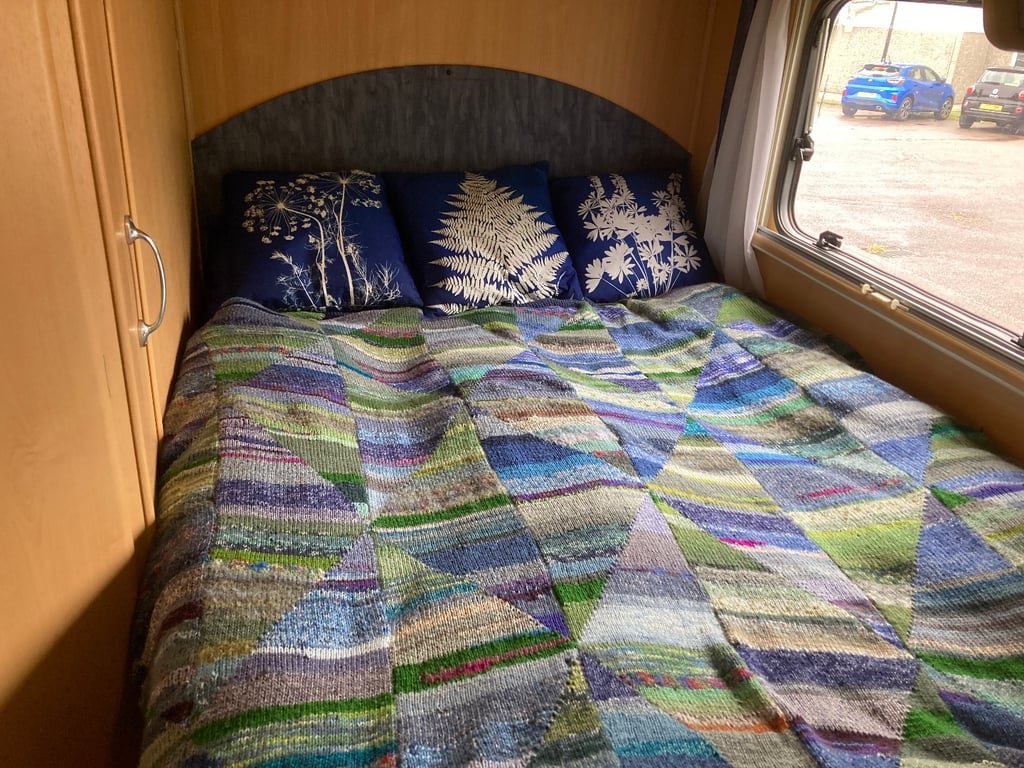
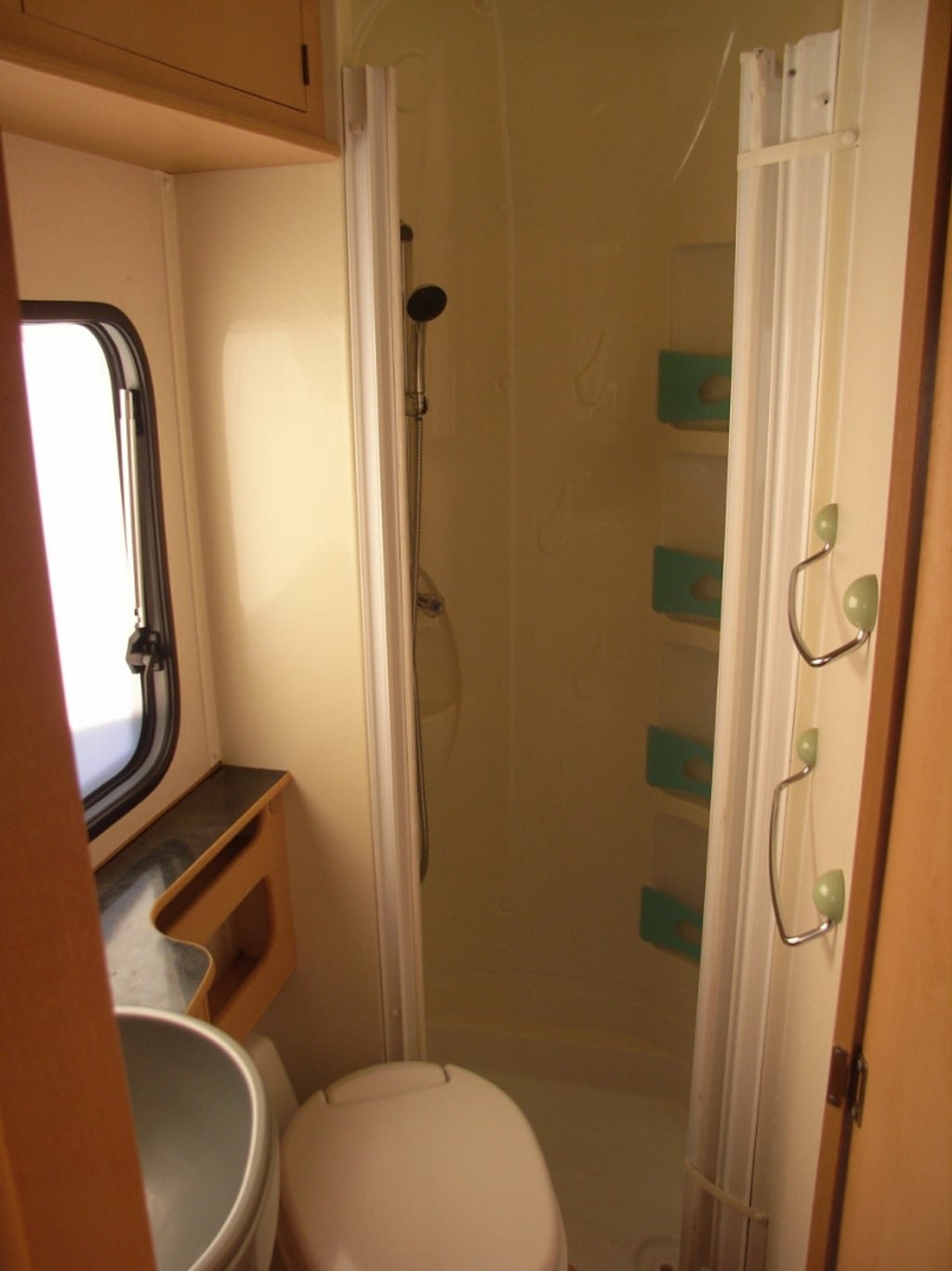
- 4 berths, 4 travel belts - rear French island bed, washroom with a separate shower cubicle
- Mileage
- 45,700 miles
- Notable kit
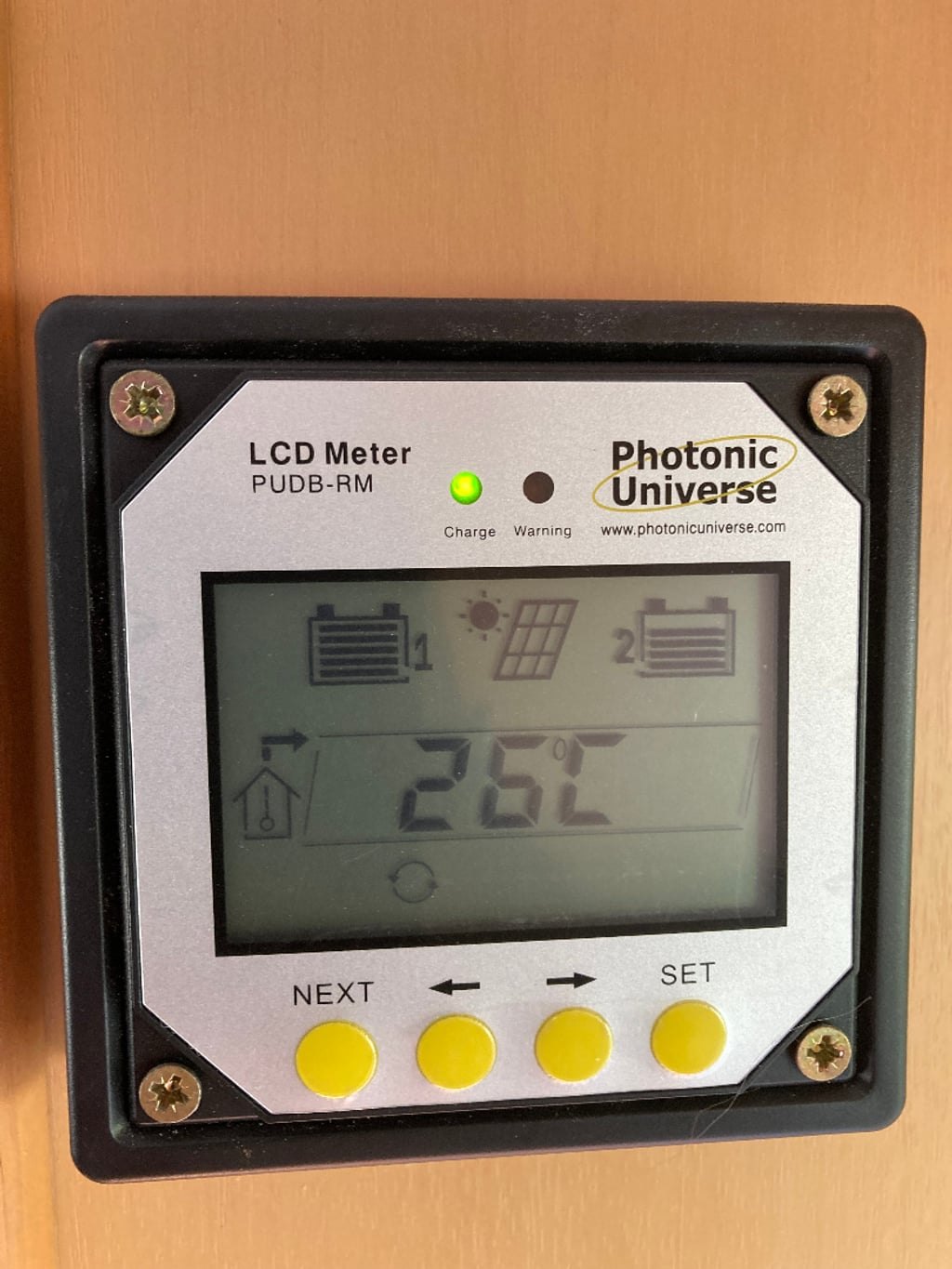
- Solar panel and twin leisure batteries, Truma blown-air heating, 3-way fridge, microwave, air suspension, wind-out awning, bike rack, swivel cab seats
- Condition, as disclosed by the seller
- No history or signs of damp. Cambelt changed September 2019. Last MOT advisories: one tyre close to the legal limit and one worn unevenly; corrosion noted, but structural rigidity not significantly reduced
- History
- Ten former keepers recorded on the V5C; bought from a dealer in November 2020
- Kept
- Dunoon, Argyll, Scotland
The fake vehicle check, step by step
The scam inverts a real and familiar transaction. Buyers genuinely do run history checks on used vehicles, so a message about “doing a check first” sounds like ordinary diligence rather than an attack. The difference is who is being asked to pay, and that single detail is the whole tell.
Martin received two of these in the two or three weeks he advertised the motorhome himself. Both followed the same script closely enough that he recognised the second as a repeat of the first. It arrives in four moves.
- The story. A warm, detailed opening message. Who they are, where they are, why they want this particular motorhome, often with a personal reason attached. It is longer and more human than a real enquiry, because it is doing the work of establishing trust that a genuine buyer would do by asking about the vehicle.
- The condition. Before anything can proceed, they say, the vehicle needs to be checked or verified, and they name the company that must do it. The framing is always that this is normal and that they always do it this way. Note what is missing at this stage: any question about damp, mileage, service history or the layout.
- The link. They supply it themselves. This is the moment the scam becomes identifiable, because in a real transaction the buyer chooses their own provider and never needs to send the seller anywhere.
- The form. The site looks plausible. The form asks for card or bank details, usually justified by a small fee for the report. The card details are the entire objective. There was never a buyer.
They do this thing where they say, oh, seen your motorhome, and they give you a whole story, and then they say we need you to do a check first through this company. And what they're doing is getting your card details. That happened to us twice.
Three things make this particular scam effective, and they are worth naming because they are the reason careful people fall for it.
It flatters the seller's honesty. Agreeing to have your vehicle checked feels like the transparent, nothing-to-hide thing to do, and refusing feels faintly suspicious. The scam is built on a decent person's reluctance to look shifty.
The sum is deliberately small. A history check costs a few pounds, so nobody applies the caution they would bring to a £14,000 decision. The money taken at the form is not the point either; a captured card is worth far more than the fee, and small recurring charges are a common follow-up.
And it arrives at the moment of hope. These messages reach a seller who has had an advert running for weeks with no genuine interest. The first enthusiastic buyer is exactly the message you want to be real.
Martin is not a careless man. He is the same seller who, a fortnight later, wrote out his own MOT advisories in full and sent them unprompted to a stranger who had asked about faults. He still got as far as the form.
I nearly did this. I went through the thing and, oh God, I've got to click on this thing and fill in this form so they have some details. And I thought, hang on a minute.
A genuine vehicle check compared with the scam
A real history check and the fraudulent version differ on every point that matters, and the differences are visible before you click anything. The decisive one is the last row: a genuine check costs the seller nothing, because the seller is not the one buying it.
| A genuine vehicle history check | The fake-check scam | |
|---|---|---|
| Who buys it | The buyer | The seller is told to |
| What it is about | The vehicle, looked up on its registration | Nothing. The form is the point |
| What it needs from the seller | Nothing - the registration is already on the advert | Card or bank details |
| Who chooses the provider | The buyer, from a provider they found themselves | The sender, who supplies the link |
| When it is raised | Around or after a viewing, alongside real questions | Before any viewing, as a precondition, with no questions |
| What it costs the seller | £0 | The card details, and whatever is later taken with them |
It is worth knowing what a real check is for, because that explains why it can never be the seller's job. A history check protects the buyer against outstanding finance, a write-off marker, a mileage discrepancy or a stolen vehicle. Every one of those risks falls on the person handing over the money. A seller buying a report and sending it over proves nothing, because the seller could have sent anything.
Everything a buyer needs to run one is already public. The registration is on the advert, MOT and tax history are free to look up on GOV.UK, and a full commercial check costs a buyer a few pounds on a provider of their own choosing. The correct answer to “can you run a check” is therefore not a refusal but an invitation: the registration is in the advert, please run one yourself.
Motorhome Pig runs its own history check on every motorhome it lists, at its own cost, before the advert goes live. Martin's was run on 14 August 2026, the day he signed.
How to avoid it: the one rule, and six habits
One test settles almost every version of this approach, and it can be applied to a message in seconds without any technical knowledge, without inspecting a link, and without giving the sender the benefit of the doubt.
In a vehicle sale, money moves in one direction: from the buyer to the seller. Any request that you pay for something, or supply card or bank details, is fraud, however reasonable the reason sounds and however small the amount. A check, a verification, an admin fee, a delivery bond, an insurance certificate - the label changes, the rule does not.
- Never buy a report because a buyer told you to. Not from their link, and not from a provider you find yourself either. It is not your purchase to make, and a genuine buyer will not have asked.
- Never follow a link a buyer sends you to a payment page. A convincing copy of a well-known site takes an afternoon to build. If you ever do want to buy something, type the provider's address in yourself.
- Send them to the registration instead. It is already on your advert. MOT and tax history are free on GOV.UK and a full check is a few pounds. Offering that is a complete, cooperative answer, and a fraudulent enquirer will lose interest immediately.
- Treat “before I can view it” as the signal. A real buyer wants to see the motorhome. Anyone who needs a form completed before they will look at a vehicle has no intention of looking at it.
- Notice what they have not asked about. Genuine motorhome buyers ask about damp, service history, the cambelt, the tyres, the layout and the berths. An enquiry with a long backstory and no questions about the vehicle is not an enquiry.
- Slow it down. Urgency is a tool. Nothing in a genuine private sale has to be settled in the next ten minutes, and a day's delay costs an honest buyer nothing.
The harder problem is that a private seller has to apply all of this alone, in real time, about people they have never met, while wanting the sale. That is the part Motorhome Pig is built to remove: every enquiry arrives through a named team rather than to the seller's phone, buyers are vetted before a viewing can be arranged, and the seller's address is not released until the seller gives the green light.
What's nice about your company is that you deal with all that, and we don't have to. That's what I really liked about it, that you do that screening. I'm sure you get it happen with you as well, people trying on scams, but you know the trade, you know what happens. We were kind of so innocent, so naive in this sense.
If you have already given your details
Act in hours rather than days, and do not be embarrassed into delay. These approaches are written to work on careful people, and the speed of the response matters far more than how it happened.
- Ring your bank and cancel the card. Use the number printed on your own card or in your banking app, never a number supplied by the person who contacted you. Tell them the details were given to a fraudulent site.
- Check your statements, including for small recurring charges. Captured cards are frequently monetised through low-value subscriptions designed to pass unnoticed rather than a single large withdrawal.
- Change any password you reused. If the form asked you to create an account and you used a password from elsewhere, that password should now be treated as public.
- Report it. To Action Fraud, or to Police Scotland on 101 if you are in Scotland. Reporting is also what builds the picture of how widespread a given approach is.
- Take the advert down, or hand it over. If your number is circulating among people running this, the approaches will keep arriving as long as the advert is live and reachable directly.
The other approaches Motorhome Pig has logged
The fake check belongs to the family of scams that go after the seller. A second family goes after the motorhome itself. Every example below is from a real, published Motorhome Pig case study rather than a general list.
- The viewing that becomes a text message. Martin's third approach. An appointment booked with enthusiasm, the motorhome cleaned and made ready, nobody arrives, and an offer lands by text at £8,000 against a £14,000 advert. Not a fraud, but the same disregard, and it costs a seller a day and a good deal of goodwill.
- The trader using your own photographs. The very first “enquiry” a seller received on Facebook Marketplace came from a trader whose profile picture was a photograph of her own campervan. It is set out in the Isle of Skye case study, and it was the reason she stopped selling privately.
- The purchase that turns into sale-or-return. An online buyer offered £75,000 for a near-new campervan, well above every genuine dealer, then revised the arrangement to one where they would take the vehicle and sell it on rather than buy it. The Hymer Free S 600 case study sets out the red flags that stopped it, along with the price-chip and deposit variants.
Never release the keys, the V5 logbook or the motorhome itself until cleared funds are in your own bank account. Everything else reduces the risk; this removes most of it. Taken with the rule above about money only moving from buyer to seller, the two together cover the great majority of what a private seller will meet.
What the motorhome was actually worth
Motorhome Pig valued this 45,700-mile, four-berth Auto-Roller 15 at £14,000 in August 2026, against two comparable recorded sales at £14,995 and £16,000. The only number anyone offered him unaided was £8,000, by text message, from a person who had booked a viewing and never turned up.
| Figure | Amount |
|---|---|
| Motorhome Pig automated valuation, 11 August 2026 | £14,000 |
| Comparable sale shown to the seller: 2006 Elddis Sunseeker 130, 44,000 miles | £14,995 |
| Comparable sale shown to the seller: 2004 Compass Avantgarde 200 Lux, 43,826 miles | £16,000 |
| First advertised by Motorhome Pig, 14 August 2026 | £16,000 |
| Reduced at the seller's request, 15 August 2026 | £14,000 |
| Net to the seller at that price, after the £2,000 fee | £12,000 |
| Offered by text on his own private advert, before any viewing | £8,000 |
The gap in that table is the second cost of selling alone. The considered, evidenced view of the motorhome's value sat between £14,000 and £16,000. The one offer that reached him unaided was £8,000, from somebody who had not seen it. A seller with no comparables and no second opinion has no way of knowing which of those numbers to believe, and a low offer arriving after weeks of silence is far more persuasive than it deserves to be.
The seller and the motorhome
Martin Gerrish lives in Dunoon, on the Cowal peninsula in Argyll. His motorhome was a 2004 Roller Team Auto-Roller 15 LivingP: a four-berth, four-belted coach-built on a Fiat Ducato, with a rear French island bed, a separate shower, solar and twin leisure batteries, and 45,700 miles on the clock. He had owned it since November 2020.
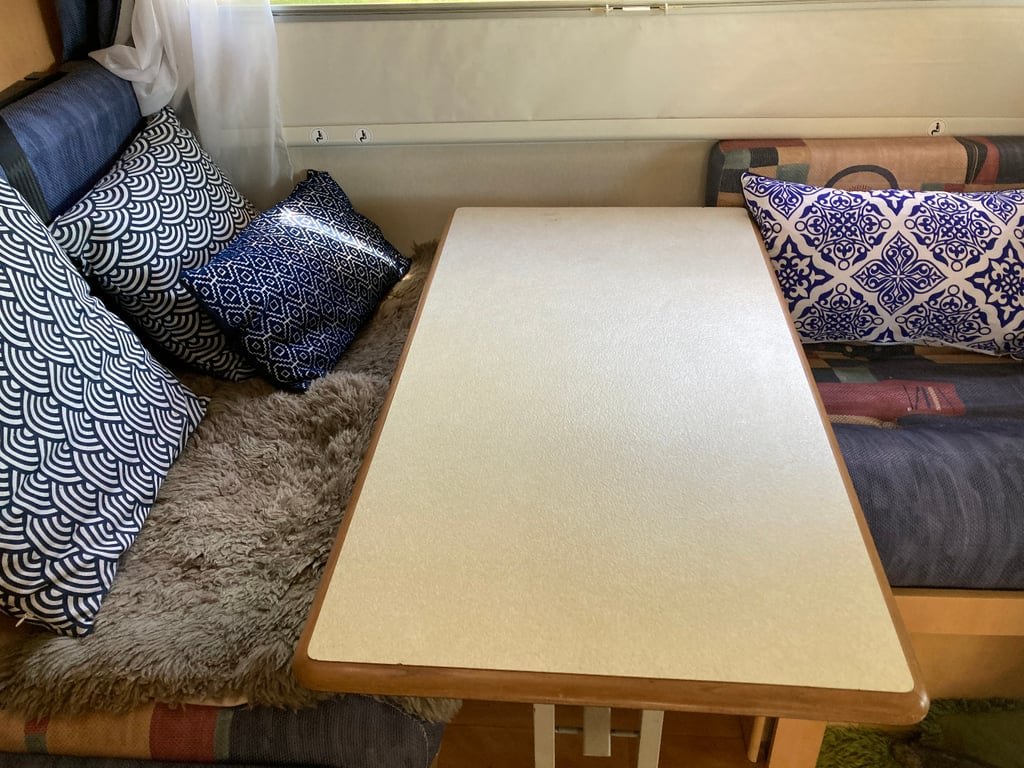
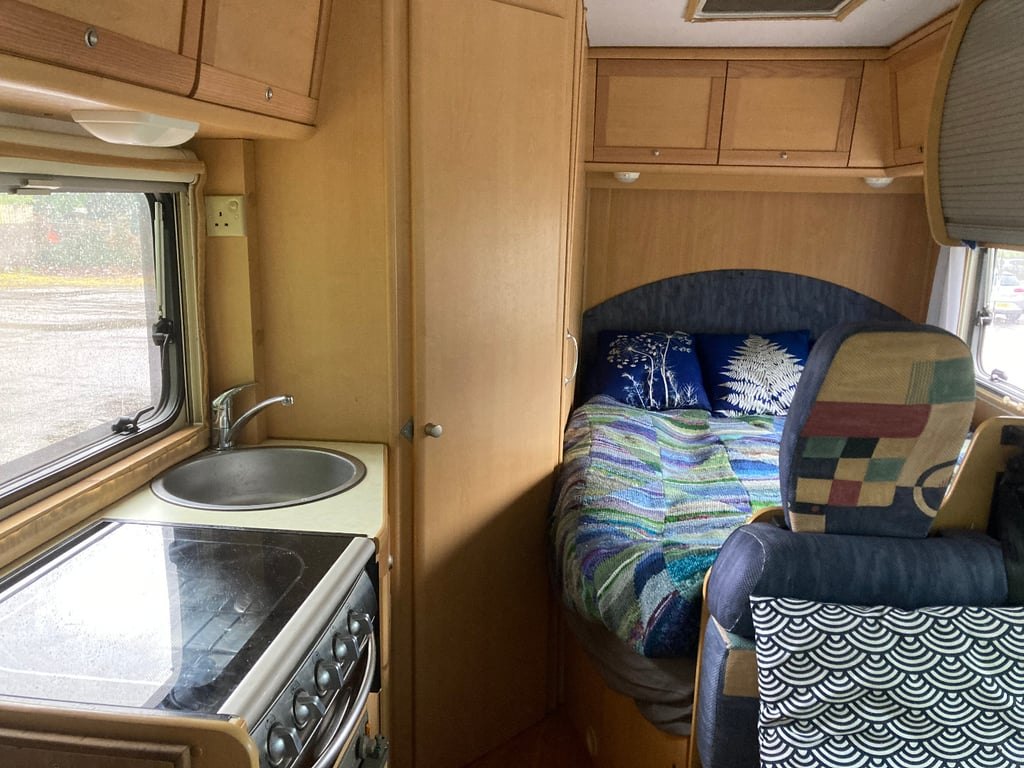
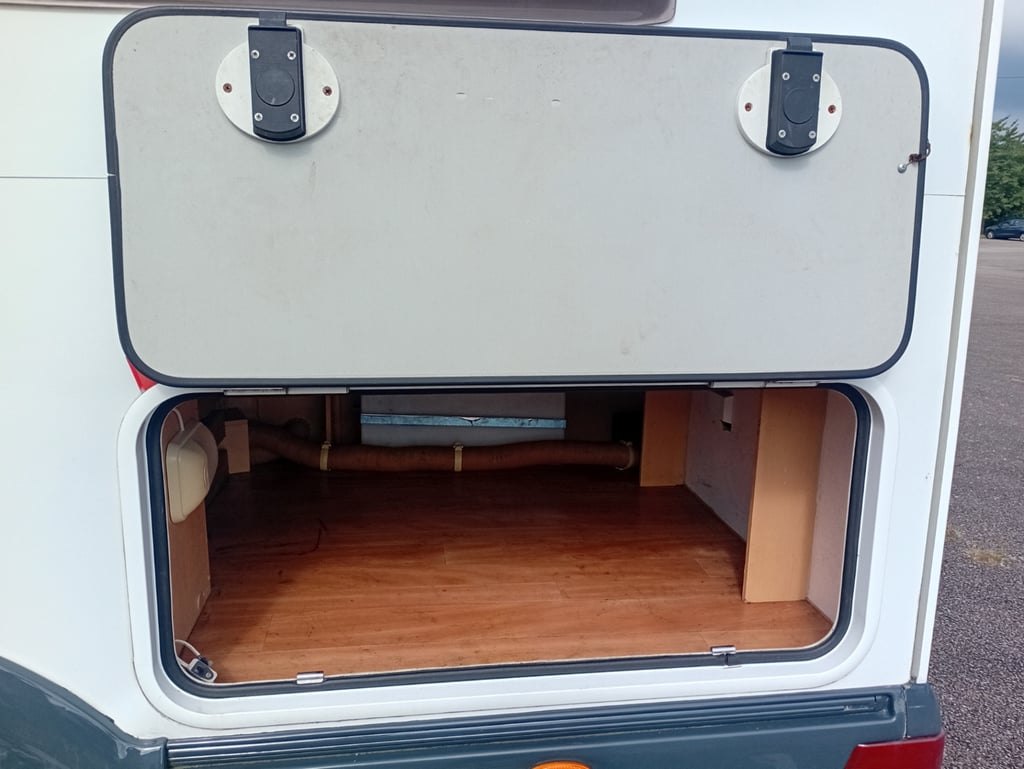
The Auto-Roller 15 is an honest, practical layout of a kind that has largely gone out of fashion: a proper fixed bed at the back, a full washroom with a separate shower cubicle rather than a wet room, a dinette that seats four, and an external locker big enough to be useful. Over the years the van had picked up the things people add when they actually use a motorhome rather than store one - a solar panel and a second leisure battery with a monitor on the wall, blown-air heating, a bike rack, an awning.
His conduct as a seller is worth recording, because it is the counterpoint to everything else on this page. When a genuine buyer asked, through Motorhome Pig, what might need attention, he replied the same day with the MOT advisories written out in full. He added that the cambelt had been changed in September 2019, and volunteered that he had previously recorded it wrongly because he had not realised the cambelt and the timing belt were the same thing.
There is one tyre that is close to legal limit and another worn unevenly. So these two tyres would probably need to be changed in the coming year. Vehicle structure is corroded but structural rigidity is not significantly reduced. There is no history or signs of damp.
That is a seller volunteering the worst of his own vehicle to a stranger, unprompted, in writing - and the same man who had been asked, twice, to prove his honesty by handing over his card details.
Why he stopped selling alone
Martin found Motorhome Pig's online listing form on 11 August 2026 and rang before finishing it to ask what the fee was. He did not sign that day; he decided to give the private market a little longer. He came back three days later, after it had produced two phishing attempts and an £8,000 text message.
The first call is a good record of what a cautious seller wants to know. He asked what the fee was, how it worked if the motorhome sold, and how the money moved. He was told the scale plainly: less below £10,000, £2,000 between £10,000 and £35,000, and a percentage above that. He worked the arithmetic out loud, twice, until he was satisfied he understood which number was his.
Then he stopped, and emailed the same afternoon: “We are still considering which way to go and if we want to continue with Motorhome Pig we will get back in touch.” When the team rang the next day he said he would put it out privately first and decide later, now that he knew how the system worked and what it cost. Nothing was pushed.
He signed on 14 August. What he said afterwards about why is the most useful line in the whole record, because it is not about price at all.
What screening actually changed
In ten days live the advert took 228 views and produced three buyer enquiries and two wishlist saves. All three enquiries were genuine, all three asked real questions about the motorhome, and none of them had Martin's telephone number or his address.
The contrast with the previous three weeks is the point of this section. Advertising alone, the messages that reached him directly included two attempts to take his card details and one no-show who wanted 57% of his asking price. Advertising through Motorhome Pig, the enquiries that reached him were three people asking about emissions bands, faults and previous keepers.
Those questions are a fair sample of what real motorhome buyers want to know. One asked for the Euro emissions band, and Martin checked the V5C and answered within the day. One, who mentioned that he was 77 and did not want problems, asked what might need fixing on the chassis, body and engine - the question Martin answered with his MOT advisories in full. One asked how many previous owners there had been, and he replied that the V5C recorded ten former keepers.
None of them was a scam, and that is not luck. Enquiries are screened before they reach the seller, the address is not published, and a buyer wanting a viewing has to go through a team rather than turn up. The relevant measure of a screening system is not how many sales it makes in ten days but what it stops arriving at a seller's phone, and in this case the answer is everything that had arrived there the previous month.
How it ended, and what it cost
The motorhome did not sell through Motorhome Pig. On 25 August, day 11 of the agreement, a local contact Martin had spoken to before signing came back and bought it. He cancelled the same day, inside his first 14 days, and Motorhome Pig charged him £0 - the £2,000 brokerage fee waived in full, no invoice, nothing chased.
Before signing, Martin had asked around locally, including at a garage in town he knew well, and someone had mentioned knowing a person who might be interested. Nothing came of it, so he assumed it had gone away. Three days after the advert went live, that person got back in touch - and rather than quietly arranging a viewing, he emailed and asked how it worked.
Before we signed up with Motorhome Pig, we had let people know locally that we were selling the motorhome. One person said they thought they knew someone who might be interested. We had not heard anything back so signed up with you. Over the weekend this person has made contact and said they are interested and would like to come and have a look at the motorhome in the next couple of days. How does this work in relation to Motorhome Pig?
He was told the sale would run through the agreement, that the buyer would be vetted and the viewing logged rather than turned away, and that someone would ring to confirm the position on this particular buyer. A week later the sale became real and he cancelled.
- Inside the first 14 days: £0. A seller who cancels within 14 days of signing pays nothing and the advert comes down immediately. Day 14 is the last free day. This applies whatever the reason, explicitly including having sold the vehicle elsewhere - the case that would cost a seller money almost anywhere else.
- Once the agreed term has been served: £0. A seller whose agreement has run its full term removes the advert for nothing, on the spot.
- Listing costs nothing either way. There is no upfront charge and Motorhome Pig pays the advertising costs. Here that covered building the advert, the history check, publication on Motorhome Pig's marketplace and on Auto Trader, and processing the walkaround video Martin filmed himself.
- It is a policy, not a clause. The seller does not have to negotiate for it and it is applied by the cancellation screen itself, so that listing is a genuinely free option to try. That is exactly how Martin used it.
In Martin's own words
Ben Aspinall rang Martin on 25 August 2026, the day the advert came down, to ask why he had cancelled and what could have been done better. The call ran seven minutes, and most of it turned out to be about the scams. What follows is that conversation, truncated for length and published with his consent.
BenMotorhome Pig
MartinSeller
BenMotorhome Pig
MartinSeller
BenMotorhome Pig
MartinSeller
BenMotorhome Pig
MartinSeller
BenMotorhome Pig
MartinSeller
BenMotorhome Pig
MartinSeller
BenMotorhome Pig
MartinSeller
BenMotorhome Pig
MartinSeller
BenMotorhome Pig
MartinSeller
Edited for length and clarity from a recorded feedback call between Martin and Ben Aspinall of Motorhome Pig on 25 August 2026, published with Martin's consent. He left a public Google review three days later.
Martin's review
Drawn from that recorded call and published with his consent, this is Martin's verdict in his own words - on a service that, in the end, did not sell his motorhome.
I really like what your website is about, the way you dealt with me, and the honesty of it all. We got scammed about three times - well, we didn't actually get scammed, but there were scams. They do this thing where they give you a whole story, and then they say we need you to do a check first through this company, and what they're doing is getting your card details. That happened to us twice. I nearly did this. I went through the thing and, oh God, I've got to click on this thing and fill in this form so they have some details. And I thought, hang on a minute. And then another person called and said they'd seen the ad, really wanted to come over and see it, and booked a time to come over. And then, when we're all getting ready for them to come, they just sent us a text: will you take £8,000 for it? We had it on at £14,000. What's nice about your company is that you deal with all that, and we don't have to. That's what I really liked about it, that you do that screening. You know the trade, you know what happens. We were kind of so innocent, so naive in this sense. You're very upfront and straightforward. I like Alison, she's amazing - the responses you get from her so quickly, even though she's AI, she's right on the button. I think your website is good. Every time I did something, either Alison got back to me or one of you did. And the point is that there are human beings there as well. I'm sorry it loses you some business, but not to worry. I will always, absolutely recommend you. I think you're doing a really good job. I think you've hit a nerve in the market, you've got something there that's really good. So keep going.
What this case study shows
The useful lesson here is not that scams exist. It is that they are aimed at the one person in a private sale who has no colleague to ask, and that being careful is not the same as being protected.
- The fake check is aimed at the seller, not the motorhome. It is worth separating from the better-known scams, because the defences are different. Nothing about protecting your vehicle protects your card details.
- Care is not the same as safety. Martin is a conspicuously honest, careful seller and he still reached the form twice. A scam engineered to exploit decency will beat diligence sooner or later.
- One question settles it. Who is being asked to pay? A genuine check is bought by the buyer and needs nothing from the seller, so any request that the seller pays is the scam.
- Screening is the part a private seller cannot do alone. Three genuine enquiries reached Martin through Motorhome Pig without his phone number or address. The two card-detail attempts reached him directly, on his own advert.
- Low offers travel with scams. £8,000 against a £14,000 advert, from someone who never viewed it, is the same disregard in a different costume - and after weeks of silence, it lands harder than it should.
- Listing is free to try, and to leave. Motorhome Pig built the advert, ran the history check, paid the advertising and charged nothing when Martin sold privately eleven days later.
- One thing here needs fixing. Martin could only read the cancellation terms by opening the cancellation form, which is why he appeared to cancel a day before he meant to. He said so, and he was right.
Motorhome Pig's position is that a private sale is usually the right way to sell a motorhome, and that the problem with it has never been the price - it is being left to do it alone. Martin got a private sale in the end, through his own network, and that is a good outcome. What he needed help with was the strangers in between, which is the part the service exists to absorb.
Let someone else read the enquiries. Listing is free, and free to leave in the first fortnight.
Sell my motorhomeFull timeline
From the first fraudulent approach to a five-star review. Every date from 11 August onwards is taken from Motorhome Pig's CRM and listing records; the period before that is Martin's own account, given in the recorded interview.
Late July / early August 2026
Advertising it himself, and the two fake checks
Martin advertises the motorhome at £14,000 on a members' selling site for two or three weeks. Two approaches arrive with a warm backstory and a demand that he run a vehicle check through their nominated company, using their link; the form asks for his card details. He reaches the form on one before stopping. No genuine buyer comes of the advert.Early August 2026
The viewing that never happened
A caller says they have seen the advert and books a time to view. Martin and his wife prepare the motorhome. Instead of arriving, the person texts an offer of £8,000 against the £14,000 advert. He stops advertising himself.11 August 2026
First contact with Motorhome Pig
He starts the online listing form and is shown a £14,000 valuation, against comparables of £14,995 and £16,000. He rings mid-form to ask what Motorhome Pig charges and how the money moves, and works the arithmetic through twice.11-12 August 2026
He decides to wait
He emails to say the decision is not made, and tells the team by phone he will try the private market a little longer first, now that he knows how the system works and what it costs. Nothing is pushed.14 August 2026 - Day 0
Agreement signed, advert live the same day
He signs the 90-day agreement online and uploads nine of his own photographs. The advert goes live at £16,000, with a £2,000 fee and a £14,000 return to him, and Motorhome Pig runs its own vehicle history check at its own cost.15 August 2026
Price reduced, with the consequence confirmed in writing
He asks for the advertised price to drop to £14,000. Because that reduces his own return to £12,000, he is written to before anything changes; he confirms in writing that he understands. Approved and applied the same day.17 August 2026
The local contact reappears
He emails to say a person he had been told about before signing has come back wanting to view the motorhome, and asks outright how that works in relation to Motorhome Pig. He is told the sale runs through the agreement, the buyer would be vetted and the viewing logged, and that someone will ring to confirm the position.20-23 August 2026
He films his own walkaround
He makes a series of short video clips and asks whether they can be edited, suggesting the sound is taken out, and sends them in by WhatsApp. A three-and-a-half-minute silent walkaround goes onto the advert on 23 August.22-23 August 2026
Three genuine enquiries, none of them a scam
Two enquiries arrive through Auto Trader and one through the Motorhome Pig site, plus two wishlist saves. All three ask real questions and none reaches Martin's phone or address directly. He answers all three the same day: the emissions band from the V5C, the MOT advisories in full, and ten former keepers.24 August 2026
A cancellation form opened, but not submitted
He opens the cancellation form on his dashboard to read the terms, then emails to say he has not cancelled anything and only filled it in because it was the only way to find out what cancelling involved. He is written back to within the hour confirming nothing has changed. The advert stays live.25 August 2026 - Day 11
Sold privately, and cancelled for £0
The local buyer completes the purchase that day. Martin cancels, giving 'sold elsewhere' as the reason. He is inside his first 14 days, so the £2,000 fee is waived in full: no invoice, nothing chased. The advert is withdrawn from the marketplace and Auto Trader the same day. Ten days live, 228 views, three enquiries, no offers.25 August 2026
The feedback call
Ben Aspinall rings to ask what went wrong in the first fortnight. Martin spends most of the seven minutes describing the scam approaches that brought him to Motorhome Pig in the first place.28 August 2026
Five-star Google review
He leaves a public review, three days after cancelling and having paid nothing.
Frequently asked questions
A buyer wants me to get a vehicle history check from a website they sent me. Is it a scam?
Almost certainly, yes. A genuine vehicle history check is bought by the buyer, about your vehicle, using the registration that is already printed on your advert. It requires nothing from you at all. If someone insists that you run the check, and supplies the link, the purpose of that link is to put a payment form in front of you and capture your card details. Martin Gerrish received two approaches of exactly this shape in three weeks while advertising a 2004 Roller Team Auto-Roller 15, and reached the form on one of them before stopping. Do not follow the link, do not enter card details, and do not treat the request as a reasonable condition of sale.
Who pays for a vehicle history check, the buyer or the seller?
The buyer. The check exists to protect the buyer against outstanding finance, a write-off marker, a mileage discrepancy or a stolen vehicle - all risks that fall on the person handing over the money. A buyer runs it themselves, on a provider of their own choosing, using the registration from the advert. There is no legitimate arrangement in which a private seller is required to buy a report and send it to a buyer, and any insistence that there is should be treated as fraud.
What should I do if I have already given my card details to a fake check site?
Contact your bank straight away, using the number printed on your own card rather than any number supplied to you, and ask them to cancel the card. Then check your statements for anything you did not authorise, including small recurring subscription payments, which is a common way these sites monetise a captured card. If you reused the password on that form anywhere else, change it. Report the attempt to Action Fraud, or to Police Scotland on 101 if you are in Scotland. Acting within hours rather than days makes a material difference.
What are the most common motorhome selling scams?
They split into two families. The first targets your money or your details before anything is agreed: the fake vehicle check that harvests card details, described in full on this page, and advance-fee requests dressed up as verification or admin. The second targets the motorhome itself: a bait-and-switch where a high purchase offer quietly becomes a sale-or-return arrangement so the vehicle leaves without being paid for; a price-chip on the day, where a sudden fault knocks thousands off a price already agreed; and pressure to release the keys or the V5 before funds have cleared. Motorhome Pig has logged real examples of both families across its published case studies.
How do I sell a motorhome without getting scammed?
Two rules cover most of it. Money in a vehicle sale moves one way, from buyer to seller, so any request for a payment or for card details from you is fraud regardless of how it is framed. And never release the keys, the V5 or the vehicle until cleared funds are in your own account. Beyond that, the practical protection is not being the person who has to judge each stranger alone: through Motorhome Pig every enquiry arrives through a named team rather than to the seller's phone, buyers are vetted before a viewing can be arranged, and the seller's address is not released until the seller gives the green light.
Do I need to provide a vehicle history report to sell my motorhome?
No. You are not required to buy or supply one, and a buyer who demands it as a precondition is either mistaken or running the fake-check scam. What you should do is be straightforward about the vehicle's condition. Martin volunteered his MOT advisories in full to a buyer who asked - a tyre close to the legal limit, another worn unevenly, and corrosion noted without significant loss of rigidity - along with the cambelt date and the confirmation that there was no damp. Motorhome Pig runs its own history check on every motorhome it lists, at its own cost, before the advert goes live.
Is it safe to sell a motorhome yourself on a classified site?
It can be, but the seller carries every part of the risk personally: judging which enquiries are genuine, handing out a phone number and an address, being at home alone when a stranger arrives, and confirming that money has actually cleared before the keys move. None of what happened to Martin is the fault of the site he used - an open classified advert with a phone number attached attracts this everywhere it appears. It is simply the part of private selling that nobody warns you about, and it is what made him stop.
How much does Motorhome Pig charge to sell a motorhome?
A success-only fee on a published scale, added to the seller's own figure rather than taken out of it, with the seller's exact net return shown before they agree to anything. On Martin's agreement the fee was £2,000 on a £16,000 list price, which left the £14,000 return he had asked for. He was never charged it: he sold the motorhome privately to a local contact on day 11 and cancelled inside his first 14 days, so the £2,000 was waived in full and Motorhome Pig charged him £0.
Is this case study and the review genuine?
Yes. It is built from Motorhome Pig's own CRM, listing and seller-dashboard records, from Martin's own emails and messages to the team, and from a recorded feedback call on 25 August 2026, published with his explicit consent. The figures - the prices, the fee, the views, the enquiry count and the dates - are stated as recorded at the time. Quotes are verbatim, truncated for length, with no words substituted. Personal details including the registration, address, phone number and email have been omitted, and the number plate is digitally obscured in every photograph.
About this case study
This case study is based on Motorhome Pig's own CRM, listing and seller-dashboard records for this agreement, on Martin's emails and messages to the team, and on a recorded feedback call of 25 August 2026 published with his explicit consent. Figures - the valuation, the list prices, the fee, the view and enquiry counts and the dates - are stated as recorded at the time. Quotes are verbatim and have been truncated for length; no words have been substituted. The account of the three approaches he received before contacting Motorhome Pig is Martin's own, given in that recorded interview.
The companies named in the two fraudulent approaches are not identified here, because we have not independently verified them and a fraudulent site may impersonate a legitimate provider. The members' selling site he had previously advertised on is not named either: an open classified advert attracts these approaches everywhere, and this is not a criticism of any one platform. The private buyer is not named or described, and what the motorhome eventually sold for privately was never disclosed to us, so it is not estimated. To protect privacy we have omitted the registration (digitally obscured in every photograph), the address, phone number and email address. The photographs are Martin's own, taken during his ownership and published with his consent. Published 28 August 2026.
The sale-or-return scam
The other family of scams: a £75,000 offer that would have taken the campervan without paying for it.
How selling with Motorhome Pig works
Vetted buyers, your address released only on your say-so, and what it costs.
Get a free valuation
The same valuation Martin was shown, with the comparable sales behind it.
More customer case studies
Real motorhomes sold, and bought, through Motorhome Pig.
Never read another one of those messages
Every enquiry comes through a named team instead of to your phone, every buyer is vetted before a viewing, and your address is released only when you say so. Nothing to pay up front, nothing if it does not sell, and nothing at all if you cancel inside your first 14 days.
No upfront cost · No sale, no fee · One central UK team, 7 days a week