
How to sell a campervan without the Facebook Marketplace time-wasters - Simon's VW Transporter T5.1
Simon had already made his mind up about one thing before he ever found us: he was not putting his campervan on Facebook. Not the “is it still available?” messages, not the tyre-kickers, not the people who never turn up, and not the ones who stand on your drive admiring it and then offer you two grand less. So he paid a fee to never speak to a buyer - and got his full asking price four days after going live. This is the whole sale, from both sides, with his own words throughout.
Written by the Motorhome Pig team · Halifax, West Yorkshire · Reviewed by the Motorhome Pig team
Figures verified against Motorhome Pig's CRM, contract and seller-dashboard records.
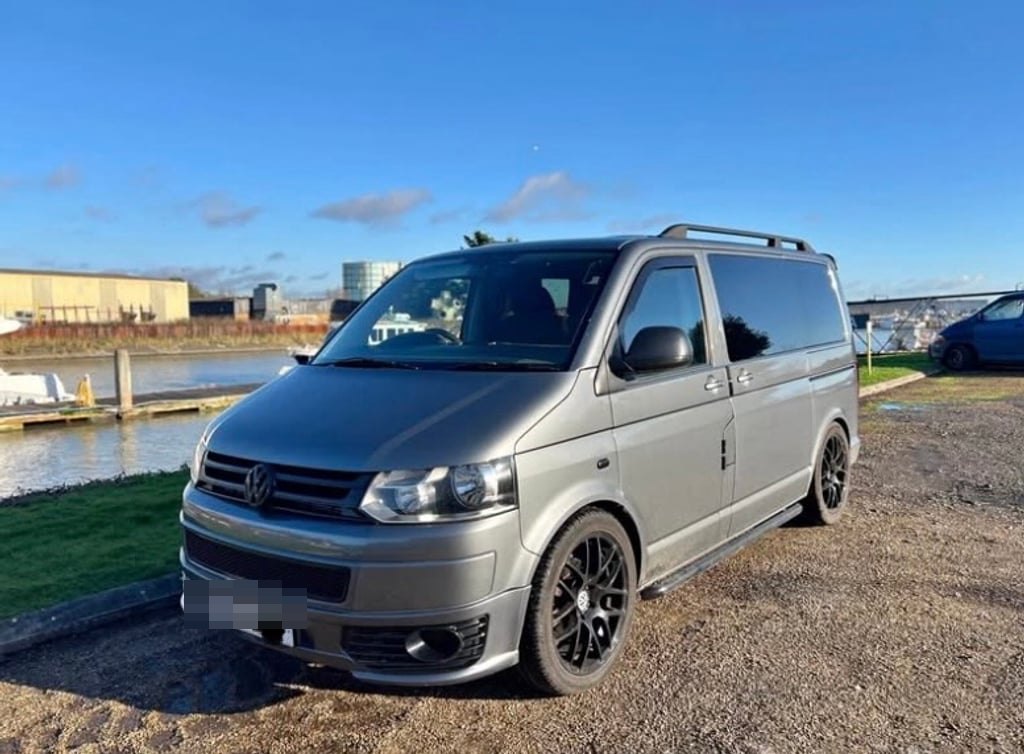
The seller: Simon, in Worthing, West Sussex, needed to move his 2010 VW Transporter T5.1 campervan on. He had never heard of Motorhome Pig, researched us, and rang up to ask what the fee was before anything else.
The challenge: a crowded second-hand VW market, a high-mileage van with an honest DIY conversion, and a seller who had decided in advance that he would not sell it himself. He also had a hard floor: £8,000 in his hand, or it was not worth doing.
What Motorhome Pig did: built the advert and put it live within a day at £9,500, pushed it out across our marketplace, Auto Trader, eBay and Gumtree, fielded every enquiry, relayed two below-asking offers with the net figure attached - and, when Simon said no to both, went straight back to the buyer with his position rather than pushing him to take the money.
The result: the same buyer came back four hours later at the full £9,500. Sold four days after going live, collected on day seven, £8,000 to Simon on a flat £1,500 fee. “You did exactly what you said on the tin,” he told us, “which seldom happens.”
The sale at a glance
- Live to a full-price offer accepted
- 4 daysLive to a full-price offer accepted
- Full asking price, never reduced
- £9,500Full asking price, never reduced
- Paid to Simon
- £8,000Paid to Simon
- Flat fee, only if it sold
- £1,500Flat fee, only if it sold
The campervan
- Make & model
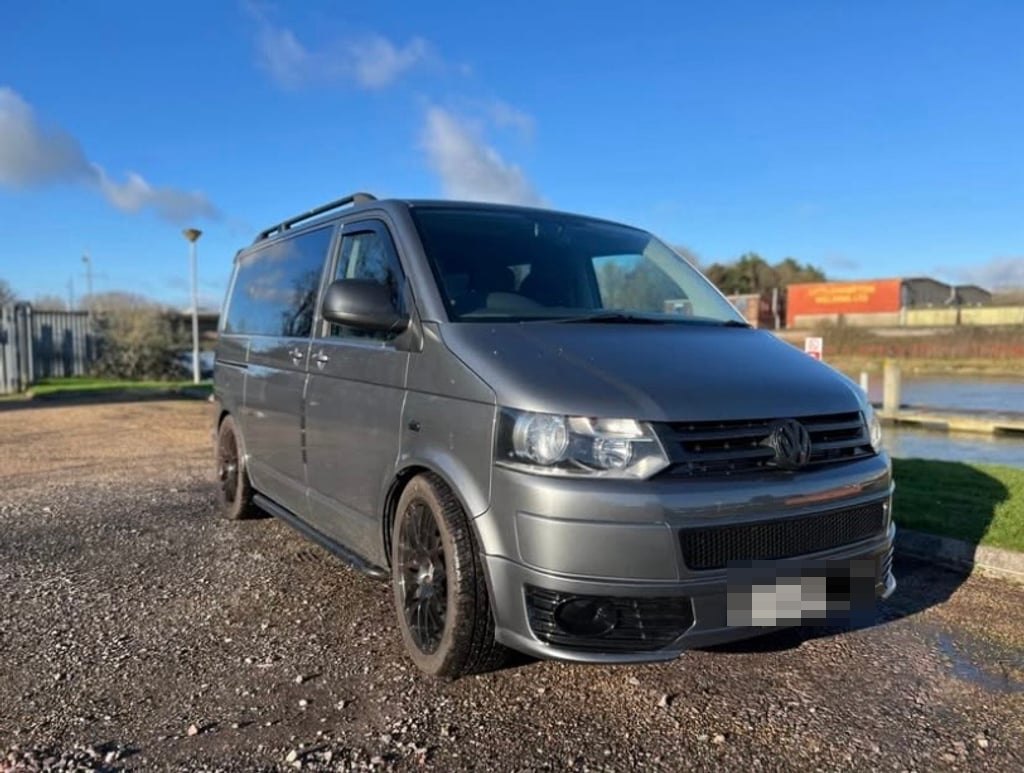
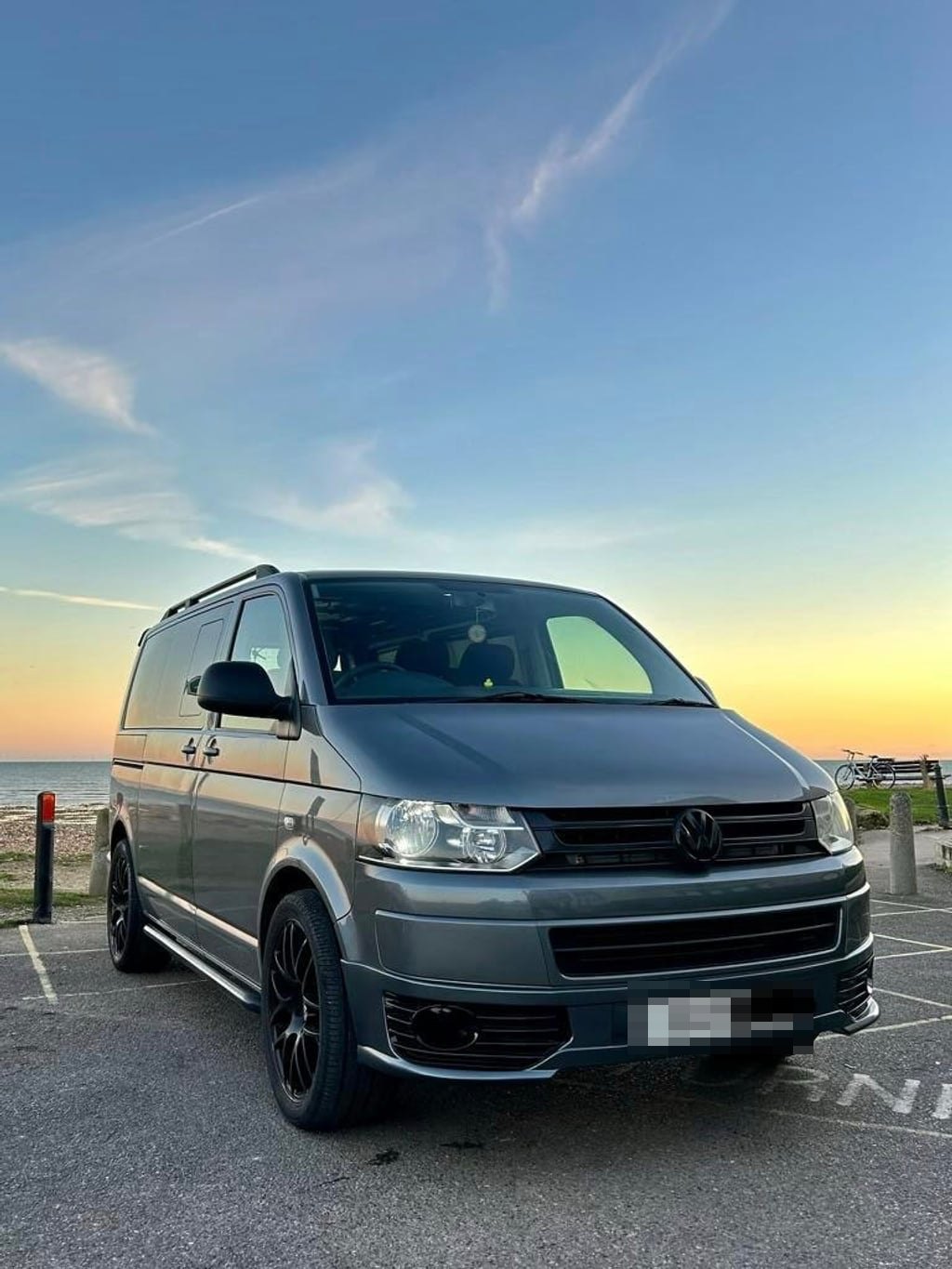
- 2010 Volkswagen Transporter T5.1 campervan (T30 SE 140 TDI, SWB)
- Engine & gearbox
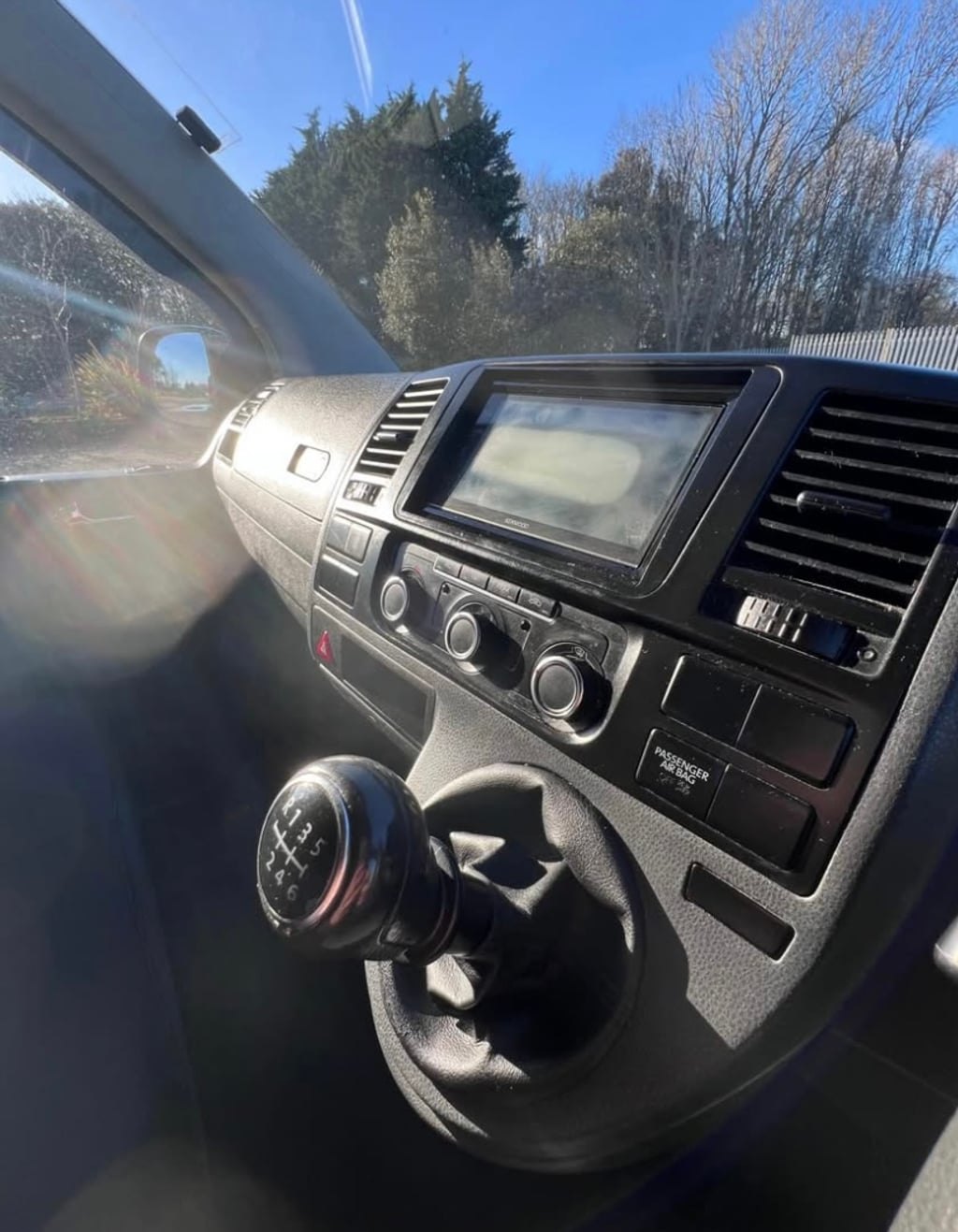
- 2.0 TDI diesel, 140 bhp, six-speed manual
- Layout
- 2 berths, 3 travel belts - single bed with under-bed storage, folding out to a double; end kitchen
- Mileage
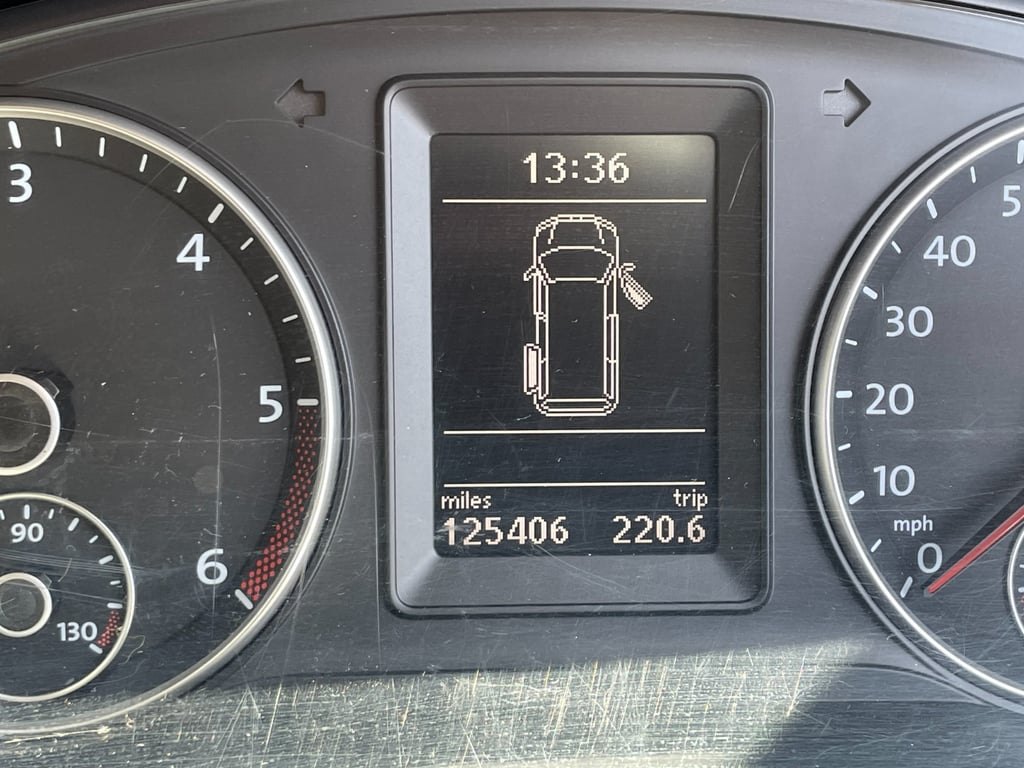
- 125,406 miles at collection
- The conversion
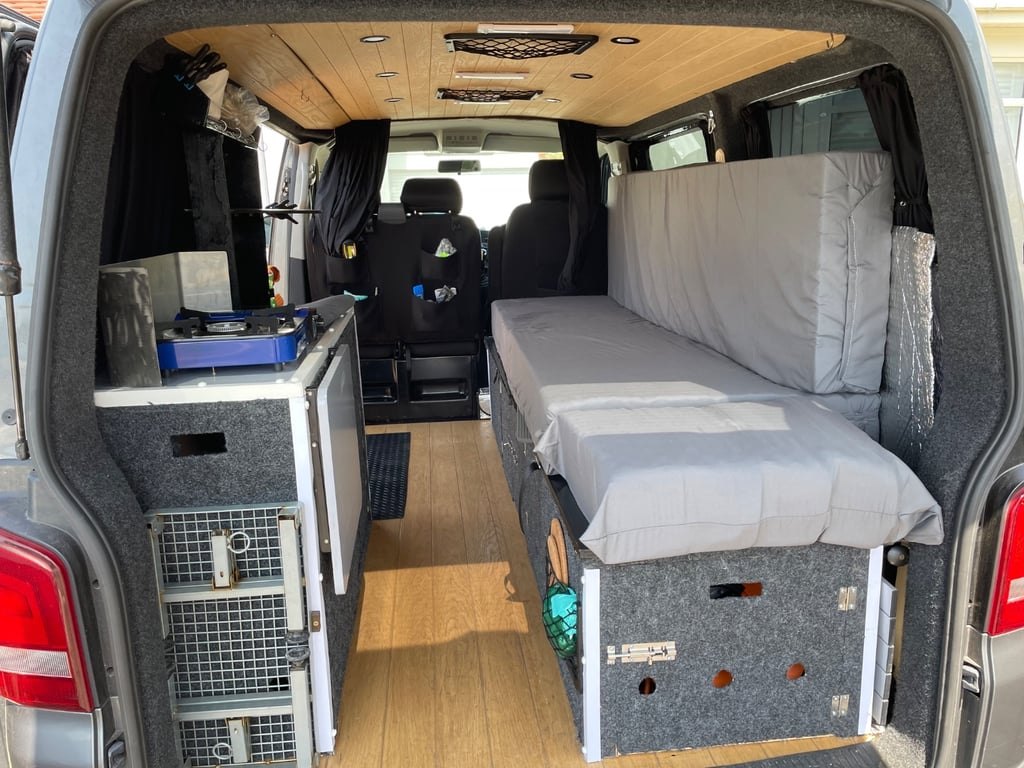
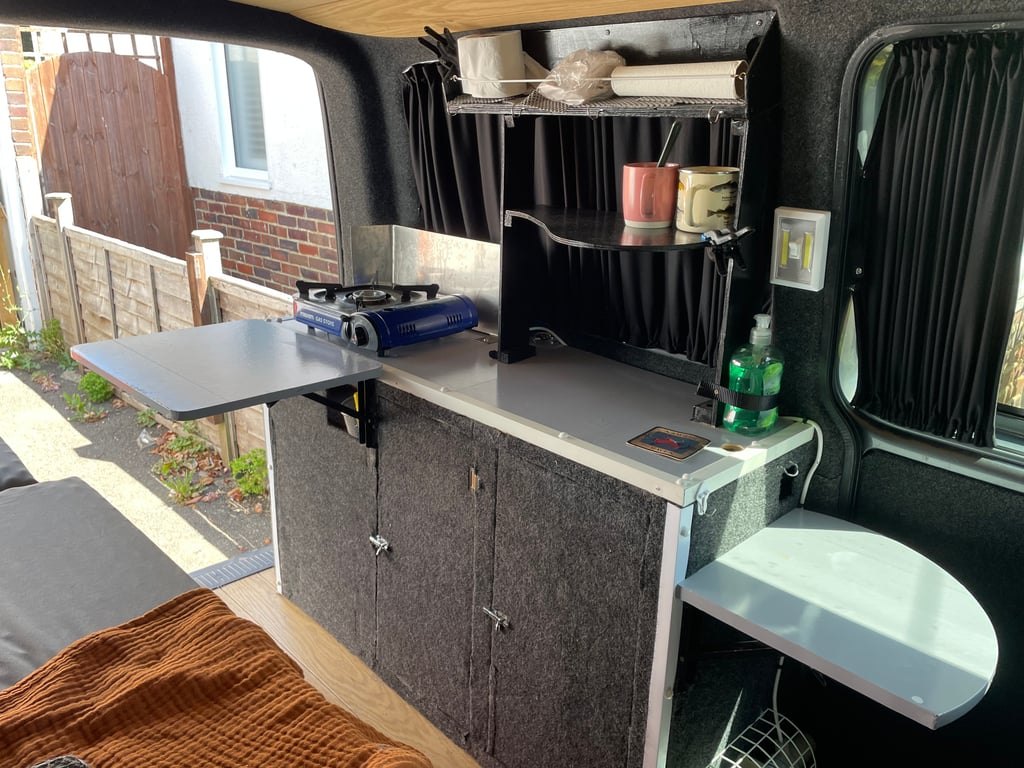
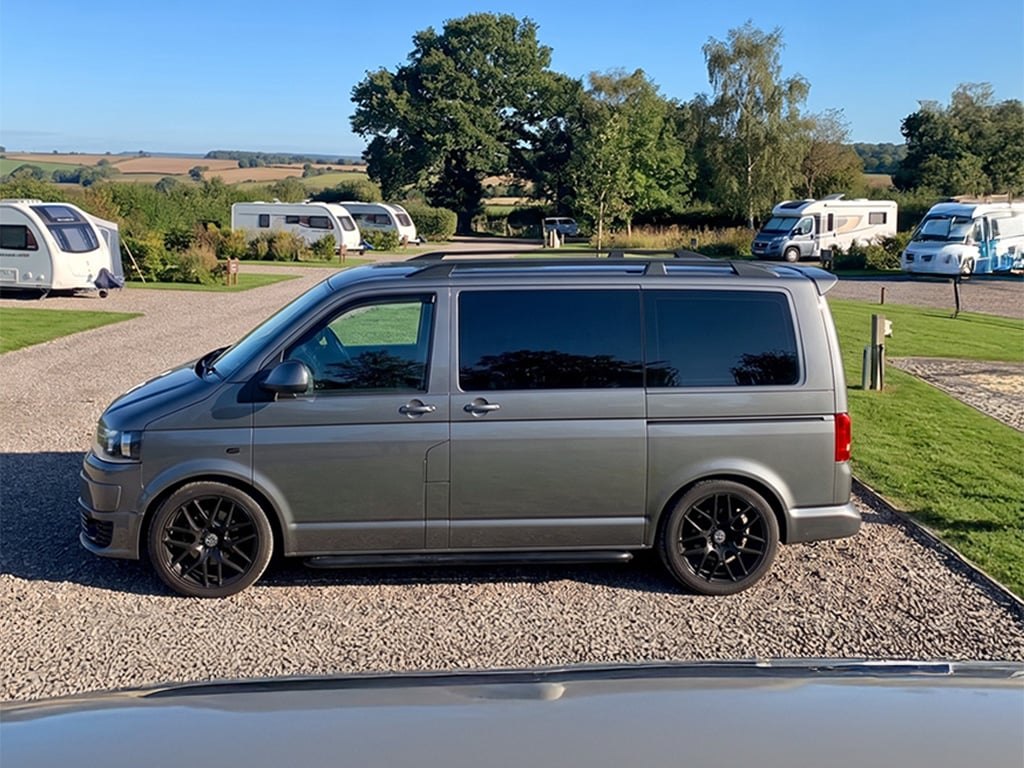
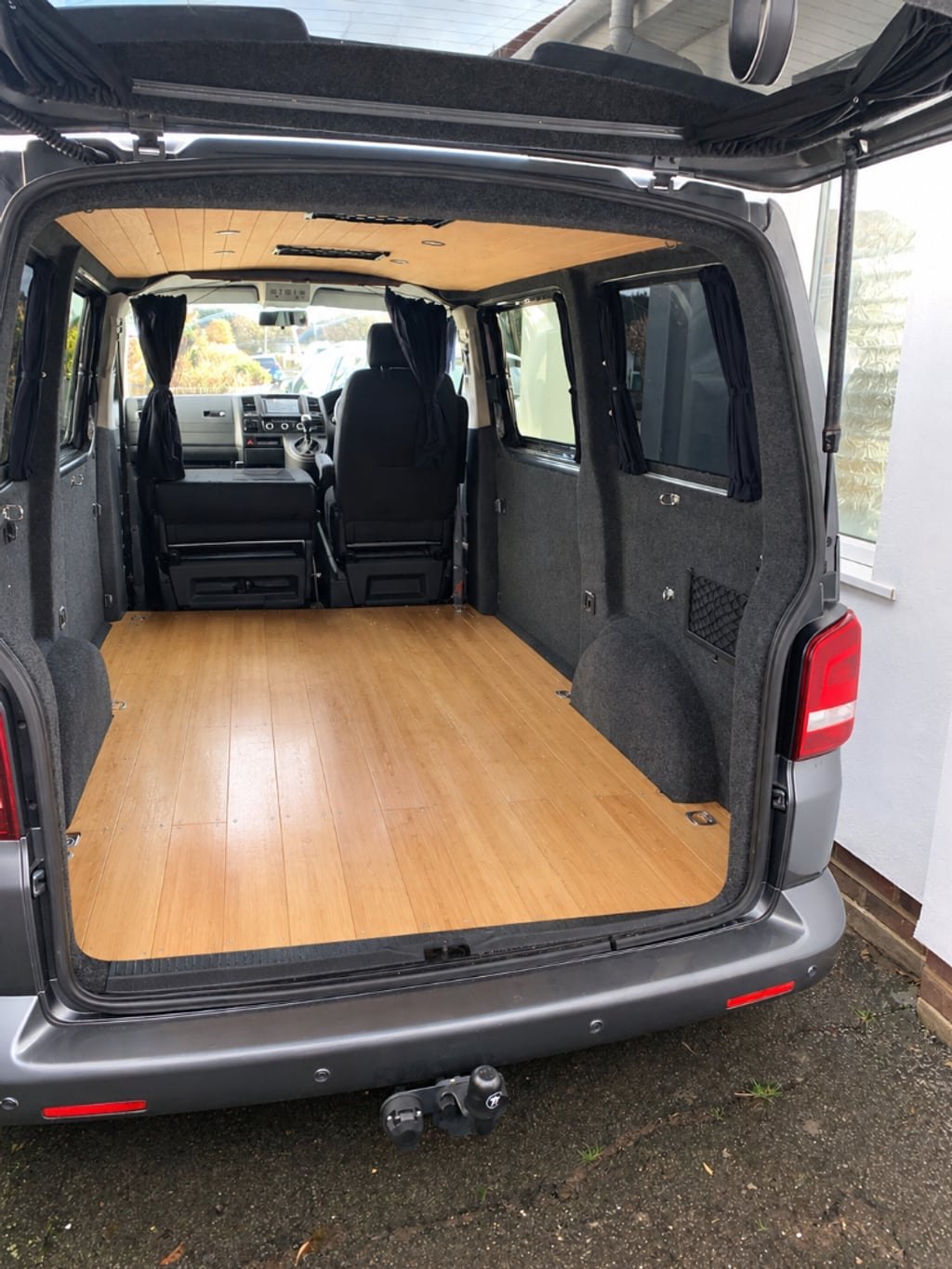
- Started life as a VW Shuttle; fully ply-lined, sound-proofed, carpeted and insulated with a wooden floor and ceiling. Simon added a removable DIY conversion in January 2025 - bed frame with three under-bed cupboards, fold-out double extension, kitchen unit with gas burner and two fold-out tables, rechargeable sensor strip lights.
- Included in the sale
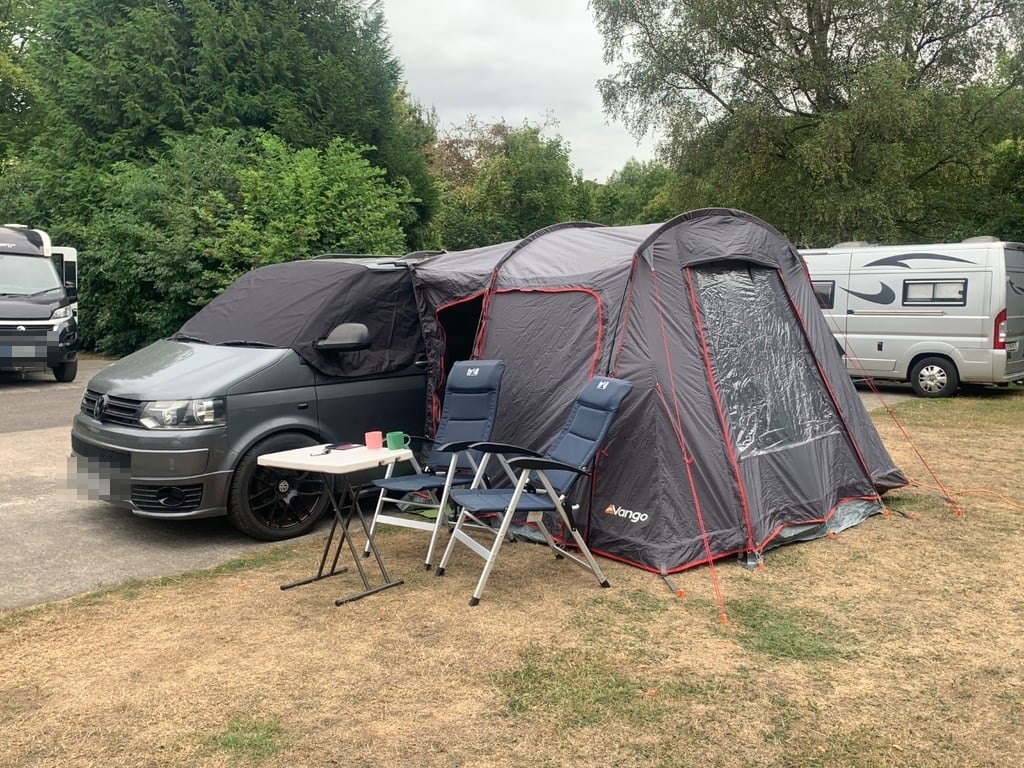
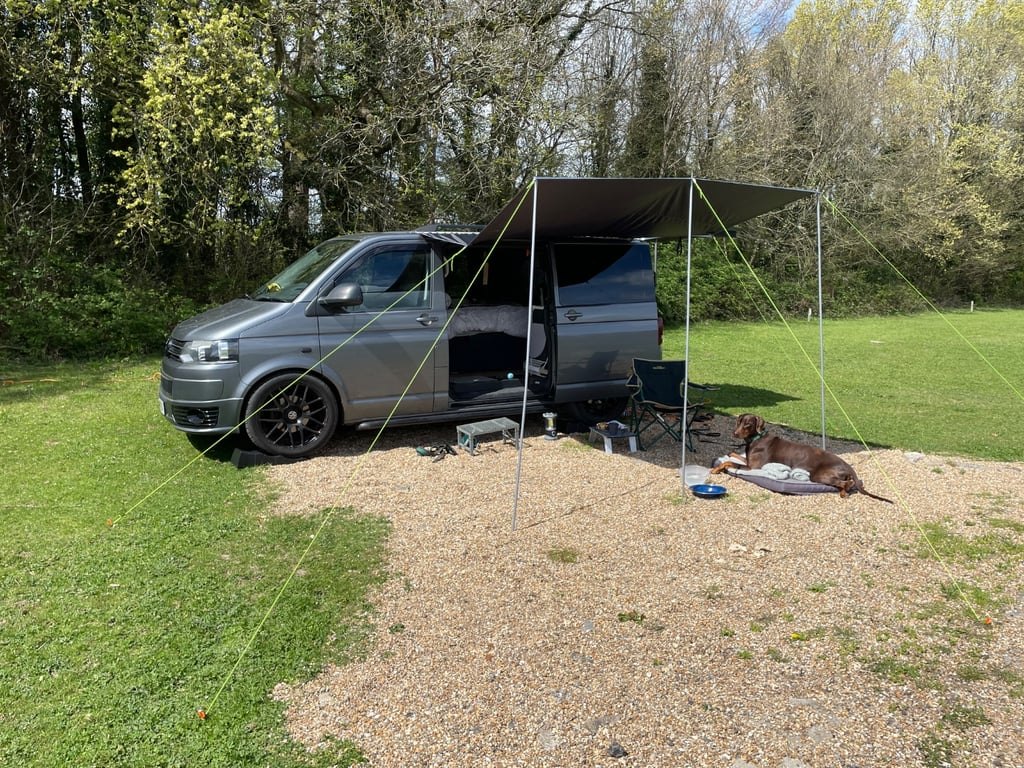
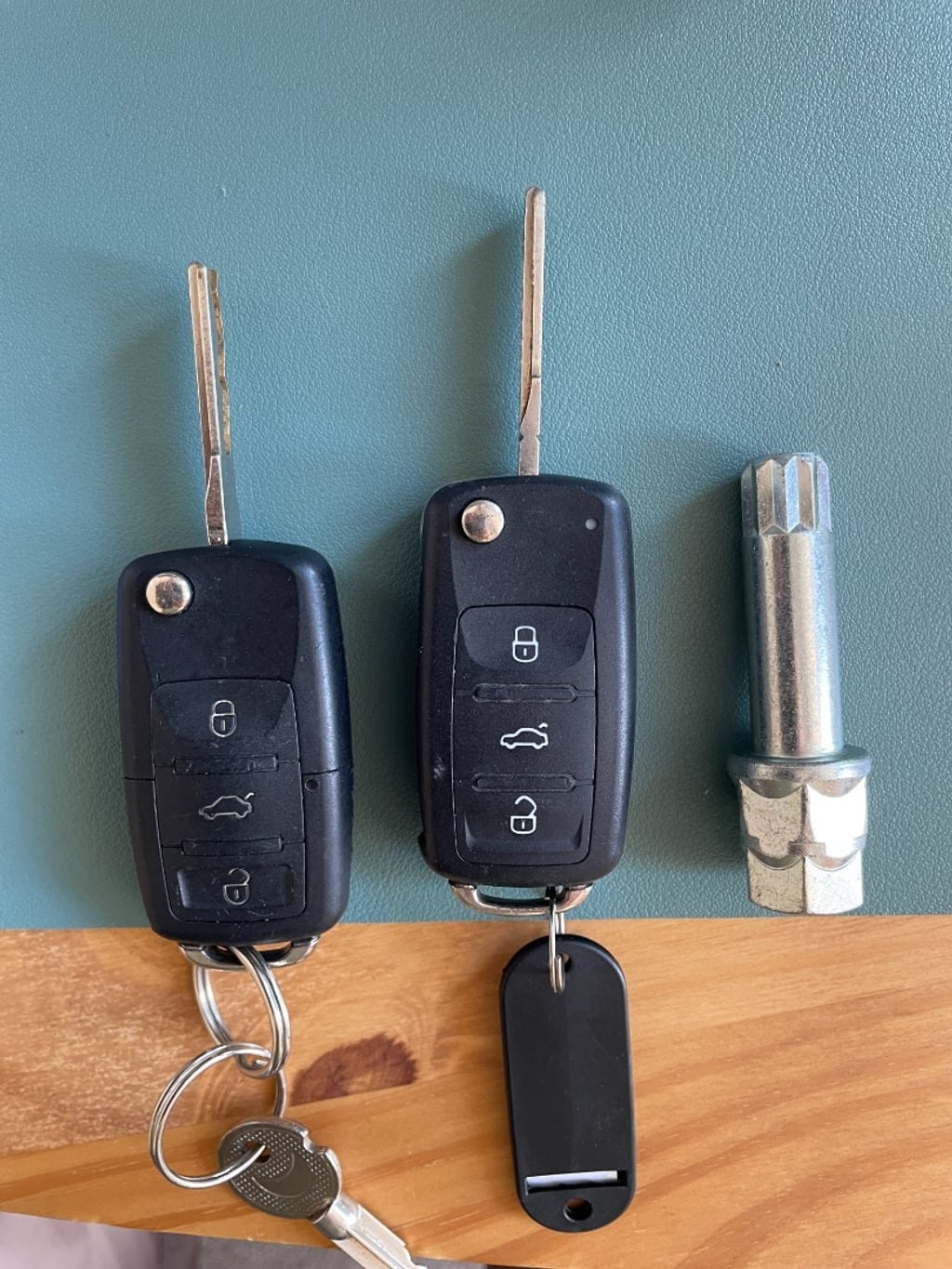
- Faro 2 driveaway awning (bought August 2024), nearside awning rail, VW wrap-around windscreen cover, two sets of keys
- Recent work
- New clutch, flywheel, engine mounts and genuine VW EGR (Nov 2024); new windscreen (Oct 2025); brake pads and discs, four tyres and tow bar (Aug 2024); starter motor and ABS sensor (Jan 2024); all MOT minors cleared Feb 2026
- Known fault, disclosed
- Cab air conditioning needs recharging - stated in the advert from day one
- History
- Five previous keepers, Simon's since 2024; HPI clear - not stolen, not scrapped, no outstanding finance; V5 in hand; MOT to October 2026; cam belt done at 99,136 miles
- Kept
- Worthing, West Sussex
The deal
- Valuation shown online
- £8,000 to the seller (28 July 2026)
- Agreement signed
- 29 July 2026 (90-day brokerage agreement)
- Advertised at
- £9,500 - never reduced
- First offer
- £8,800 (1 August) - declined
- Second offer
- £8,000 (1 August) - declined
- Sold for
- £9,500, the full asking price (agreed 2 August 2026)
- Brokerage fee
- £1,500 flat, success-only - nothing payable up front
- Simon received
- £8,000
- Time on market
- 4 days from going live to a full-price offer accepted; collected on day 7
- Completion
- Buyer travelled 148 miles to Simon's home; payment cleared before the keys and V5 moved
Got a campervan to sell - and no appetite for Marketplace?
Sell my motorhomeWhat a 2010 VW Transporter T5.1 campervan sold for
Simon's 2010 VW Transporter T5.1 was advertised at £9,500 and sold for £9,500 - the full asking price, with no reduction at any point - four days after going live in August 2026. After the flat, success-only £1,500 fee, Simon received £8,000, which was the exact figure he had said he needed before he signed anything.
The more useful number for anyone valuing a similar van is not just the sale price, but what the market offered on the way there. Two buyers bid below asking within hours of each other on the first day of real interest. Because a Motorhome Pig advert is built as the seller's return plus a fixed fee, a below-asking offer comes off the seller's side - so each one arrived on Simon's phone with the figure it would actually have left him. That is what made both answers easy.
| Stage | Price | What Simon would have kept |
|---|---|---|
| Online valuation shown to Simon (28 July) | £8,000 to him | £8,000 |
| Advertised at (29 July) | £9,500 | £8,000 |
| Offer 1, private buyer (1 August) - declined | £8,800 | £7,300 |
| Offer 2, private buyer (1 August) - declined | £8,000 | £6,500 |
| Sold - full asking price (2 August) | £9,500 | £8,000 |
| Motorhome Pig fee (success-only, nothing up front) | £1,500 | - |
| Net paid to Simon | - | £8,000 |
Holding out was worth £700 against the better of the two early offers, and £1,500 against the worse one - and it cost him three days. If you want to see what similar vans are up for today, our current campervans and motorhomes for sale are the honest live comparison.
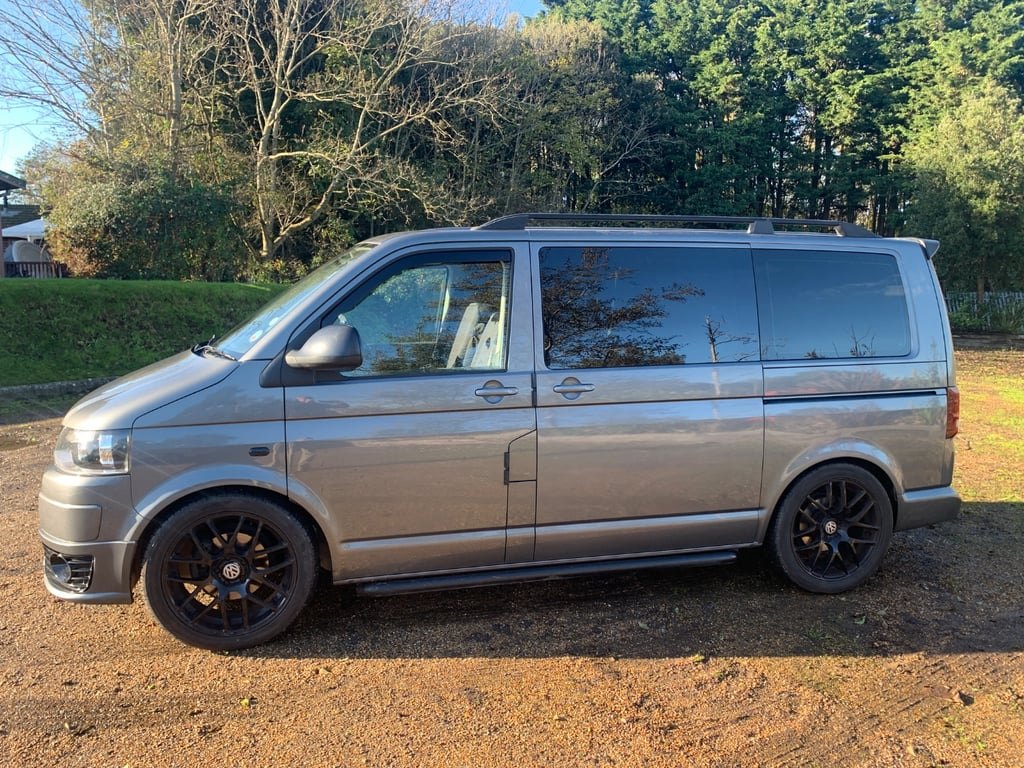
The seller and the campervan
Simon lives in Worthing, on the West Sussex coast. He had owned the Transporter since 2024 and had spent real money keeping it right. He was selling because he needed something with a little more space than a short-wheelbase panel van - a practical decision, not a reluctant one, and he simply wanted it gone without a drama.
The van itself is the kind that rewards an honest advert. It started life as a VW Shuttle and came to Simon already ply-lined, sound-proofed, carpeted and insulated, with a wooden floor and ceiling. In January 2025 he added his own conversion, built for how he actually used it: a single bed frame with three large under-bed cupboards and a rear hatch for ramps and hook-up cable, a fold-out extension that drops onto the single to make a full double, a kitchen unit housing the pots and pans with a gas burner on top and two fold-out tables, and rechargeable sensor-operated strip lights he preferred to the original LEDs.
Crucially, he described it for what it was. The conversion was his own work, and the whole thing could be lifted out to leave a first-rate base vehicle for someone with different plans - a genuine selling point to the right buyer, and one he made sure the advert said out loud. The mechanical record backed him up: a new clutch, flywheel, engine mounts and a genuine VW EGR in November 2024, a new windscreen in October 2025, brakes, four tyres and a tow bar in August 2024, and every minor from the last MOT cleared in February 2026.
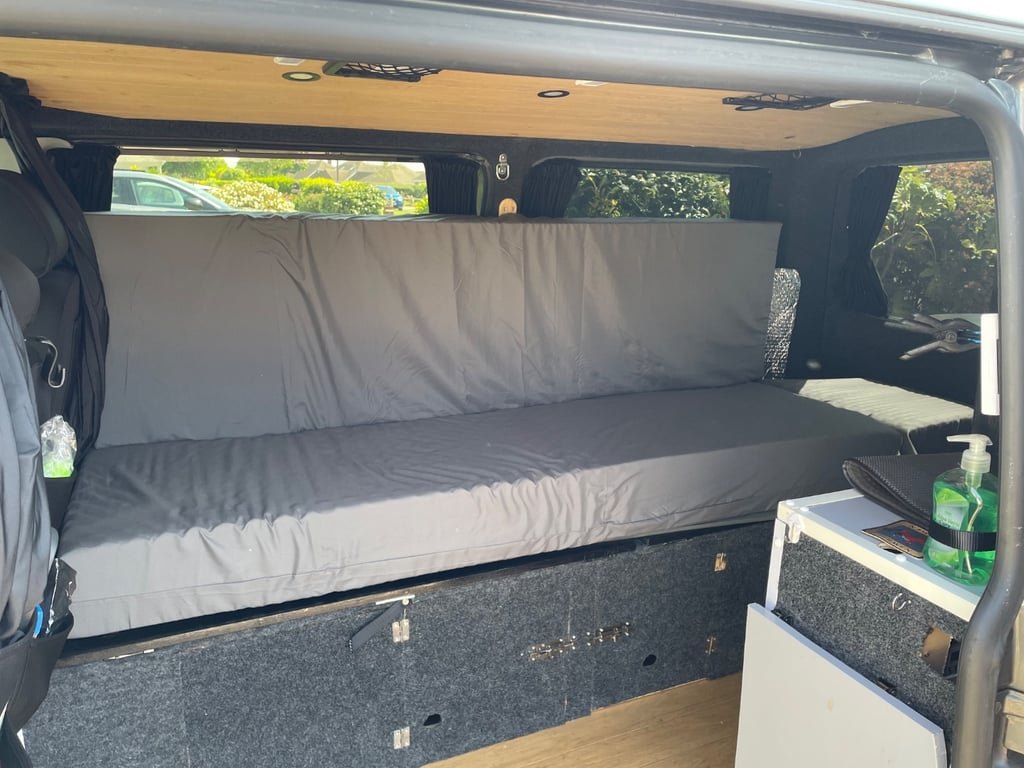
One fault was declared from day one and never quietly dropped: the cab air conditioning needed recharging. It went into the advert as plainly as that, and when a buyer later asked about it, the answer he got was Simon's own - that he never used the air conditioning, would not be recharging it, and that the most basic recharge runs around £70. It is not a glamorous way to answer a question. It is the way that keeps a deal standing up on collection day.
Why he couldn't face Facebook
Simon had not tried anyone else before us, and he had not tried selling it himself either. He had looked at what selling a VW privately involves and decided against it outright. “I couldn't face Facebook,” he told us. “I could not. It would have been a horror story for me.”
His reasoning was clear-eyed rather than squeamish. The second-hand VW market is enormous and noisy - “there's still a voluminous amount of VWs out there,” as he put it, “silly prices for some of them just because they've got a big conversion in them, very high mileage.” Standing out in that crowd on a free marketplace means fielding everything the crowd sends you. He could picture the whole sequence, and he wanted no part of it.
So when he rang us, the very first thing he asked about was the fee. Not the marketing, not the reach - the price of not having to do it himself. He weighed the number against the alternative and decided it was worth paying. That is an unusually honest way to buy a service, and it set the tone for everything that followed.
That fee is well worth avoiding time-wasters, tyre-kickers and non-showers. That's why I went with you.
What Simon was actually paying to avoid, in his own order, and what a brokerage does about each:
- Time-wasters. The endless “is it still available?” messages from people with no intention of buying. Enquiries land with the brokerage instead, and the seller never sees the ones that go nowhere.
- Tyre-kickers. People who come for a look round a nice van on a Sunday. A viewing is only booked once a buyer has been spoken to, screened and put a deposit position in writing.
- Non-showers. Appointments that evaporate after you have cancelled your own plans. Buyers are verified and confirmed before the seller is told to get the van ready.
- The doorstep low-ball. The offer that arrives only once the buyer is standing in your driveway and you have invested a morning. Offers come through the broker, in writing, with your net figure attached, before anyone travels.
It is worth being precise about what that buys and what it does not. Motorhome Pig advertises the van, vets the buyers, handles the negotiation and books the viewing - but the seller still hosts the viewing at their own home. Simon met exactly one buyer, once, on the day the van was collected. That was the deal he wanted, and it is the deal he got. If you want the mechanics step by step, they are set out on how selling with Motorhome Pig works.
The number that mattered: £8,000
Simon put his van through our online valuation on 28 July 2026 and was shown a single figure: £8,000 to him. That is what he had asked for, and it is what he got - but only because he said out loud, early and more than once, that £8,000 was a floor and not an opening position.
The arithmetic behind a Motorhome Pig advert is deliberately simple: the price on the advert is the seller's return plus our fixed fee. Simon wanted £8,000; his van sat in the up-to-£10,000 band, where the fee is a flat £1,500; so it was advertised at £9,500. That relationship was on his screen before he signed, in the brokerage agreement he signed on 29 July, and it never moved.
What made the difference later was that he had been unambiguous about the floor. He was not saying “I'd like eight” and hoping. He was saying that below £8,000 the sale stopped being worth the bother, and he repeated it to Woody, his main contact, in the plainest possible terms. When the low offers arrived, nobody had to guess what he meant.
I said: I need the full asking price. Once I've paid your fee of £1,500, I need eight grand. I don't want seven, seven and a half, to make it worthwhile or half reasonable taking a hit. I need eight grand. And he said no worries, I'll go straight back to them and say that's what you want.
- Name a net figure, not a sticker price. “I need £8,000 in my hand” is defensible; “I want about nine and a half on the advert” is not, because it says nothing about what you will accept.
- Get it into the agreement. Your return is a term of the brokerage agreement, not a note on a call. Simon's £8,000 was written in on day one and is what every offer was measured against.
- Say whether it is a floor or a target. Both are legitimate, and they lead to completely different conversations with a buyer. Tell your contact which one you mean.
- Judge every offer on the net, not the offer. £8,800 sounds close to £9,500. It is £700 short of what you said you needed, and seeing it that way takes the emotion out of the decision.
- Accept that a floor can cost you the sale. Simon knew he might be turning down his only buyers. He was prepared to be wrong, and that is what made the position credible.
Live in a day - and the seller who did the work
Simon started the online form on 28 July, called in with questions the next morning, finished his advert and signed the 90-day brokerage agreement on 29 July. The listing was live on our marketplace the same day, at £9,500, with 23 of his photographs on it - and on Auto Trader, eBay and Gumtree from there.
He was, by any measure, a model seller. The advert we published on day one was already decent; the advert that actually sold the van was substantially his. On 30 July he sat down and wrote us a full rundown - the exact model designation, the gearbox, the two sliding doors, the two sets of keys, the MOT date, the service history, every piece of work he had paid for with the month and year attached, the awning and covers included, and a paragraph explaining how the conversion came out and what you were left with if you took it out. It went into the live advert and was approved the same day.
Then he kept going: more photographs, and a walkaround video. Thirty-one images ended up on the final listing. When the buyer's questions came in, Woody could point at answers that were already there.
The website to actually do it was probably the best I've used across all sorts of platforms for inputting information. When it comes to uploading photos and videos, a lot of similar platforms throw spanners in the works - I never had any issue.
The Transporter went onto Motorhome Pig's own marketplace alongside Auto Trader, eBay and Gumtree, all inside the one success-only fee. Auto Trader is where this particular buyer found it, and a private seller would have paid for that listing separately. Over the four days it was live, the listing took 127 views on motorhomepig.com alone.
Two offers, both declined
Real interest arrived on 1 August, three days after going live, and it arrived twice in one evening. One buyer offered £8,800. Another, who had found the van on Auto Trader, offered £8,000 with a note that the air conditioning “could be expensive”. Simon declined both.
Neither decision was difficult once the numbers were put the right way round. £8,800 would have left Simon £7,300. £8,000 would have left him £6,500. Against a stated floor of £8,000, both were out, and he said so without hesitation on the phone to Woody the next morning.
The second buyer's questions were the more interesting part of that call. He wanted to know about the cam belt - it had been done in 2021, and Woody went to the paperwork and came back with the mileage at the time: 99,136, so about 25,000 miles ago, and not due again. And he wanted to know whether the air conditioning fault hid a leak. The honest answer, straight from Simon, was that he had simply never used the air conditioning, was not going to spend money recharging it to sell the van, and that a basic recharge is around £70 anyway. All of it went back to the buyer as it was.
Two mechanical worries could have knocked £1,000 off this van between them. Both were answered with a specific, checkable fact - a cam-belt mileage from the service records, and a realistic cost for the air-con recharge - rather than reassurance. A buyer who gets a straight answer to a hard question tends to believe the easy ones too.
The turnaround: full asking price, four hours later
On the afternoon of 2 August, the buyer whose £8,000 had been turned down that morning came back and offered the full £9,500. He had spent the day costing up the few things he wanted to do to the van, decided it worked within his budget, and went to asking price. Simon accepted on the spot.
This is the part of a brokered sale that a private seller almost never gets. On Marketplace, a rejected offer usually ends the conversation - there is nobody to carry the “no” back without it sounding like a slammed door, and nobody for the buyer to reopen the conversation with two hours later without losing face. Here, there was a named person in the middle of it whose job was to keep talking to both ends. Woody had relayed Simon's position plainly, and stayed in touch with a buyer who was still interested.
What tipped it, in the buyer's own account to Woody, was that he had watched the walkaround videos and gone through the detail. The advert Simon had spent an evening writing did the arguing for him.
I do come with good news. Mark, who put in the offer of the £8,000, has come back to me and said he'd be willing to pay the full price of the £9,500. He's chalked up a few things he wants to do to the van and the costs, and it does actually work within his budget.
Simon's reply was one word: “Delighted.” The van was marked sold that evening, the advertising was pulled down across all the platforms, and a viewing was booked for Wednesday 5 August at two o'clock.
One viewing, one buyer, 148 miles
Exactly one buyer ever came to see this van, and he travelled 148 miles - about two and a half hours - to do it. He was verified, and had to read back a one-time PIN over the phone, before Simon's address was released to him on the morning of the viewing.
The address is the part sellers worry about, and rightly. It is never on the advert. It is not released when a viewing is requested, and it is not released when a viewing is accepted. The buyer is called, verified, and has to read back a unique PIN for that appointment before the location is shared - and only then does the seller get a text saying, in as many words, that this is the green light to get the van ready. Simon got his at 11:13 on the morning of 5 August. Before that point, the standing instruction is the opposite: don't prepare anything yet.
He also did something practical in the gap. He had a second, unrelated appointment booked for the same Wednesday afternoon, and before cancelling it he texted to ask whether the buyer had actually committed - a completely fair question from someone who had spent the previous fortnight hearing about no-shows. Woody rang him back that morning to confirm it was going ahead before he cancelled anything. Simon then offered to collect the buyer from the local station in the van itself if he was coming by train, and noted that there was three-quarters of a tank in it so he would get home comfortably.
Before I cancel an appointment that I have on Wednesday, can you let me know if he has paid his deposit so I know he is serious re attending. Hope that makes sense.
A viewing request is not a viewing. Between the two sit a phone call, an identity check and a PIN the buyer has to read back before a seller's address is shared. It is a small amount of friction that removes the two things private sellers dread most - strangers with your address who never intended to come, and a morning spent cleaning a van for someone who was never real.
Collection day and getting paid
The buyer arrived at two o'clock on Wednesday 5 August, went over the van, paid Simon his £8,000 by bank transfer, and drove it away. The V5 was transferred once the money was in. Our fee had already been settled separately, so nothing about the fee touched the handover.
The order of events on collection day is deliberate and dull, which is the point: satisfy yourself, pay, then the keys and the V5 move. The team called the day before to confirm everything was still on, called again on the morning, and the whole thing took the afternoon. Simon rang Woody as soon as the buyer had pulled off the drive.
He also asked, once more, the question he had asked at the start - whether anything else was owed now that the van had gone. It was not. The flat £1,500 was the only fee, it was already dealt with, and there was nothing to pay on top. He wanted to hear it plainly from the person he had dealt with all week, and he did.
Mark's just gone, very happy with his van. I was very, very pleased that when I said I need £8,000, which is a £9,500, you listened and went back and told him that. A lot of people wouldn't - they just want the sale. What I wanted, I got.
The result
Advertised at £9,500 on 29 July. Sold at £9,500 on 2 August. Collected and paid on 5 August. Simon received £8,000 - the exact figure he had named before he signed anything - and paid a flat £1,500, which would have been nothing at all had the van not sold.
Four days from live to a full-price offer accepted is fast - the median across Motorhome Pig sales is around 36 days - and we would rather say why than pretend it is typical. The van was priced sensibly against its own market rather than against hope. It was genuinely well kept, with receipts to prove it. The advert was unusually thorough because the seller wrote most of it. The known fault was disclosed rather than discovered. And the seller was clear about his floor early enough for it to be defended rather than discovered mid-negotiation.
What Simon actually bought, though, was not speed. It was distance. He never answered an “is it still available?” message, never had a stranger on his drive looking for a discount, and met precisely one buyer - the one who had already agreed to pay him what he asked.
Want your number, not whatever the doorstep offers? Start with a free valuation.
Sell my motorhomeIn Simon's own words
Two days after the van was collected, Adam from our media team rang Simon for honest feedback. This is that conversation, lightly edited for length and clarity, published with his consent.
AdamMotorhome Pig media team
SimonSeller
AdamMotorhome Pig media team
SimonSeller
AdamMotorhome Pig media team
SimonSeller
AdamMotorhome Pig media team
SimonSeller
AdamMotorhome Pig media team
SimonSeller
AdamMotorhome Pig media team
SimonSeller
AdamMotorhome Pig media team
SimonSeller
AdamMotorhome Pig media team
SimonSeller
AdamMotorhome Pig media team
SimonSeller
Edited for length and clarity from a recorded post-sale interview between Simon and Adam of the Motorhome Pig media team on 7 August 2026, published with Simon's consent.
Simon's review
Drawn together from that interview and published with his consent, this is Simon's verdict in his own words.
I did my research and you came up. I'd never heard of you, and I quite liked the freshness of it and how you did it. Then I rang up, explained the bracket I was in and what the fee would be, and I thought: do you know what, that fee is well worth avoiding time-wasters, tyre-kickers and non-showers. That's why I went with you. The website to actually do it was probably the best I've used across all sorts of platforms for inputting information. When it comes to uploading photos and videos, a lot of similar platforms throw spanners in the works - I never had any issue at all. I couldn't face Facebook. It would have been a horror story for me. Everyone puts stuff on there and it's "is it still available?" - constant time-wasting - and then someone comes along and says "oh yes, it's really nice, but I'll only give you this." Woody was a really good guy, above and beyond, because he just listened. I said I need the full asking price: once I've paid your fee of £1,500, I need eight grand. I don't want seven, seven and a half. He said no worries, I'll go straight back to them and say that's what you want - and one of them came back and said that's fine. Every time I phoned up, a real person spoke to me. When they said they'd phone me back, they phoned me back. Woody dealt with all of them. I didn't have to speak to them - all that was taken out of my hands, and that is worth the fee. You run a good business, so you can charge a premium price, and I accept that. You did exactly what you said on the tin, which seldom happens. Five star. And please, tell Woody he did really well.
What this case study shows about our service
One sale is not a statistic, but it is a faithful, end-to-end illustration of what a brokerage is actually for - and what the fee buys, in the words of a seller who asked about the fee before anything else.
- You never deal with the buyers. Every enquiry, question and offer went through the team. Simon met one buyer, once, on collection day - the only one who had agreed to pay his price.
- Your floor is a term, not a hope. The £8,000 Simon said he needed was written into his agreement on day one and is what every offer was measured against.
- We never accept an offer for you. Both below-asking offers came to Simon with his net figure attached, and both were his to decline.
- A “no” doesn't end the conversation. Because someone was in the middle, the buyer who was turned down at £8,000 could come back four hours later at £9,500 without anyone losing face.
- No upfront cost, flat success-only fee. £1,500 in Simon's band, payable only because it sold, with nothing on top - and he asked us that question twice and got the same answer.
- Your address is released last. Never on the advert; shared only after the buyer is verified and reads back a one-time PIN, and only then are you told to get the van ready.
- Faults are disclosed, not discovered. The air-con needing a recharge was in the advert from day one, and the buyer's question about it was answered with a real cost, not a reassurance.
- The advert is yours to improve. Simon emailed a full spec rundown and more photographs; it was written into the live listing and approved the same day, ending at 31 images and a walkaround video.
- Real people answer the phone. Simon called us five times over nine days and spoke to a person every time - and when we said we would ring him back, we rang him back.
- Advertised everywhere at once. Our marketplace plus Auto Trader, eBay and Gumtree, inside the one fee - and Auto Trader is where this buyer found the van.
Selling a campervan and dreading the messages? That's the bit we take off you.
Sell my motorhomeFull timeline
From the first online valuation to a collected, paid-for van and the post-sale interview - nine days end to end, four of them on the open market.
28 July 2026
Online valuation
Simon puts the 2010 VW Transporter through the online valuation and is shown a single figure: £8,000 to him. He stops at the photo step to think about it.29 July 2026 - Day 0
Call, advert built, agreement signed
Simon rings in with questions and spends eleven minutes going through how a brokerage works. He finishes his advert, signs the 90-day agreement, and the listing goes live the same day at £9,500 with 23 of his photographs.29 July 2026
Vehicle history check - pass
A full history report comes back clear: not stolen, not scrapped, no outstanding finance, MOT valid to October 2026.30 July 2026
Simon rewrites his own advert
He emails a detailed spec rundown - model designation, every piece of recent work with dates, the awning and covers included, and how the DIY conversion comes out - plus more photographs. It goes into the live advert and is approved the same day.31 July 2026
Identity verified, seller dashboard live
Simon's ID check is approved and he's into his seller dashboard, where he can track views, enquiries and offers, and request changes to the advert himself.1 August 2026
Two offers in one evening
A private buyer offers £8,800. A second, who found the van on Auto Trader, offers £8,000 with a note that the air conditioning 'could be expensive'.2 August 2026 (morning)
Both offers declined
Woody calls Simon with both offers and the net each would leave him - £7,300 and £6,500 against a stated floor of £8,000. Simon declines both. The buyer's cam-belt and air-con questions are answered from the paperwork: belt done at 99,136 miles, and a basic recharge is around £70.2 August 2026 (afternoon)
Full asking price accepted
The buyer comes back at the full £9,500, having costed up what he wanted to do to the van. Simon accepts. The van is marked sold, the advertising is pulled from every platform, and a viewing is booked for 2pm on Wednesday 5 August.3 August 2026
Simon checks before cancelling his own plans
He texts to ask whether the buyer has genuinely committed before he cancels a separate Wednesday appointment. Woody calls him back that morning to confirm it's going ahead.5 August 2026, 11:13
Buyer verified, address released
The buyer is verified and reads back his one-time appointment PIN. Only then is Simon's address shared, and Simon gets the green light to prepare the van.5 August 2026, 14:00
Collection, payment and handover
The buyer arrives after a 148-mile journey, goes over the van, and pays Simon £8,000 by bank transfer. The V5 is transferred once the money is confirmed. Simon rings Woody as soon as he's driven off.7 August 2026
Post-sale interview and five-star review
Adam from the media team interviews Simon for honest feedback. 'You did exactly what you said on the tin, which seldom happens.'
Frequently asked questions
How do I sell a campervan without using Facebook Marketplace?
Use a brokerage that advertises the van for you and stands between you and the buyers. That is exactly why Simon chose Motorhome Pig for his 2010 VW Transporter T5.1: he had decided in advance that he could not face Marketplace - the "is it still available?" messages, the tyre-kickers, the no-shows and the low-ball offers at the door. Motorhome Pig wrote and built the advert, placed it on its own marketplace plus Auto Trader, eBay and Gumtree, fielded every enquiry, screened the buyers, ran the negotiation and booked the one viewing that mattered. Simon never spoke to a single buyer until one turned up to collect the van - which sold at its full £9,500 asking price four days after going live.
What is a 2010 VW Transporter T5.1 campervan worth?
Simon's sold for £9,500 in August 2026 - the full advertised asking price, with no reduction - and that was a 125,000-mile T30 SE 140 TDI short-wheelbase with a removable DIY conversion, a driveaway awning included, and cab air conditioning that needed recharging. It is worth knowing what the market actually offered along the way: two buyers bid below asking first, at £8,800 and £8,000, and both were turned down before one of them came back at the full price. Condition, honest history and a properly detailed advert are what carried the difference.
How much does Motorhome Pig charge to sell a campervan?
A flat, success-only fee with nothing to pay up front - you pay nothing at all unless and until the van sells. Simon's van sat in the up-to-£10,000 band, so the fee was a flat £1,500. It was advertised at £9,500, which is his £8,000 plus the £1,500 fee, and the figure he would keep was on his screen before he agreed to anything. He asked Woody directly whether anything else came on top after the sale, and was told plainly that it did not: the £1,500 was the only fee he would ever pay.
Can I set a minimum price I'll accept when selling through a broker?
Yes, and Simon's sale is a clean example of why it matters. He was explicit from the start: he needed £8,000 in his hand, not £7,000 or £7,500, or the sale was not worth doing. That figure was written into his brokerage agreement as his return, the van was advertised at £8,000 plus the £1,500 fee, and when two buyers came in below it the team relayed his position rather than leaning on him to take the money. Offers are only ever accepted by the seller - Motorhome Pig never accepts one on your behalf.
Does the broker accept offers on my behalf?
No. Every offer is passed to the seller with the exact net figure attached, and only the seller can accept or decline it. Both of the below-asking offers on Simon's Transporter were relayed to him by phone with what each would actually have left him, and he declined both. Four hours after the second was turned down, that same buyer came back at the full £9,500 - which Simon accepted.
Who deals with the buyers - me or the broker?
The broker. Enquiries land with Motorhome Pig, not with the seller: the team answers the buyer's questions, relays anything only the owner can answer, screens who is genuine, negotiates, and books the viewing. Simon's own summary of what he was paying for was exactly this - "Woody dealt with all of them. I didn't have to speak to them. All that was taken out of my hands." Buyers only meet the seller at a confirmed viewing, at the seller's own home, at a time the seller has approved.
Do I have to let strangers come to my house?
Only one, and only once you have said yes. The seller's address is never on the advert and is not released when a viewing is requested. The buyer has to be verified first and read back a one-time PIN over the phone before the address is shared - and only then does the seller get a text confirming the viewing is going ahead and it is safe to get the van ready. On Simon's sale exactly one buyer was ever given his address, on the morning of the day he collected the van.
How long does it take to sell a VW Transporter campervan?
Simon's took four days from going live to a full-price offer accepted, and seven days from live to the van being collected and paid for. That is fast even by our standards - the median across Motorhome Pig sales is around 36 days - and it was helped by a sharp asking price, an unusually thorough advert that Simon wrote much of himself, and a well-kept van with its receipts in order.
What happens if a buyer offers less than my asking price?
It comes to you with the arithmetic done. Because a Motorhome Pig advert is the seller's return plus a fixed fee, a below-asking offer comes off the seller's side of the deal - so on Simon's van the £8,800 offer would have left him £7,300 and the £8,000 offer would have left him £6,500, against the £8,000 he had said he needed. Seeing it in those terms is what made both decisions obvious, and he declined them without hesitation.
Is this case study and the review genuine?
Yes. It is built from Motorhome Pig's own CRM, contract and seller-dashboard records for this sale, and from a recorded post-sale telephone interview published with Simon's explicit consent. Every figure - the valuation, the asking price, both declined offers, the fee, the net and the dates - is stated as recorded at the time. Personal details such as the registration (digitally obscured in the photographs), address, contact details and the private buyer's name have been omitted.
About this case study
This case study is based on Motorhome Pig's own CRM, contract and seller-dashboard records for this sale, on Simon's messages and calls with the team, and on a recorded post-sale telephone interview published with his explicit consent. Figures - the valuation, the asking price, both declined offers, the fee, the net figure, the view count and the dates - are stated as recorded at the time. Quotes have been lightly edited for length and clarity without changing their meaning.
To protect privacy we have omitted personally identifying details, including the vehicle registration (digitally obscured in the photographs, along with a neighbouring vehicle's plate in one campsite shot), contact details, Simon's exact address and the private buyer's name. The photographs are Simon's own, taken during his ownership and published with his consent. Published 7 August 2026.
How selling with Motorhome Pig works
The step-by-step version of everything Simon went through.
Sell your campervan or motorhome
Free to list, and a flat fee only if it sells.
Compare us with other ways to sell
Motorhome Pig vs Motorhome Depot, Marketplace and Auto Trader.
More customer case studies
Other real motorhomes and campervans sold through Motorhome Pig.
Motorhomes for sale near Brighton & Hove
What's available now along the Sussex coast, near where Simon sold.
Meet the team
The people Simon dealt with - including Woody, Ben and Alison.
Sell your campervan the way Simon did
One central UK team fields every enquiry, screens every buyer and brings you offers with your net figure attached. No upfront cost, a flat success-only fee - and you never answer an 'is it still available?' message again.
No upfront cost · No sale, no fee · One central UK team, 7 days a week