
How to sell a self-converted campervan when there is no book price
They built it themselves, for the two of them. Then four grandchildren arrived and a two-berth stopped working. What followed is the problem every self-builder meets at the end: nobody can tell you what your van is worth, because there is nothing quite like it. This is the complete account of how that price was found, told with the seller's own words, his own photographs, and the parts that did not go smoothly.
Written by the Motorhome Pig team · Halifax, West Yorkshire · Reviewed by the Motorhome Pig team
· Last updated 28 August 2026
Figures verified against Motorhome Pig's sales record, listing status history and CRM.
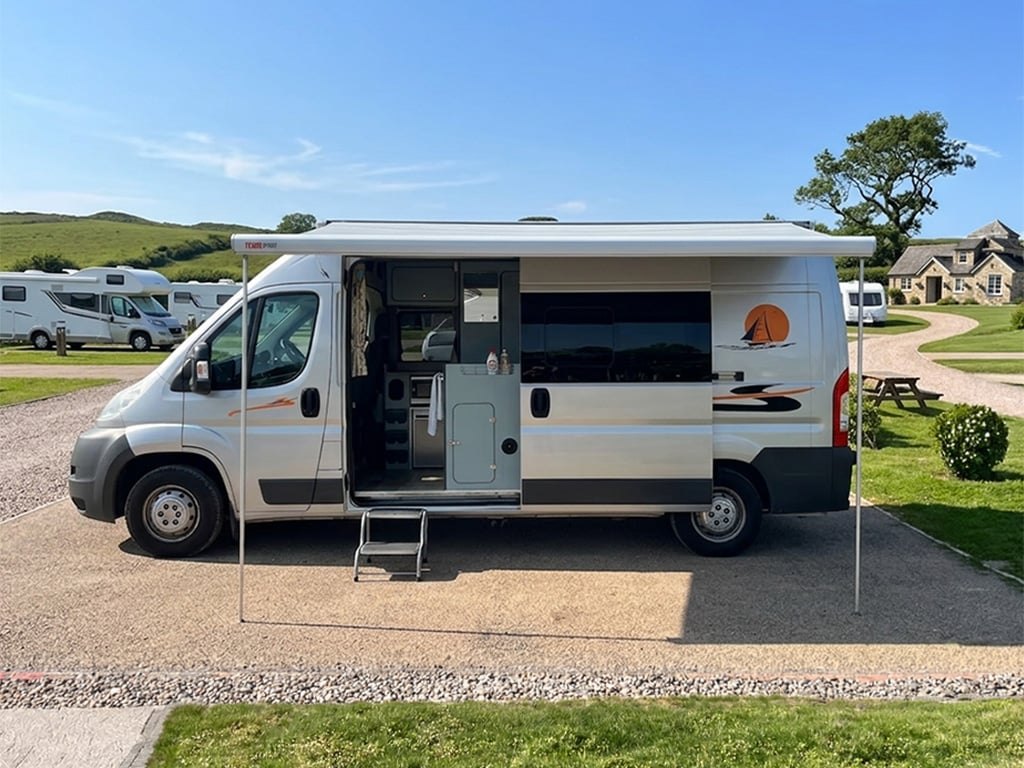
Summary: A 2014 Peugeot Boxer converted into a campervan by its own owners was listed in Staffordshire at £23,000 and sold for £19,500 in 55 days through Motorhome Pig, returning £17,500 to the seller after a fixed £2,000 fee. A self-build has no published book value and attracts no remote cash offer, so the advert itself has to carry the proof: the photographs, the written specification and the receipts are what set the price.
The seller: a Staffordshire couple who converted a 2014 Peugeot Boxer panel van into a two-berth campervan themselves, and named it Connie. They were selling because their family had outgrown it: four grandchildren had arrived since the build.
The challenge: a self-conversion has no book price. No published guide covers it, no dealer will bid on it remotely, and the comparable sales run from £11,500 to £26,995 for vans of a similar age and mileage. Nobody could tell them what it was worth.
What the seller did: supplied 40 photographs 15 minutes after his first contact, and a 900-word written specification of the entire build 20 minutes after that. When Motorhome Pig's own advert copy later misdescribed his MOT history, he caught it and corrected it.
The result: listed at £23,000, reduced three times by the seller from his own dashboard, and sold at £19,500 after a single viewing. He received £17,500. Asked what he would tell a friend, he said: “go for it.”
The sale at a glance
- Sold price for a DIY conversion
- £19,500Sold price for a DIY conversion
- Advertised to sale agreed
- 55 daysAdvertised to sale agreed
- Paid to the seller
- £17,500Paid to the seller
- Was all it took
- 1 viewingWas all it took
The campervan
- Make & model
- 2014 Peugeot Boxer L3H2 Professional, converted to a campervan by its owners
- V5 body type
- Motor Caravan - the conversion met the DVLA standards for reclassification
- Base vehicle
- 2.2 litre diesel, 130bhp, manual, silver
- Layout
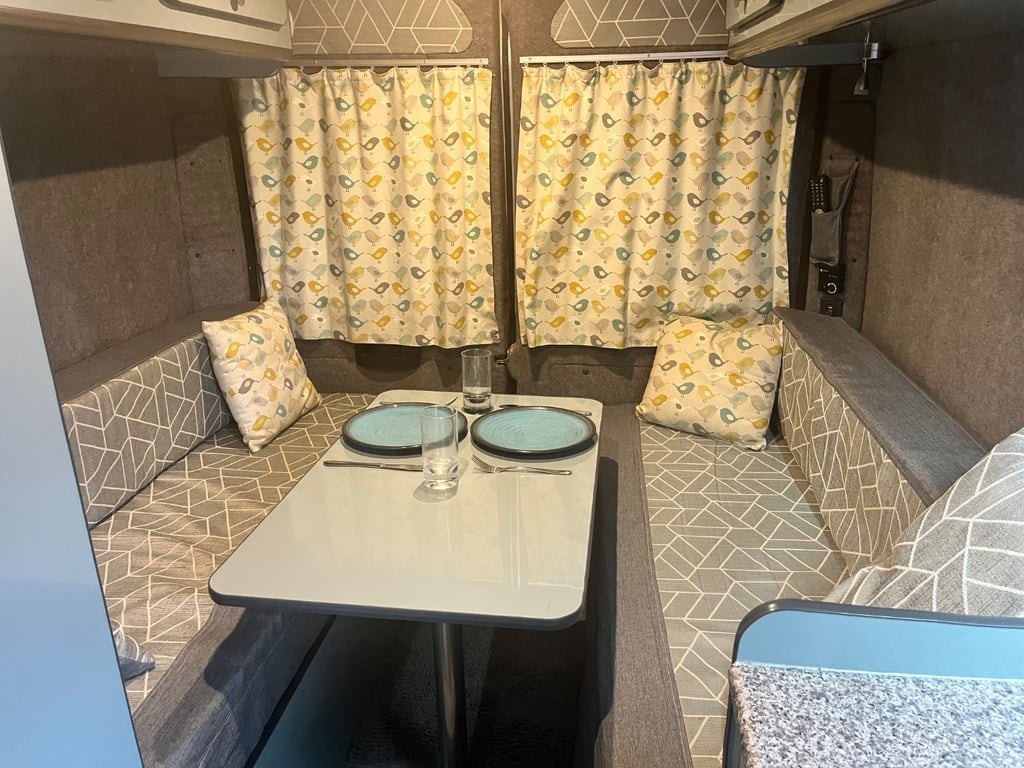
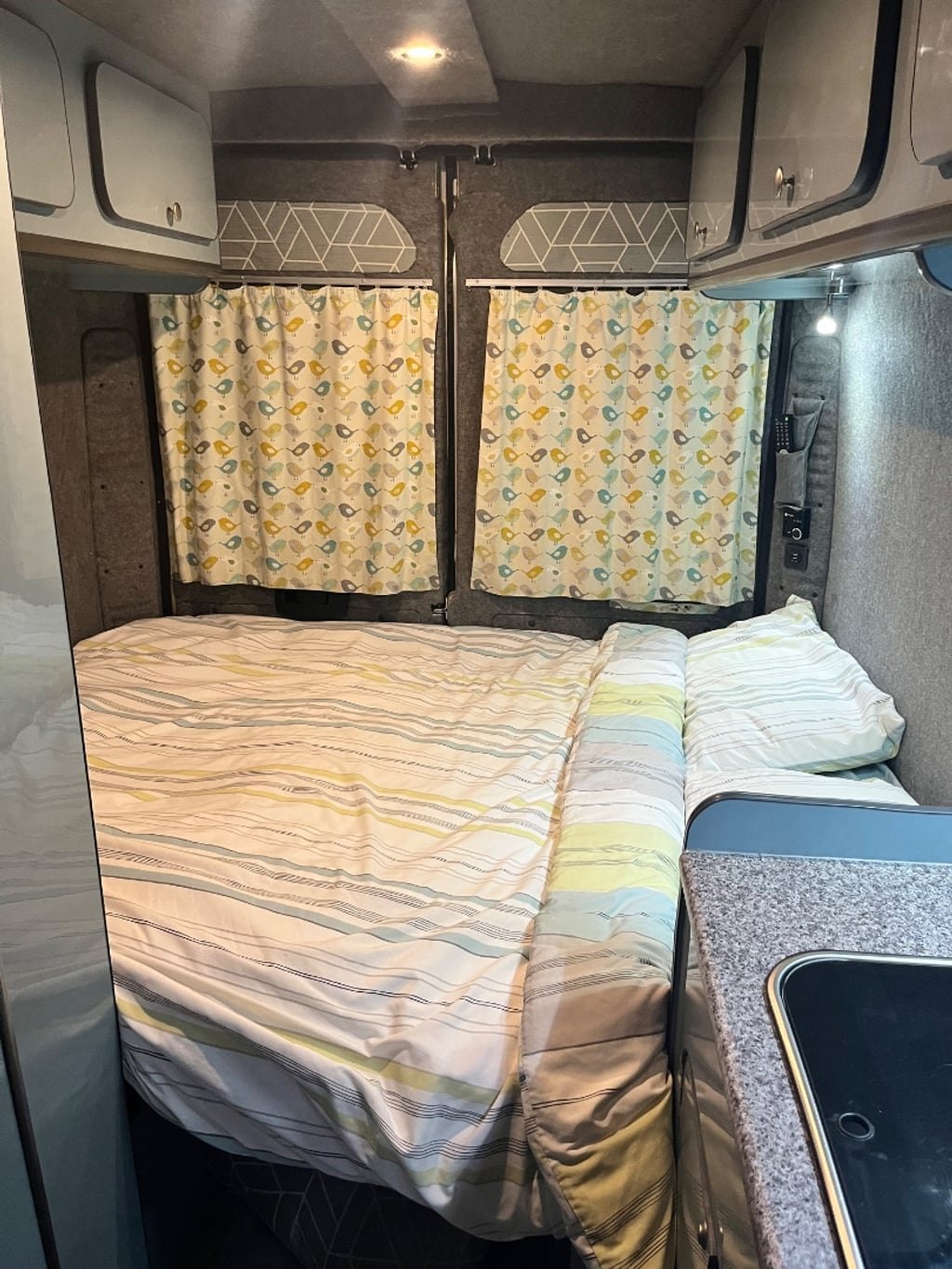
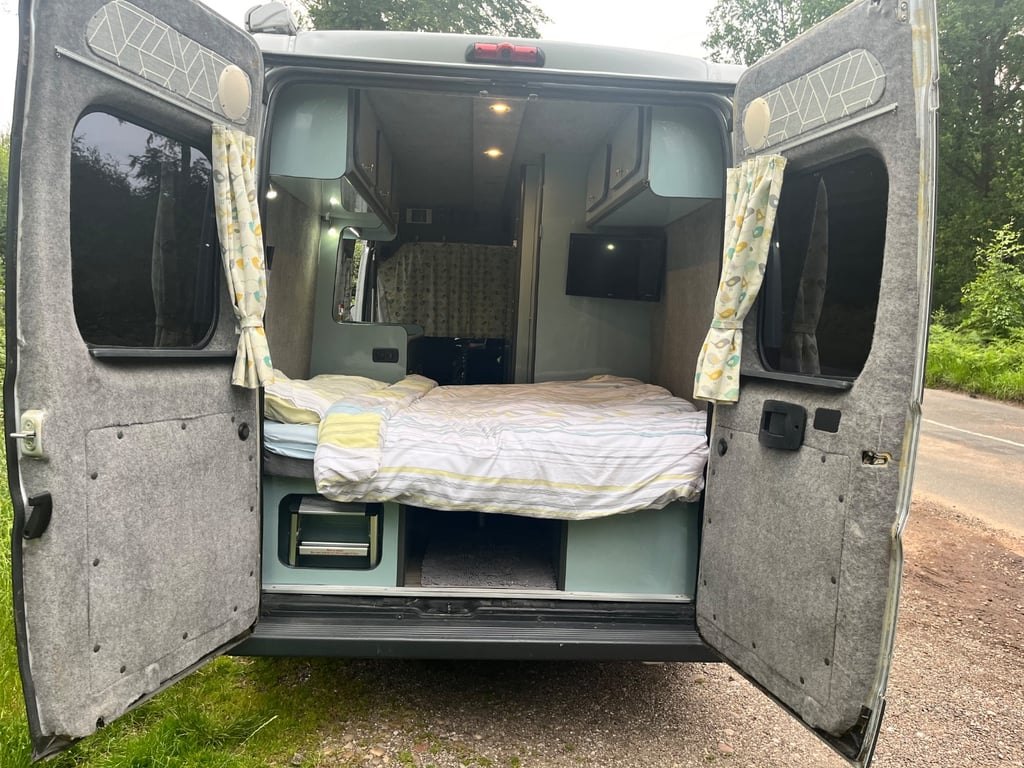
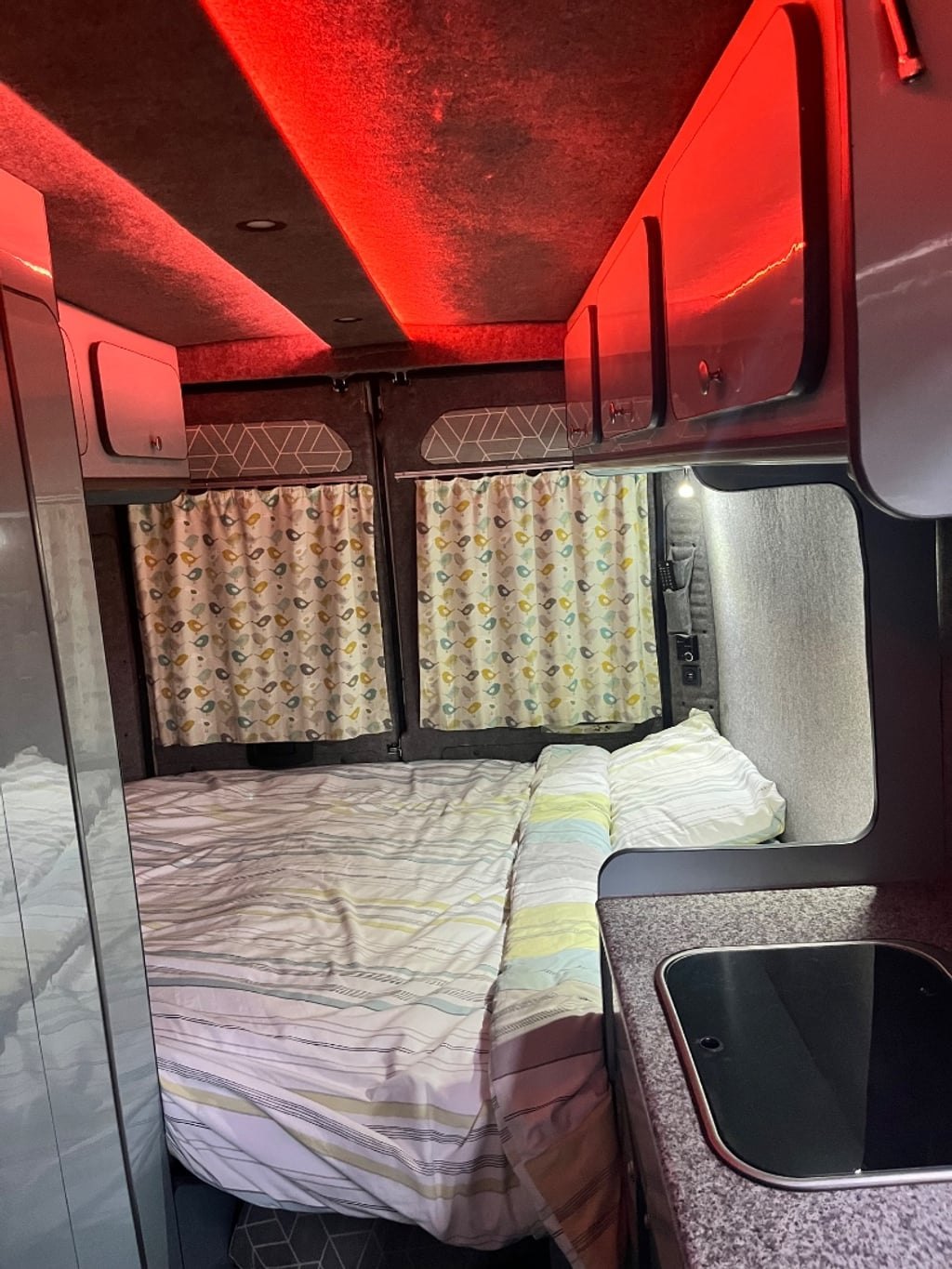
- 2 berths, 2 travel belts; rear seats convert to a 6ft by 5ft bed on a 6in memory-foam mattress
- Mileage
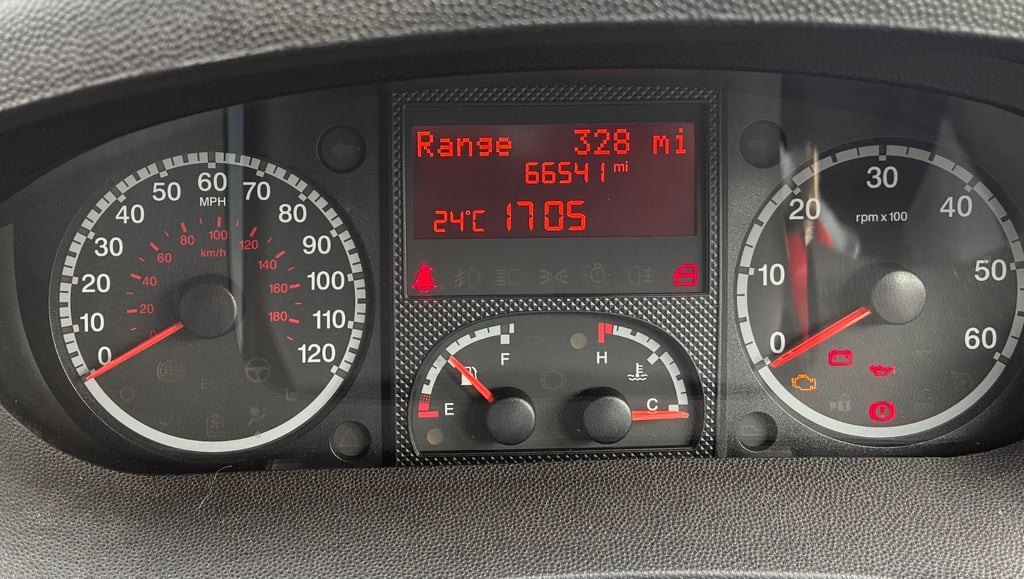
- Approx. 66,000 miles (66,246 at its last MOT)
- Kitchen
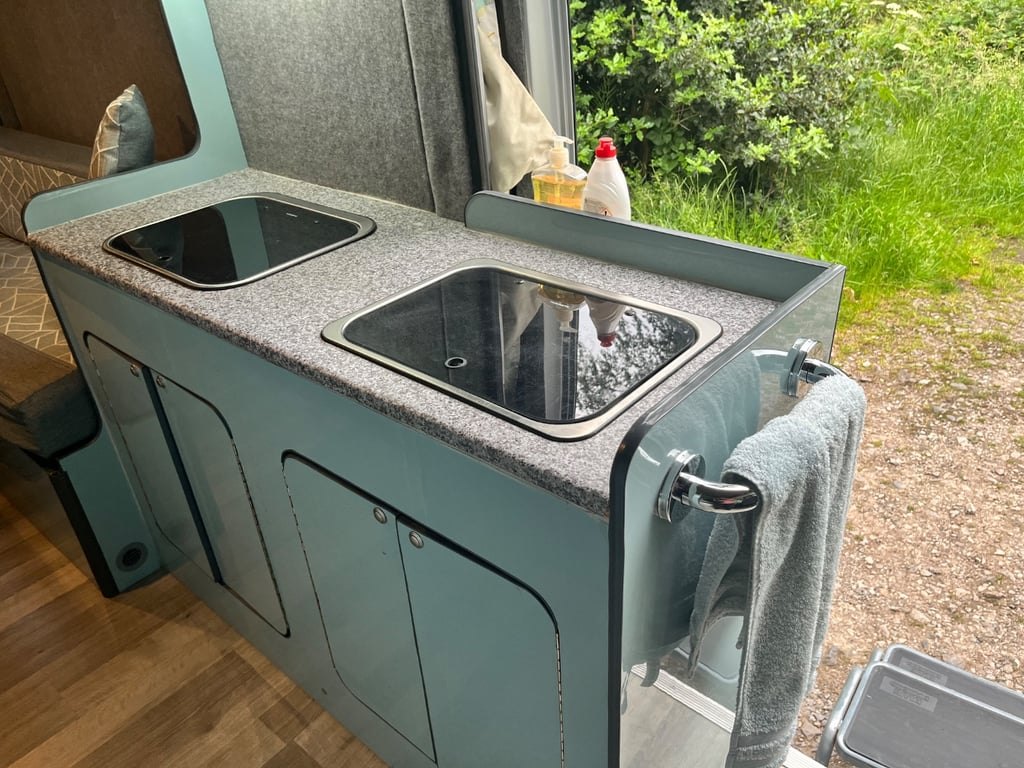
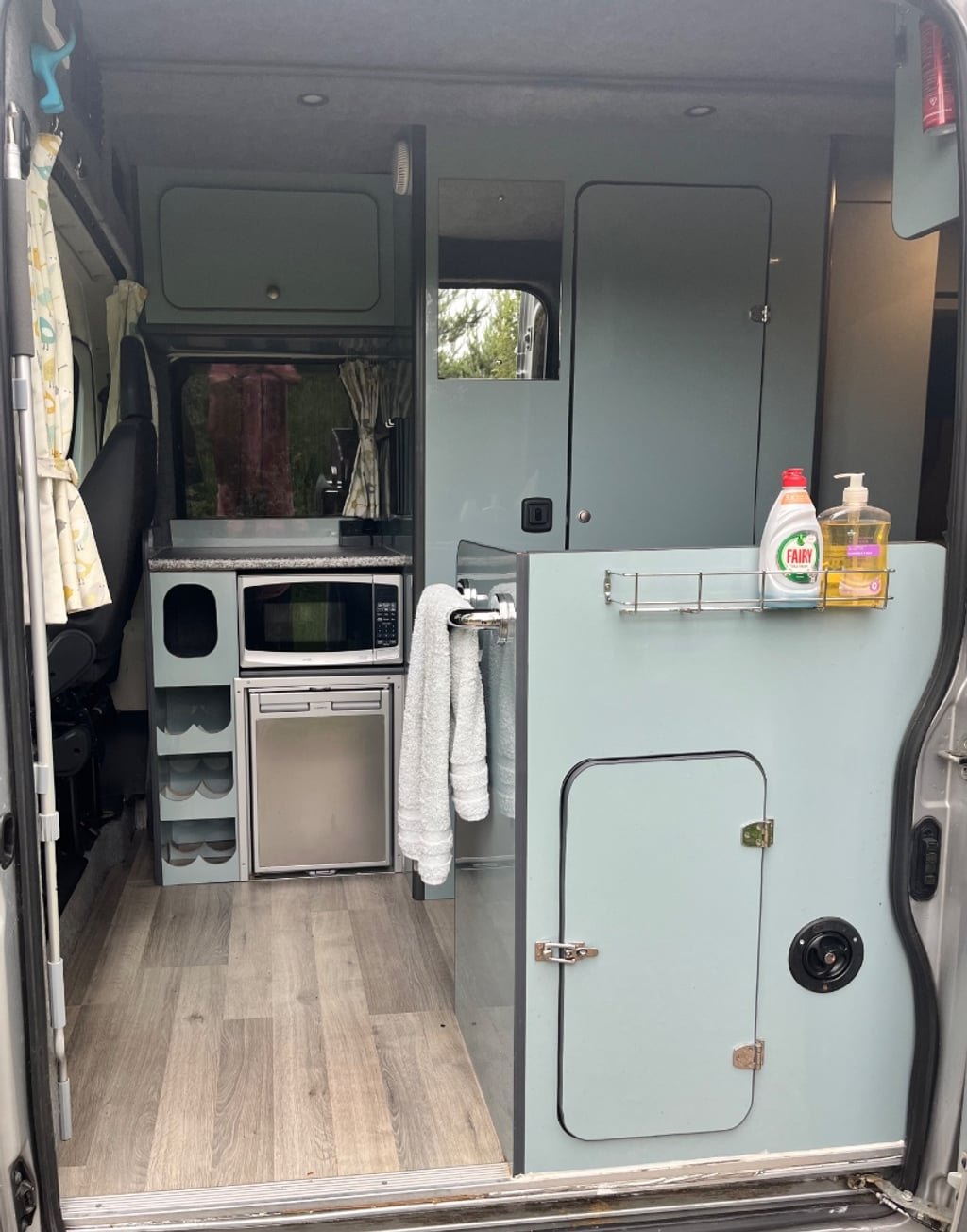
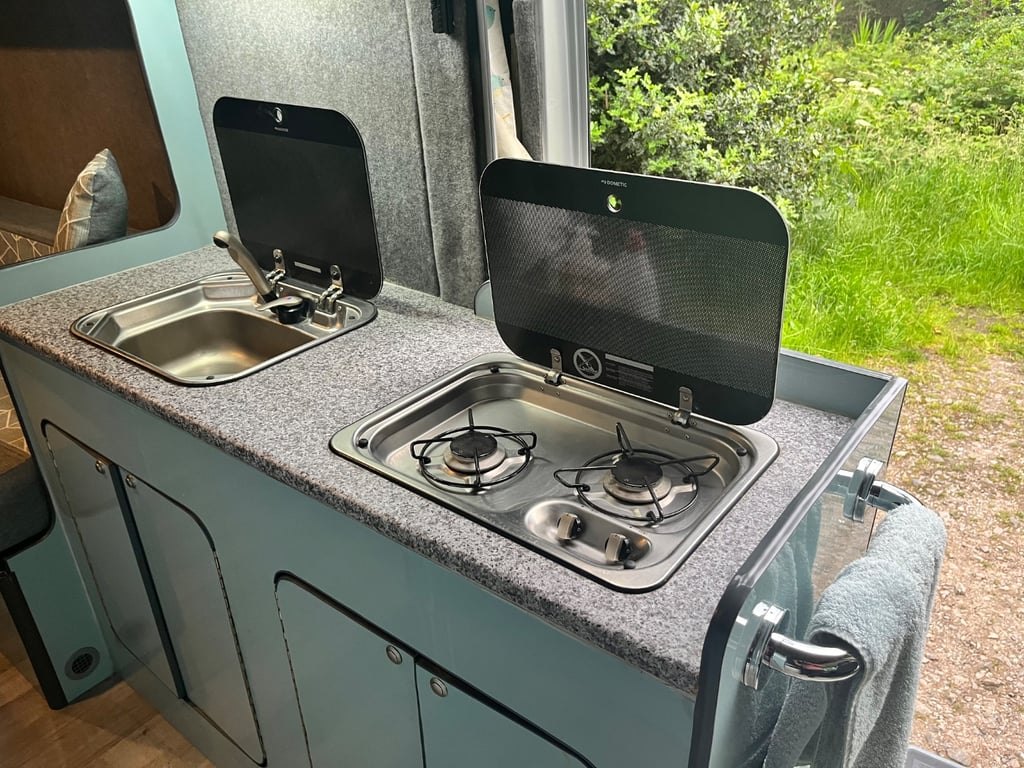
- Two-ring gas hob, sink with hot and cold running water, microwave, 12V compressor fridge
- Washroom
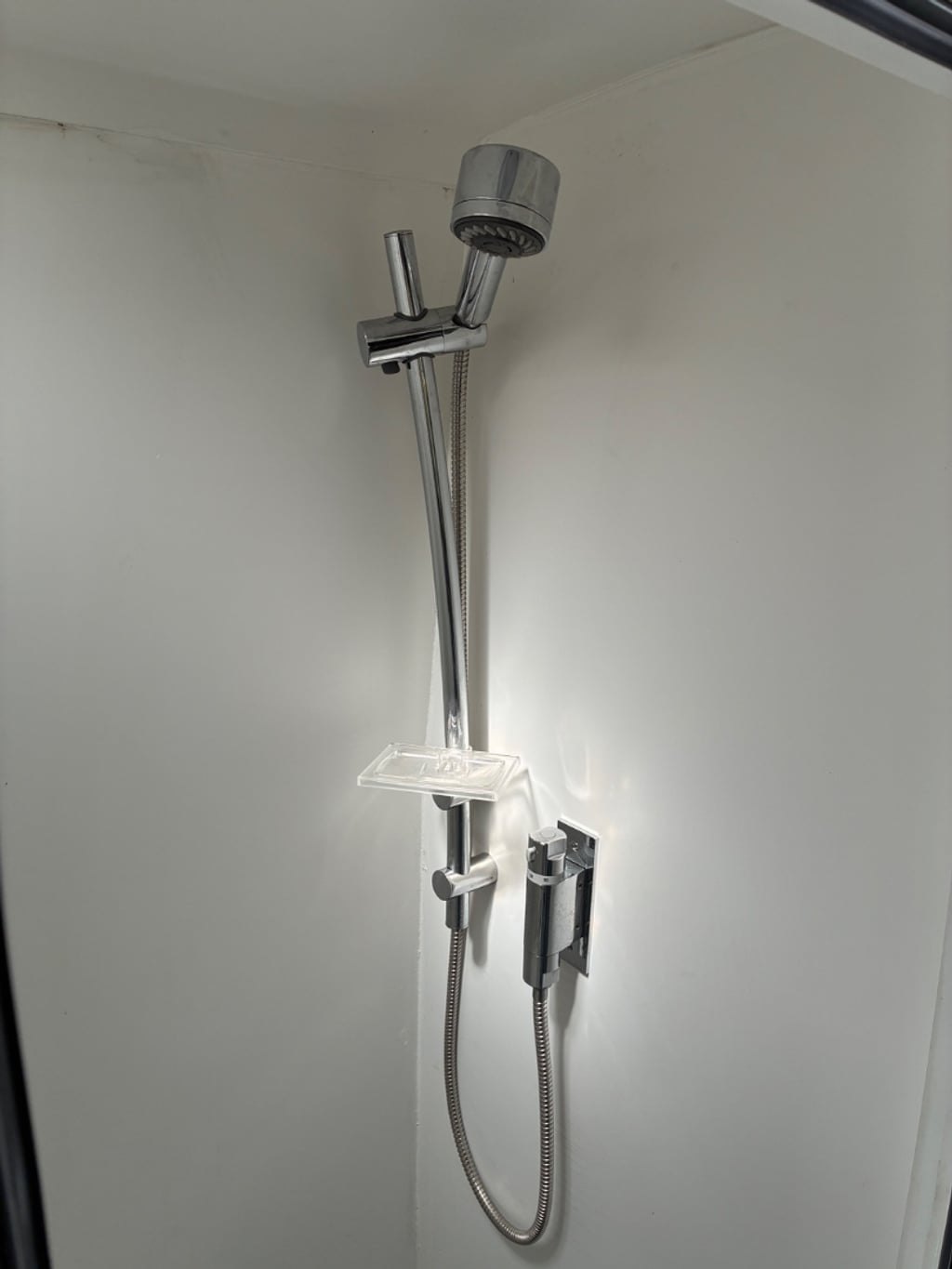
- Full wet room with Thetford cassette toilet, shower and extractor fan
- The build
- 50mm Celotex PIR insulation, sound-deadening pads, two 80-litre underslung fresh and grey water tanks, pressurised hot and cold water
- Electrics
- 110Ah leisure battery, Victron charger and MPPT controller, Sterling battery-to-battery charger, 100W roof solar, 230V hook-up
- Notable kit
- Fiamma F80s wind-out awning, reversing camera, DAB radio, TV with built-in DVD player
- History
- Two previous keepers; not stolen, no outstanding finance, no scrap marker; MOT to 22 November 2026
- Kept
- Staffordshire
The deal
- Enquiry submitted
- 16 June 2026
- Photographs uploaded
- 16 June 2026, 15 minutes after first contact
- Full written spec supplied
- 16 June 2026, 35 minutes after first contact
- Advertised from
- 22 June 2026
- Original list price
- £23,000
- Price reductions
- Three, all requested by the seller: 8 July, 25 July, 9 August
- Final list price
- £19,720
- Sold for
- £19,500 (agreed 16 August 2026)
- Brokerage fee
- £2,000 fixed, success-only, nothing upfront
- Seller received
- £17,500
- Collected
- 23 August 2026
- Time on market
- 55 days from being advertised (22 June) to the sale being agreed; 65 days to collection
Built your own camper and no idea what it's worth? That's the normal starting point.
Sell my motorhomeWhat a self-converted Peugeot Boxer campervan is worth
This one sold for £19,500 in August 2026 at approximately 66,000 miles, returning £17,500 to the seller. The wider market for comparable panel-van conversions of that era runs from about £11,500 to £26,995, and where a particular van lands inside that range is decided by the quality of the build rather than by its age or mileage.
These are the sold comparables Motorhome Pig's underwriting pulled when this van was first assessed in June 2026. They are reproduced here because they show the one thing a seller of a self-build most needs to understand, which is the sheer width of the range. Two vans of almost identical age, base and mileage can be £8,000 apart.
| Conversion | Mileage | Sold for | When |
|---|---|---|---|
| 2014 Peugeot Boxer custom conversion | 63,000 | £11,500 | May 2026 |
| 2017 Ford Transit Custom conversion | 71,805 | £12,000 | June 2026 |
| This 2014 Peugeot Boxer self-conversion | 66,000 | £19,500 | August 2026 |
| 2017 Vauxhall Vivaro campervan | 71,000 | £22,000 | June 2026 |
| 2015 Peugeot Ohana Explorer (professional conversion) | 70,113 | £26,995 | April 2026 |
The two cheap ones at the top are almost certainly basic or tired fit-outs. The Ohana at the bottom is a recognised professional conversion, which buys its owner a name that buyers can look up. This van sat in between, and that is exactly where a well-executed private build belongs: worth far more than a rough conversion, worth less than a badged one, and impossible to place without evidence.
Why a self-build gets no cash offer
Motorhome Pig does not make remote cash offers on self-built or independent conversions on panel-van bases. On this vehicle the automated underwriting returned a cash value of £0 and routed it straight to brokerage. That is a published rule, applied before anyone had seen the van, and it is worth understanding rather than resenting.
When the enquiry arrived on 16 June 2026, Motorhome Pig's underwriting assessed it automatically and recorded its reasoning in full. The relevant line is blunt: conversion quality varies far too much to value remotely. A cash offer is a promise to buy something sight-unseen, and nobody can responsibly make that promise about a vehicle whose entire value sits in workmanship they have not inspected.
For a seller, the rule has four practical consequences:
- There is no instant exit. A factory motorhome can be cash-bought in days. A self-build has to be sold to a retail buyer who can come and look at it.
- The upside is the price. A trade cash offer on a conversion, where one exists at all, prices the risk of the unknown into the number. Selling to the person who will actually use it does not.
- The advert has to do the inspecting. Everything a buyer cannot verify from a photograph has to be written down, and everything that is wrong has to be written down too.
- It is not a verdict on your van. The gate trips on the category, not the quality. This one was well built and sold for £19,500.
There was a second gate in this case, and it is a useful one to know about. The van's Staffordshire postcode sits outside the roughly 90-minute radius of Motorhome Pig's Halifax site within which cash purchases are considered at all. As the underwriting note put it, even if the conversion gate had not applied, location alone would have brought the cash figure to zero. Brokerage was always the route here.
The seller and the van
A Staffordshire couple who bought a 2014 Peugeot Boxer L3H2 Professional panel van and converted it into a two-berth campervan themselves, thoroughly enough that the DVLA reclassified its V5 body type to Motor Caravan. They called it Connie. They sold it because their family had outgrown it.
The reason for selling is the gentlest one in this whole set of case studies, and the seller gave it in a single sentence on the phone afterwards. “When we converted it ourselves, there was just the two of us,” he said. “We've now got four grandkids, and holidays with the grandkids just aren't working out.” A van built for a couple had been outgrown by the family that built it. Nothing had gone wrong. There was no deadline and no pressure. As he put it: a change of circumstances might be the thing you are looking for.
The conversion itself was not a weekend project. The V5 recorded the body type as Motor Caravan, which in the UK means the build met the DVLA's standards for reclassification rather than simply having a bed thrown in the back. Behind the lining sat 50mm Celotex PIR insulation and sound-deadening pads. Underneath were two 80-litre tanks for fresh and grey water, feeding a pressurised hot and cold system. On the roof was a 100W solar panel running through a Victron MPPT controller into a 110Ah leisure battery, which a Sterling battery-to-battery charger topped up whenever the engine was running.
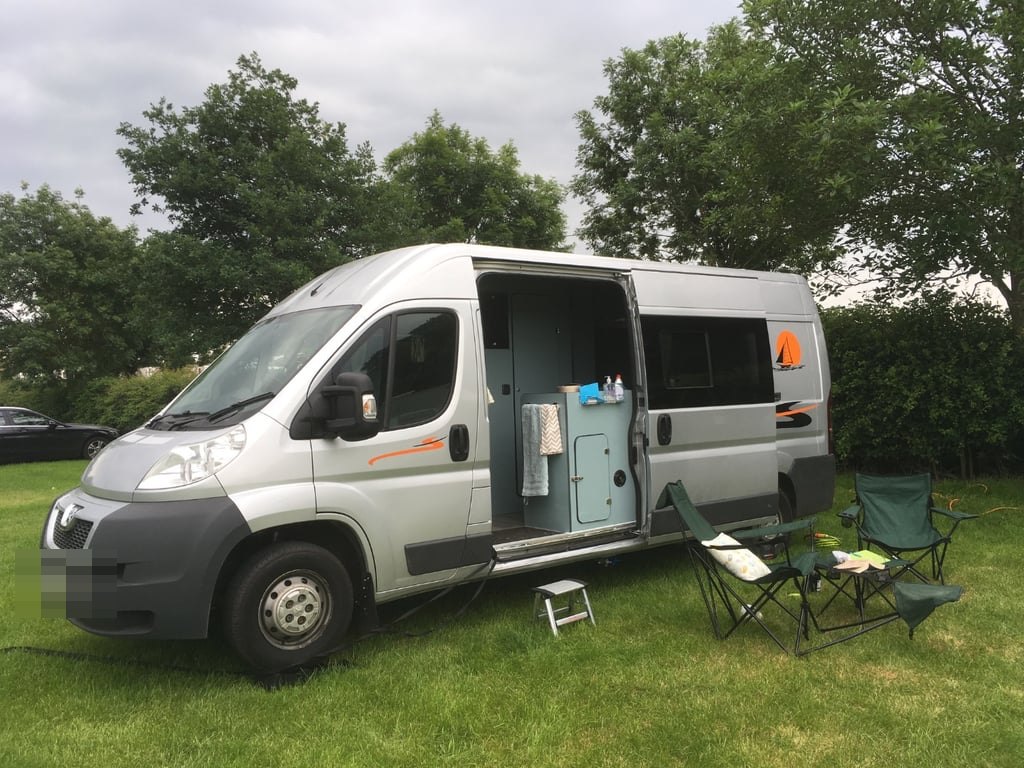
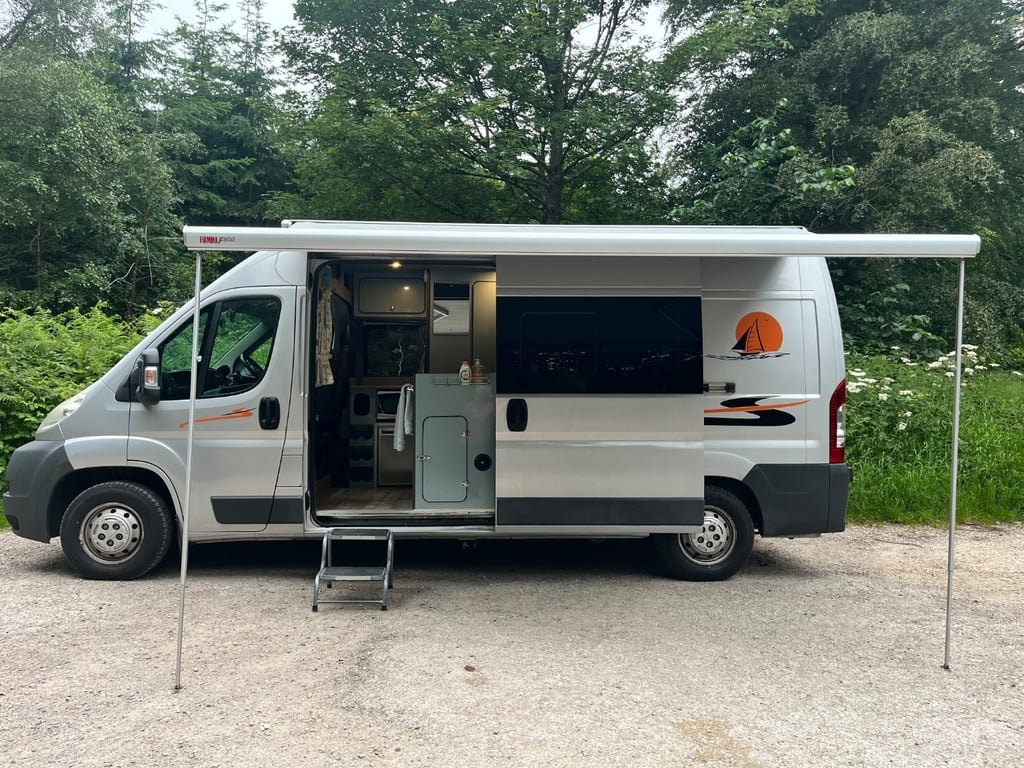
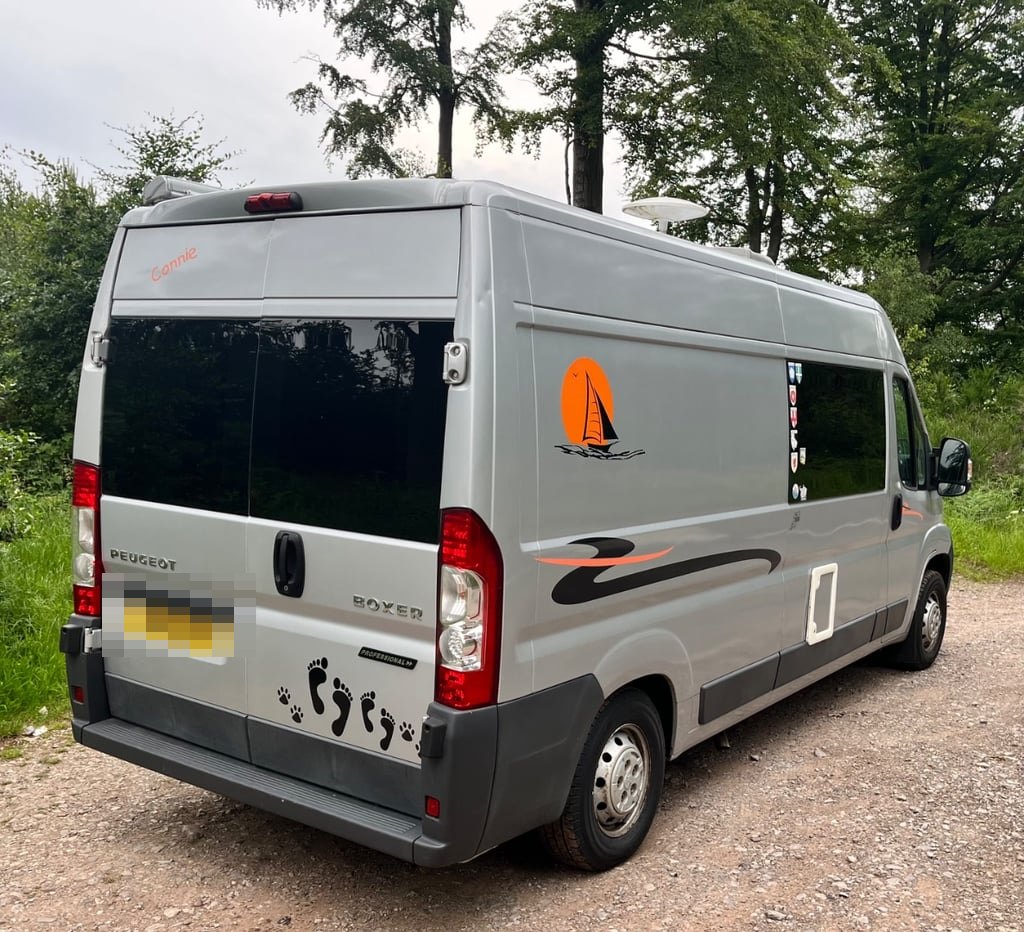
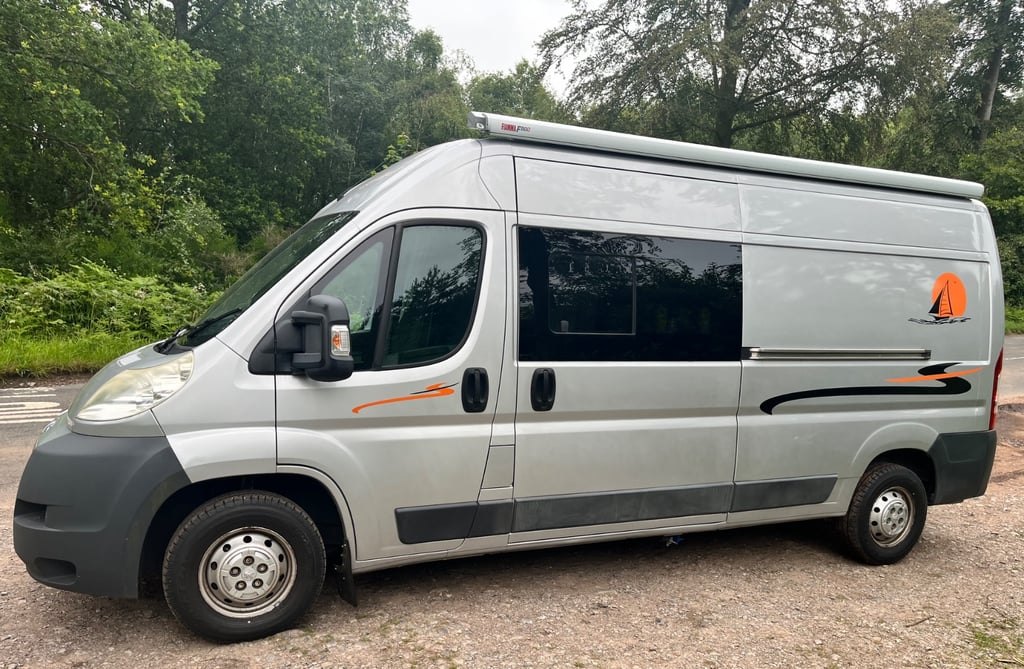
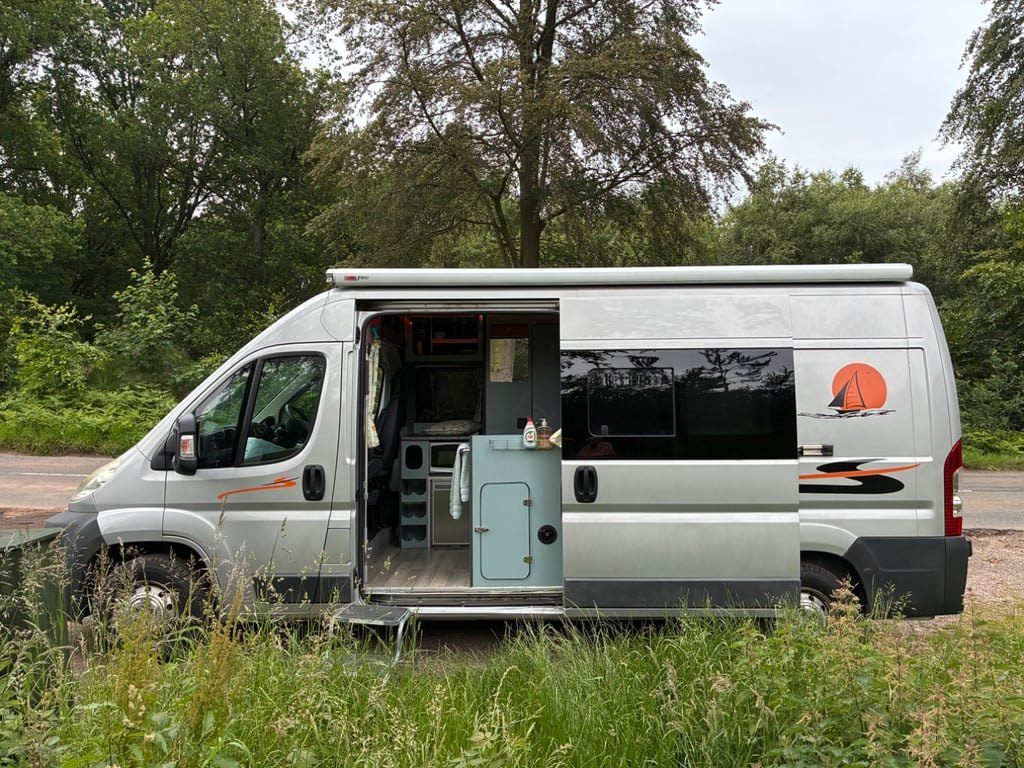
The graphics on the tailgate are the giveaway that this was somebody's project rather than a product. So is the name. A factory motorhome carries a badge; this one carried a sailing boat, a set of footprints and a name painted on by the people who built it.
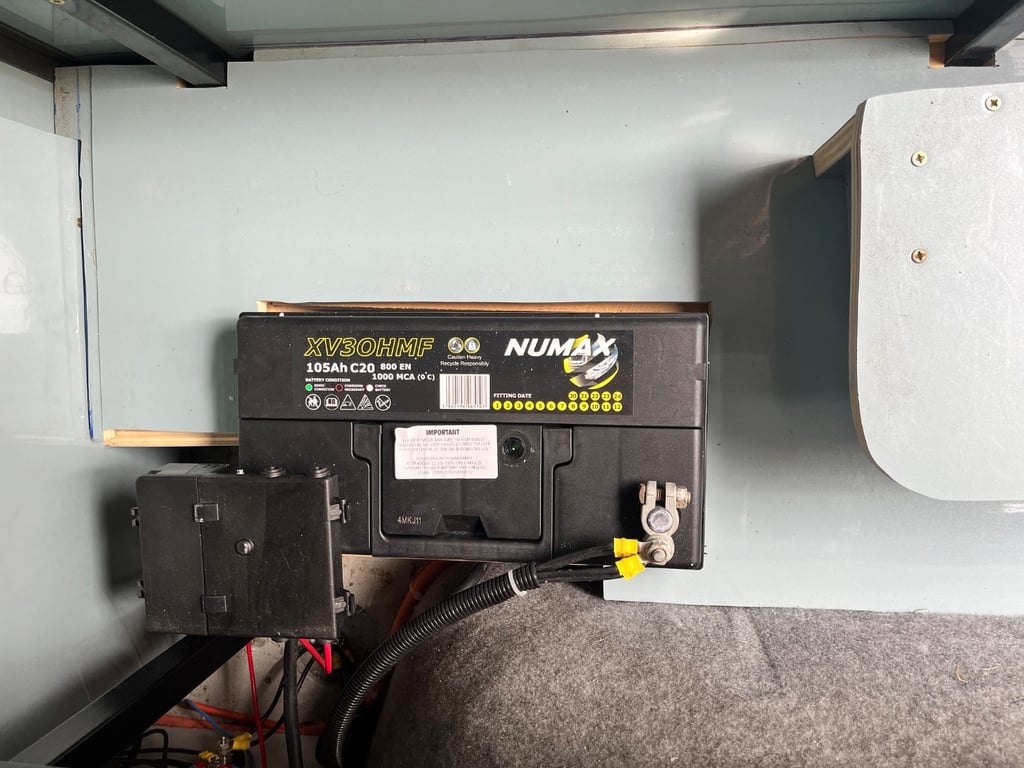
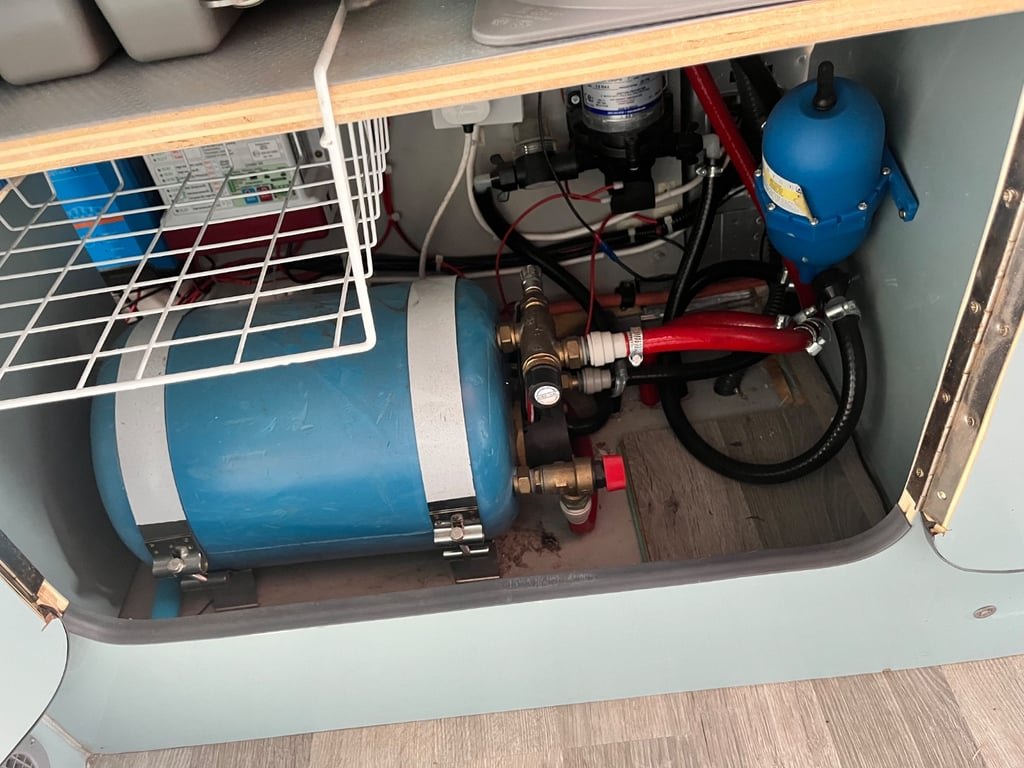
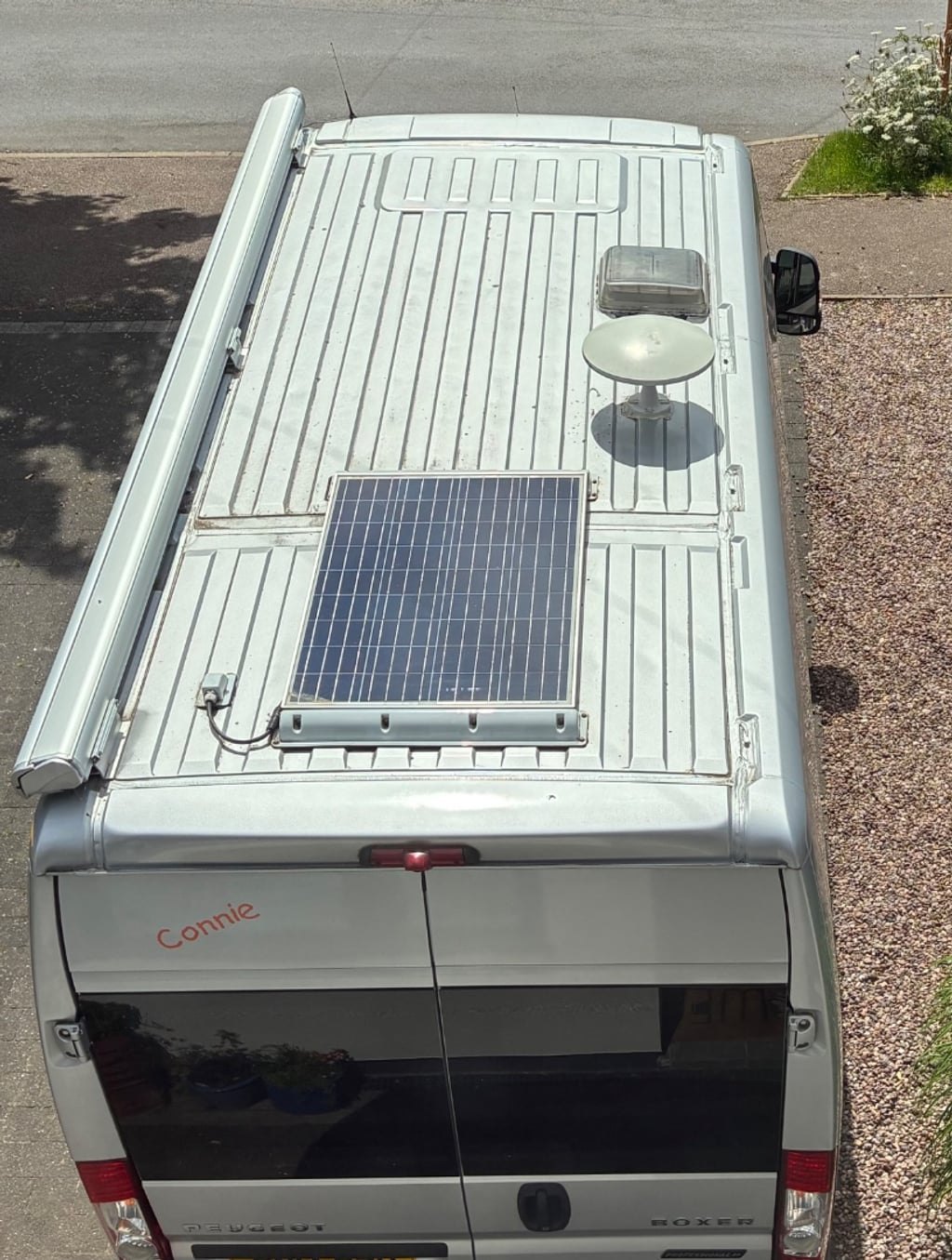
Those three photographs matter more than they look. A buyer considering a factory motorhome does not need to see behind the panels, because a manufacturer's name answers the question. A buyer considering a self-build has only one way to judge whether the wiring was done properly, and it is to be shown.
The 35 minutes that built the advert
The single most useful thing this seller did happened before anyone had asked him for anything. He submitted his enquiry at 15:07 on 16 June 2026. His 40 photographs were uploaded by 15:22. A complete written specification of the entire conversion, running to roughly 900 words, arrived by email at 15:42, 35 minutes after first contact.
Asked at the end of the sale what advice he would give, he did not talk about pricing or negotiation. He talked about this.
I think it probably helped us with the fact we actually got all decent photographs and paperwork and everything together first. It's a preparation of ourselves.
The specification he sent is the reason this sale worked. It is not marketing copy. It is an owner describing his own workmanship, in order, without exaggeration, and it answers questions before they are asked. The wet room light has two brightness settings, dim from a bedside switch and bright from the switch by the door. The curtains have small magnets fitted so they stick to the bodywork. There is a shelf on each of the rear doors, which he described, in the only flourish in the whole document, as a G and T shelf.
It also contains the sentence that most sellers would have deleted. In a bracket, in the middle of the kitchen paragraph, he wrote that the van has a gas hot air heater, that it is currently disconnected, that when they replaced the gas pipe for the cooker that year they did not change the pipe to the heater because they had never needed to use it, and that for heating they generally use an electric fan heater. He volunteered a fault, unprompted, in his own advert copy, on the first day.
Motorhome Pig's AI assistant, Alison, replied within the minute and told him it was one of the most thorough descriptions she had received. That was not flattery. The advert that went live was substantially his words, tidied and formatted by the advertising team.
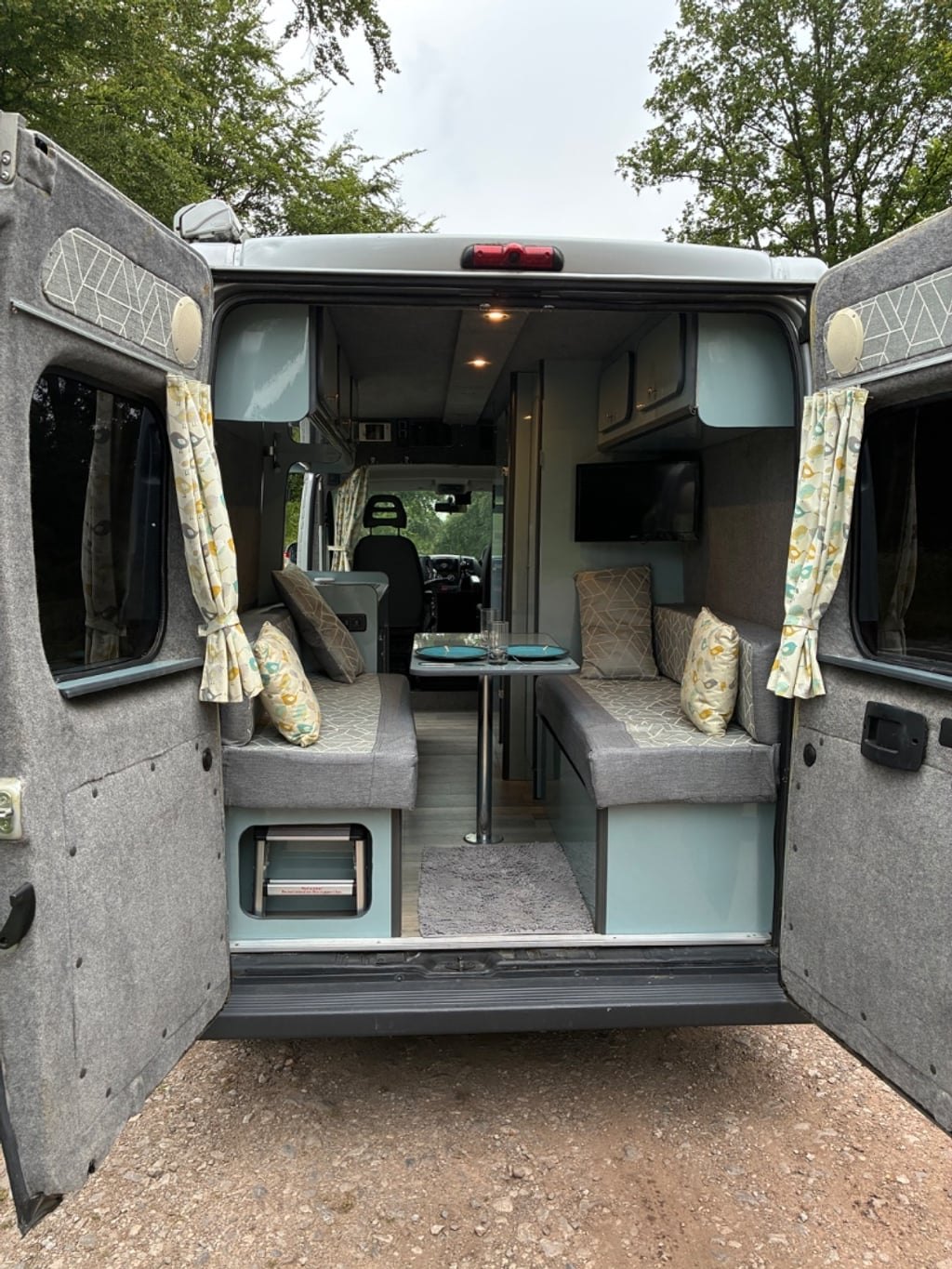
Reproducing what this seller had ready on day one:
- Photographs of the parts nobody sees. The battery, the pump, the tanks, the solar controller, the insulation if you have a shot of it mid-build.
- A written specification of the build. What was fitted, by whom, and to what standard. Name the components: Victron, Sterling, Thetford, Fiamma, Celotex. Brand names are checkable, and checkable is what a self-build lacks.
- Receipts for the mechanical work. Redact your own name and address first, as this seller did before his repair invoice was shared with a buyer.
- The V5 body type. If your conversion has been reclassified as a Motor Caravan, say so. It is independent confirmation that the build met a standard.
- The faults, in writing. A disclosed fault costs you a little. A fault discovered at the viewing costs you the sale.
Going live at a price nobody could look up
The seller picked £20,000 himself, by browsing similar campervans on the Motorhome Pig site, then asked whether he could achieve more. Motorhome Pig's underwriting also said £20,000; his adviser went above it and pitched a £21,000 return. The listing was built at £23,000 and was advertised from 22 June 2026. He ultimately received £17,500.
His first email set out the position with characteristic economy. He was, he said, somewhere in the middle on the options: he wanted a hassle-free sale, it did not need to be very quick, but the sooner the better. On price, he had picked a figure by looking at similar campervans on the site and thought it was fair, though he added that he would like to know if he could achieve more. Then, in the same breath, the line that gives away every self-builder who ever lived: “As ever I think our camper van is better than the competition.”
The underwriting came back at £20,000, with medium confidence, noting that his asking price implied a better-than-basic conversion and that the detail he had supplied suggested a thoughtful build. His adviser, Billy, telephoned him on 19 June to talk it through, and what he then did is worth recording precisely, because it set up everything that followed.
Billy told him the underwriters had come back at exactly £20,000. He had tried, he said, to get it in at £22,000. Then he went above his own underwriters: “I'll put my neck on the block here,” he said. “The best I can do is I'll run it at 21, and I'll put that wiggle on as well, so for a return of £21,000.” With the fixed £2,000 fee on top, that is the £23,000 list price the van went live at. The vehicle history check came back completely clean: not stolen, no outstanding finance, no scrap marker, two previous keepers, MOT to 22 November 2026.
The honest postscript is that the £21,000 return was not achieved. The seller eventually received £17,500, which is £3,500 below the figure his adviser pitched on that call and £2,500 below the underwriters' own number. An optimistic opening price is not free: it buys negotiating room, and it costs weeks of a listing sitting above the market while that room is given back. Whether the extra £1,000 of headroom was worth the eight weeks is a fair question, and the answer here is probably not.
It was advertised on the Motorhome Pig marketplace and exported to Auto Trader, which is where most of the enquiries eventually came from.
Four steps down: how the market found the real number
The price moved four times in 55 days, and every one of the three reductions was requested by the seller himself from his dashboard. £23,000 became £21,850, then £20,758, then £19,720, and the van finally sold at £19,500. The fee stayed at a fixed £2,000 throughout, so each cut came off the list price and the seller's return moved by exactly the same amount.
| Stage | List price | Seller receives |
|---|---|---|
| Listed, 22 June 2026 | £23,000 | £21,000 |
| Seller requests a cut, 8 July 2026 (applied 9 July) | £21,850 | £19,850 |
| Seller requests a cut, 25 July 2026 | £20,758 | £18,758 |
| Seller requests a cut, 9 August 2026 | £19,720 | £17,720 |
| Sold, 16 August 2026 | £19,500 | £17,500 |
| Motorhome Pig fee (fixed, success-only) | £2,000 |
Each reduction was a 5% step suggested by the seller dashboard and approved by an administrator, usually the same day, with the new price pushed out across every advertising network. The seller understood exactly what he was doing, and described the mechanism back to a member of the team on a call in mid-July with more clarity than most internal documents manage.
It was up at 23, which would give me 21, and it dropped it by 5% was a tick in the box. I think it increased the viewings a bit, and I think it said there's one or two people who've actually added it to their favourites.
He was right about the effect. On that same call he put the listing at “about 800 viewings” and the team put the dashboard figure at 850. Over its life it drew seven buyer enquiries and ten recorded shortlist saves, though the counter shown to the seller lagged at nine. This is the part of selling a self-conversion that no amount of preparation removes: with no book price and no badge, the only way to establish what the van is worth is to keep presenting it to the market until the market answers. Four price points over eight weeks is not a failure of pricing. It is the discovery process working.
It is also worth being straight about the arithmetic. £23,000 to £19,500 is a fall of £3,500, or about 15%. The seller ended up close to the figure he had picked for himself on day one before the listing was built at a higher number, and comfortably above the £11,500 that a comparable Boxer conversion had fetched three months earlier. Both of those things are true at once.
What buyers of a self-build actually ask
The enquiries on this listing were markedly more technical than those on a factory motorhome, and they cluster around one anxiety: is the workmanship sound, and can it be proved? Motorhome Pig relayed each question to the seller and each answer back, and the answers were given straight, including the one that lost a buyer.
These are the real questions buyers asked about this van, taken from the enquiry record. Anyone preparing to sell a conversion should assume they will be asked all four.
- “With it being a self conversion, does everything work on this van? Has it had a habitation check or anything? Gas safe certification?” The honest answer here was that it had neither on record. What it had instead was a written build specification, receipts, and a disclosed fault.
- “Could you send me the failed MOT report so I can see what the problems were?” Asked by the buyer who went on to purchase the van. The report was shared, along with the invoice proving the work had been done.
- “How long is the bed? I'm 6ft 2in, so a bit worried the bed may be too small.” The seller replied that the made-up bed is six feet long and five feet wide, on a six-inch mattress of four inches of standard foam topped with two inches of memory foam. Six feet is short for a man of 6ft 2in, and he gave the number anyway. The record does not show what that buyer decided; the van was sold to someone else.
- Everything the brochure would normally answer. Berths, belts, keys, transmission, layout, service history, cambelt, extras. On a factory model a buyer looks these up. On a conversion they have to ask.
Point three is the one worth sitting with. A seller trying to close a deal could have answered “plenty of room, come and see it” and got a viewing out of it. This seller sent the tape measure figure to a buyer it was unlikely to suit. That is the same instinct that put the disconnected heater in his advert copy on day one, and it is the whole reason a stranger can trust the rest of what he wrote.
When the advert copy got it wrong
On 27 July 2026 the seller emailed to say that Motorhome Pig's own advert copy misdescribed his MOT history in a way he believed was putting buyers off. He was right, and the copy was wrong. It is included here because a case study that only reports the parts that went well is not evidence of anything.
The listing carried a “Recent Work” paragraph stating that the latest MOT, which it correctly dated to 6 November 2025, had noted suspension wear and tyre advisories, and recommending a full pre-purchase inspection by a qualified mechanic. The advisories it listed were real, but they belonged to the previous test, the one the van had failed. Attached to the date of the passing test, they read to a buyer like a van with unresolved problems.
What had actually happened was the opposite. The van failed its MOT on 30 October 2025. The failure and every advisory item on it, including the steering rack, the tyres and the suspension components, were then repaired. It was re-presented on 6 November 2025 and passed cleanly, with no advisories recorded at all. The advert had carried the old test's problems forward onto the new test's date, and attached a warning to a van that had been fixed.
The seller set this out precisely, item by item, noting that he held the receipt for the work, and asked for the description to be corrected. He also did something that, in hindsight, foreshadowed how he would end this whole story: he offered to send the repair invoice, and then said he would need to redact his personal information, such as his name and address, before he did. The redacted invoice arrived by email on 5 August and was shared with the buyer who was asking about the MOT.
The latest MoT, 6/11/2025, shows a pass, with no advisories. So there is no need for a full pre-purchase inspection by a qualified mechanic. Can you please update the description to reflect the correct situation.
Two lessons sit inside that. The first is for Motorhome Pig: automatically generated advert copy that summarises an MOT history can invert its meaning, and it needs a human check against the actual test results before it goes live. The second is for sellers, and it is more useful. Read your own advert. This one had been live for five weeks before the error was caught, and it was caught by the only person in the process who knew the van's history well enough to notice.
One viewing, one sale
Two viewings were booked. The first, requested on 4 August 2026, was cancelled before it happened. The second took place at 4pm on Saturday 15 August, with a buyer who had travelled roughly 93 miles from Lancashire. She bought the van.
Before the address was released, Motorhome Pig telephoned the buyer to verify her identity, using a PIN she had to read back. That check is why the seller's address is not given out to anyone who fills in a form, and it is the mechanism behind the only worry he expressed about the whole process. Asked afterwards whether he had been concerned about selling the vehicle, he said: not really, it is just, as you say, you check out the people, they're genuine.
Both parties checked in through the appointment system, the seller at 15:58 and the buyer at 16:05 BST. The viewing went well and did not close. The seller emailed that evening to report, in his own words, that the buyer and her husband had seen the campervan and were very impressed, that they were viewing another vehicle the following day, and that they would let him know afterwards whether they wanted to buy.
He also tried to telephone Motorhome Pig three times that evening, at 17:23, 17:24 and 17:25, leaving a voicemail. All three went unanswered. Alison replied by email within minutes to acknowledge the update and to note that he had tried to ring, and the internal task raised that evening said explicitly that someone should call him back. The next recorded conversation with a member of the team was about 41 hours later, on the morning of 17 August, after the buyer's money had arrived. That is the second thing on this page that did not go as it should: a seller who has just finished a viewing and rings three times ought to reach somebody.
The buyer viewed the other vehicle on the Sunday and came back. The sale was agreed on 16 August at £19,500, £220 below the £19,720 asking price, and she paid Motorhome Pig's £2,000 fee that day through GoCardless Instant Bank Pay. That single £2,000 payment served as her deposit and as the brokerage fee; it is one payment, not two, and it is the only money Motorhome Pig received on this deal.
Getting paid
The buyer collected on Sunday 23 August 2026 and paid the seller directly by bank transfer before driving the van away. Motorhome Pig's £2,000 fee had already been settled separately by the buyer on 16 August, so the seller received his £17,500 as a single clean payment with nothing deducted from it.
A member of the team, Malachy, called the seller on the morning of collection to say the buyer was on her way and expected around three o'clock, and to give him a direct line for the rest of the day. The instruction was simple: keep in touch, ring us once it is done, and if there is even a small bump in the road call straight away.
The seller rang later that afternoon. He had missed Malachy by about a second, as Malachy put it, and there is a brief comic exchange in the recording about answering machines and cups of coffee. Then he confirmed it, in the plainest terms available.
They have transferred the money and they've just driven the van away. Nice and smooth. I gave a quick run around showing where various things are hidden, and they're on the way up to Preston now. So, all done and dusted. Thank you very much.
The only question he raised at any point about the mechanics of completion was about the logbook, which the team answered: transfer the green slip when the money is transferred. There is one paperwork wrinkle worth recording, because it is commoner than people expect. The V5C for this van was in his wife's name rather than his own. He raised it himself, unprompted, on an inbound call five minutes after his agreement was sent, simply to ask whether it made any difference. He was told it did not for a couple selling jointly. The identity verification call three and a half weeks later re-confirmed the same thing.
In the seller's own words
Five days after the van was collected, Adam from the Motorhome Pig media team telephoned the seller for his honest feedback. He agreed to the interview being published on one condition, which is why he is not named on this page. The exchange below is truncated and lightly cleaned of filler; nothing has been added.
AdamMotorhome Pig media team
SellerSeller
AdamMotorhome Pig media team
SellerSeller
AdamMotorhome Pig media team
SellerSeller
AdamMotorhome Pig media team
SellerSeller
AdamMotorhome Pig media team
SellerSeller
AdamMotorhome Pig media team
AdamMotorhome Pig media team
SellerSeller
AdamMotorhome Pig media team
SellerSeller
AdamMotorhome Pig media team
SellerSeller
Edited for length and clarity from a recorded post-sale telephone interview between the seller and Adam of the Motorhome Pig media team, 28 August 2026, published with the seller's consent and on his condition of anonymity.
A note on the strange woman called Alison
Alison is not a woman, strange or otherwise. She is Motorhome Pig's AI assistant, and she wrote the welcome email that arrived within a minute of this seller's enquiry, praised his written specification, relayed the buyer's question about the bed length, chased his answer back to the buyer, apologised for the missed calls on the afternoon of the viewing, and drafted the internal task that got his MOT correction in front of the advertising team. She also, as it happens, made the phone call in which he described her that way, because the media team's outbound calls run through her number.
He is the second seller in this set of case studies to assume she was a person, and Motorhome Pig would rather say so plainly than enjoy the compliment quietly. There is a public page explaining exactly what Alison is and what she can do, and every message she sends links to it.
The seller's review
Drawn together from that interview and published with his consent, this is his verdict in his own words.
I hadn't tried anyone else before Motorhome Pig. We converted the van ourselves, and when we did it there was just the two of us. We've now got four grandkids, and holidays with the grandkids just aren't working out in a two-berth. A change of circumstances might be the thing that makes you sell. There weren't really any worries about it. It's just, as you say, you check out the people, they're genuine. I think we had a couple of advisers. It was Malachy who dealt with us on the final day. And the biggest adviser was a strange woman called Alison. It went quite smoothly. I put a comment on Google. If a friend rang me tonight saying they were thinking of selling their motorhome, I'd tell them: go for it. The only advice I'd give is that I think it probably helped us that we actually got all decent photographs and paperwork and everything together first. It's a preparation of ourselves.
What this sale shows about selling a self-conversion
One sale is not a statistic, but this one illustrates the specific problem a self-builder faces at the end, which is that the thing they made by hand has no price until somebody agrees to pay one.
- A self-build has no book price, and that cuts both ways. Comparable conversions of this era sold anywhere between £11,500 and £26,995. This one reached £19,500 because the build justified it.
- Preparation is the highest-leverage thing a seller does. Photographs at 15 minutes, a full written specification at 35 minutes. The advert that sold the van was substantially the seller's own words.
- Motorhome Pig will not cash-buy a panel-van conversion. The underwriting returned £0 cash before anyone saw it. Brokerage to a retail buyer is the only honest route, and it is the one that pays more.
- Disclosure sells. A disconnected gas heater was declared in the seller's own advert copy on day one, and a bed measurement was given to a buyer it was always going to disqualify.
- The opening price was pitched above the valuation, and did not hold. Motorhome Pig's underwriting said £20,000. The adviser pitched a £21,000 return and listed at £23,000. The seller received £17,500. Headroom is not free, and on this sale it cost weeks rather than earning pounds.
- Price discovery takes steps, and the seller controls them. Three 5% reductions, every one requested by the seller from his dashboard and approved the same day, with the net figure visible before each decision.
- The fee does not move. £2,000 fixed and success-only, from a £23,000 list price down to a £19,500 sale. Nothing was payable upfront and the percentage was never re-cut in Motorhome Pig's favour as the price fell.
- Buyers are screened before an address is shared. The viewer was verified by telephone against a PIN before the seller's address was released, which is what the seller meant by checking that people are genuine.
- Automated advert copy needs a human check. Motorhome Pig's generated summary inverted the meaning of this van's MOT history and stood uncorrected for five weeks until the seller caught it.
- Missed calls were a running problem. Eleven inbound calls from this seller went unanswered across five separate occasions between 13 July and 23 August, including three on the evening of the viewing and two on the day of collection. He left three voicemails. An automated apology went out within a minute every time, which is a mitigation rather than a fix.
If you have built your own camper and are wondering where to start, the honest answer from this sale is: start with the evidence, not the price. Motorhome Pig sells conversions alongside factory motorhomes across the UK, and you can read how selling works or get a free valuation without committing to anything. If you would rather see what is out there first, the current stock and the motorhomes for sale around Stafford are a reasonable place to calibrate your own expectations, which is exactly how this seller arrived at his opening figure.
Selling something you built yourself? The advert has to do the inspecting.
Sell my motorhomeFull timeline
From the first enquiry to a collected, paid-for van and the post-sale interview. The active selling window, from the listing being advertised on 22 June to the sale being agreed on 16 August, was 55 days. The seller had been emailed to say it was live three days earlier.
16 June 2026, 15:07
Enquiry submitted
A quote request arrives through the Motorhome Pig website for a 2014 Peugeot Boxer conversion, two berths, 66,000 miles, with a suggested asking price of £20,000. An automated welcome email and SMS go out within the minute.16 June 2026, 15:22
Photographs uploaded
Forty photographs are uploaded, 15 minutes after first contact. They include the leisure battery, the water system and the roof solar panel, not just the interior.16 June 2026, 09:30
The price question
The seller replies that he wants a hassle-free sale, has picked his figure by browsing similar campervans on the site, and asks whether he could achieve more. A task is raised for his adviser to review the pricing.16 June 2026, 15:42
The written specification
A roughly 900-word description of the whole conversion arrives by email, 35 minutes after first contact. It volunteers, in a bracket, that the gas hot air heater is disconnected.19 June 2026
Underwriting, and no cash offer
Automated underwriting returns £20,000 and a cash value of £0, gated because Motorhome Pig does not cash-buy self-built panel-van conversions. His adviser calls, goes above that number and pitches a £21,000 return, which sets the £23,000 list price. The agreement is signed, a 'your motorhome is now live' email goes out that afternoon, and a clean vehicle history check follows. The seller rings in minutes later to volunteer that the V5C is in his wife's name.22 June 2026 - Day 0
Advertised
The listing's status changes to advertised, three days after the seller was emailed to say it was live, and its Auto Trader taxonomy is completed the same morning. It is published at £23,000 on the Motorhome Pig marketplace and exported to Auto Trader.8 July 2026
First reduction
The seller requests a 5% reduction from his dashboard, to £21,850. It is approved and pushed across every network.15 July 2026
850 views, and an identity check
An identity verification call re-confirms the seller's details, including that the V5C is in his wife's name, which he had already volunteered on 19 June. He tells the team the listing has had about 800 views, and the team puts the dashboard figure at 850. He notes the price drop lifted the viewing rate.25 July 2026
Second reduction
Down again by 5%, to £20,758, seller return £18,758.27 July 2026
The seller corrects the advert
He emails to say the 'Recent Work' paragraph misdescribes his MOT history, presenting a failed test from 30 October 2025 as current and recommending a pre-purchase inspection, when the van had been repaired and passed cleanly on 6 November. He asks for it to be corrected.5 August 2026
MOT evidence shared
The MOT information is shared with an interested buyer, followed by the repair invoice, which the seller has redacted himself to remove his name and address.9 August 2026
Third reduction
A final 5% step, to £19,720, seller return £17,720.13 August 2026
The bed question
A buyer who is 6ft 2in asks how long the bed is. The seller answers precisely: six feet by five, on a six-inch mattress, knowing it is unlikely to suit him.15 August 2026, 16:00
The viewing
A buyer travels roughly 93 miles from Lancashire, having been verified by telephone against a PIN before the address was shared. Both parties check in at 15:58 and 16:05. She is very impressed but is viewing another vehicle the next day. The seller rings the team three times that evening, at 17:23, 17:24 and 17:25, and leaves a voicemail. All three go unanswered.16 August 2026
Sold
The buyer returns after seeing the other vehicle. The sale is agreed at £19,500, £220 below asking, and she pays Motorhome Pig's £2,000 fee through GoCardless the same day. That one payment is both her deposit and the brokerage fee.23 August 2026
Collection and payment
The buyer collects at around 3pm, transfers the balance directly to the seller, and drives the van away toward Preston. The seller receives £17,500. 'All done and dusted,' he tells the team by phone.28 August 2026
Post-sale interview
Adam from the media team interviews the seller. He agrees to publication on condition of anonymity, and gives his one piece of advice: get the photographs and paperwork together first.
Frequently asked questions
How do you value a self-converted campervan?
By comparison with what similar conversions have actually sold for, not by a book price, because self-builds have none. Every published guide value covers the base van as a panel van, or a named factory model, and a one-off conversion is neither. Motorhome Pig's own underwriting on this vehicle put the realistic range for comparable panel-van conversions of that era between £11,500 and £26,995, and said so plainly: conversion quality varies far too much to value remotely. The practical answer is that the advert has to carry the proof. This seller supplied a full written specification, receipts and 40 photographs, the van was listed at £23,000, and the market settled it at £19,500 after three price steps.
What is a self-converted 2014 Peugeot Boxer campervan worth?
This one sold for £19,500 in August 2026 at approximately 66,000 miles, with the seller receiving £17,500 after Motorhome Pig's £2,000 fee. For context, from the comparable sales recorded in Motorhome Pig's underwriting: a 2014 Peugeot Boxer custom conversion at 63,000 miles sold for £11,500 in May 2026, a 2017 Ford Transit Custom conversion at 71,805 miles sold for £12,000 in June 2026, a 2017 Vauxhall Vivaro campervan at 71,000 miles sold for £22,000 in June 2026, and a 2015 Peugeot Ohana Explorer professional conversion at 70,113 miles sold for £26,995 in April 2026. The spread is the point: build quality, not age or mileage, decides where in that range a conversion lands.
Can I get a cash offer for a self-built campervan?
Not from Motorhome Pig, and this is a deliberate published rule rather than an accident. Motorhome Pig does not make remote cash offers on self-built or independent conversions on panel-van bases such as the Boxer, Relay, Ducato, Transit, Vivaro or Sprinter, because conversion quality varies too much to price without seeing it. On this vehicle the automated underwriting returned a cash value of £0 and routed it to brokerage only. That is not a judgement on the van: this one was well built and sold for £19,500. It means a self-conversion is sold to a retail buyer who can see it, rather than bought sight-unseen at a trade price.
How much does Motorhome Pig charge to sell a campervan?
A fixed, success-only fee with nothing payable upfront, and the seller's exact net figure is shown on the seller dashboard before anything is agreed. On this £19,500 sale the fee was £2,000 and the seller received £17,500. The fee stayed at £2,000 through all three price reductions, so each reduction came off the list price and the seller's return moved by the same amount, visibly, on the dashboard.
Do I need a habitation check or a gas safety certificate to sell a self-conversion?
There is no legal requirement to hold either in order to sell a vehicle privately in the UK, but buyers of self-builds ask about them frequently, and one buyer asked about both on this listing. This van had neither on record. What it did have was a detailed written specification of the build, receipts for the mechanical work, a clean MOT and an owner who answered every technical question straight, including disclosing in the advert that the gas hot air heater was disconnected. That transparency is what stood in for certification, and it was enough.
How long does it take to sell a self-converted campervan?
This one took 55 days from being advertised on 22 June 2026 to the sale being agreed on 16 August 2026, and it was collected on 23 August. That is longer than Motorhome Pig's roughly 36-day median across 386 completed sales, which is what you would expect: a one-off conversion has a smaller buyer pool than a factory model, and the price has to be found rather than looked up. It was at roughly 850 views by mid-July, drew seven enquiries and ten recorded shortlist saves, and sold after a single viewing.
Will a DIY conversion put buyers off?
Some, but the ones it attracts ask sharper questions. The enquiries on this listing were noticeably more technical than on a factory motorhome: one buyer asked whether everything worked, whether it had a habitation check and whether there was gas safety certification; another asked for the failed MOT report so they could see what the problems had been; a third, who was 6ft 2in, asked exactly how long the bed was when made up. Every one of those was answered honestly, including the answer least likely to help the sale: the bed measures six feet, which is short for a buyer of 6ft 2in.
What paperwork do I need to sell a self-converted campervan?
The V5C logbook, MOT history, and receipts for any significant work are the core of it. For a self-build it is worth adding a written specification of what was fitted and how, because no brochure exists to answer those questions for you. This seller supplied all of it within 35 minutes of his first contact, and later sent a redacted copy of the repair invoice, with his own name and address removed, so it could be shared with a buyer. Note also that the V5C on this vehicle was in the seller's wife's name rather than his own, which he raised himself within minutes of receiving his agreement rather than waiting to be asked; for a couple selling jointly it made no difference.
Is this case study and the review genuine?
Yes. It is built from Motorhome Pig's own CRM and database records for this sale, the seller's messages to the team, and a recorded post-sale telephone interview. The seller gave his consent for it to be published on one explicit condition, which was that it be anonymised, so he is not named here. Figures are stated as recorded at the time: the sale price, the fee and the net payment come from the sales record, and the dates come from the listing's status history. The private buyer is not named either.
About this case study
This case study is based on Motorhome Pig's own CRM and database records for this sale, the seller's messages to the team, and a recorded post-sale telephone interview. The sale price, brokerage fee and net payment come from the sales record; the list prices and reduction dates come from the price-change records; the going-live and sold dates come from the listing's status history. Quotes have been lightly edited for filler and clarity without changing their meaning.
The seller consented to publication on one explicit condition, recorded on the interview: that it be anonymised. He is therefore not named anywhere on this page, and neither is the private buyer, who is an unconsented third party. We have also omitted the registration, which is digitally obscured in the photographs, along with contact details and the seller's exact address. The photographs are the seller's own, taken during his ownership. Published 28 August 2026.
How selling with Motorhome Pig works
The step-by-step version of everything described here.
Get a free valuation
Conversions included. No cost, and no obligation to list.
More customer case studies
Other real motorhomes and campervans sold through Motorhome Pig.
Meet the team
The people behind this sale, including Malachy and Alison.
Built it yourself? It still has a price.
Motorhome Pig sells self-conversions alongside factory motorhomes, to retail buyers across the UK. No upfront cost, a fixed success-only fee, and a dashboard that shows exactly what you take home before you agree to anything.
No upfront cost · No sale, no fee · One central UK team, 7 days a week