
Unlocking buyer demand through smart price bracketing - how Helen's Cumbrian campervan found eight buyers in three weeks
A 136,000-mile 2011 VW Transporter, on the west Cumbrian coast, a long way from anywhere. On paper, three headwinds at once. What changed the outcome was not the vehicle and not the advert - both were strong throughout. It was a single tactical decision about which price bracket the van competed in, executed across a national portal footprint. This is the analysis, with the demand data at each price point.
Written by the Motorhome Pig team · Halifax, West Yorkshire · Reviewed by the Motorhome Pig team
Figures verified against Motorhome Pig's CRM, contract and sales records. Published with Helen's consent.
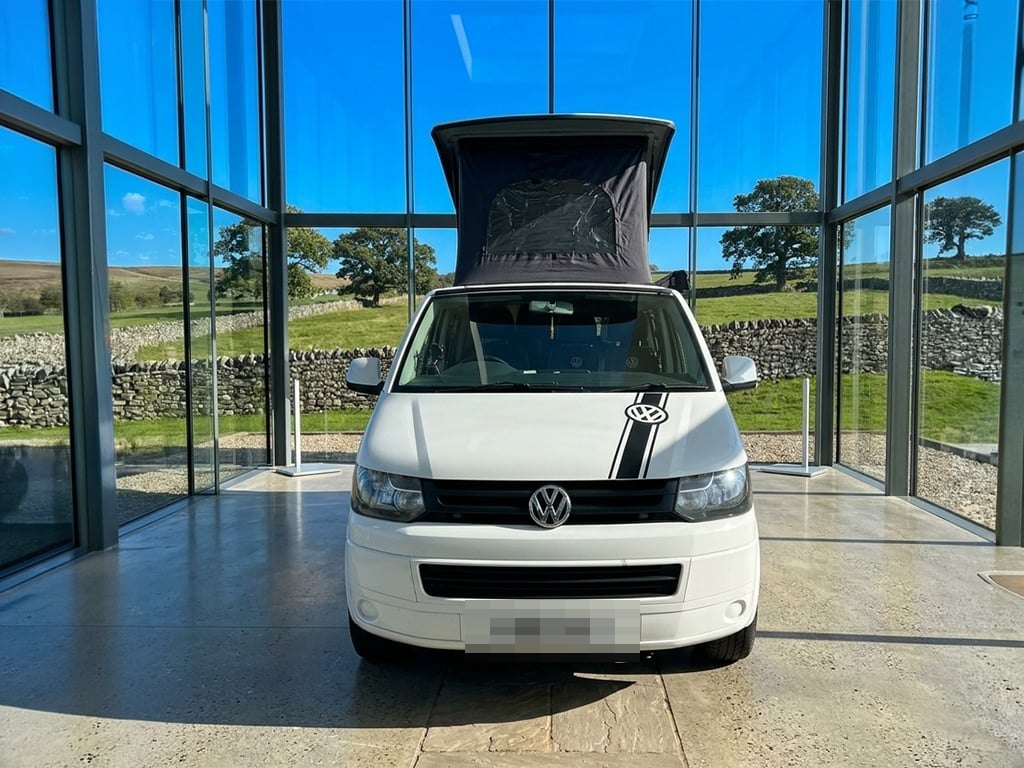
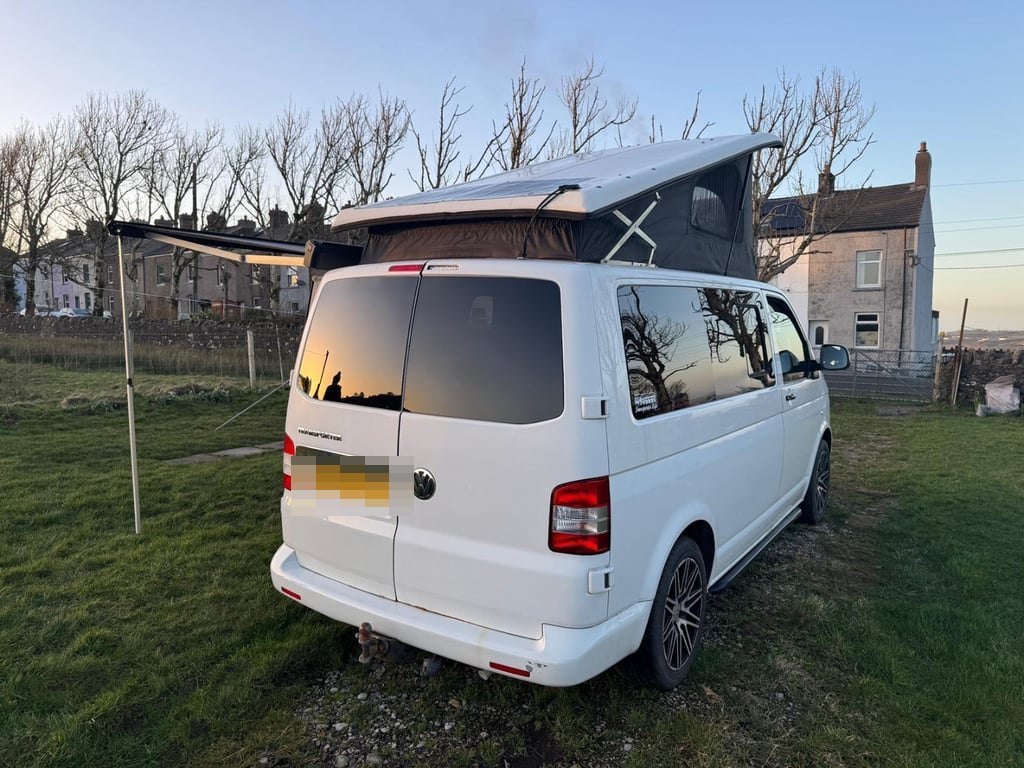
The asset: a 2011 VW Transporter T5.1 campervan - pop-top roof, rock-and-roll bed, solar, inverter, awning, four berths - with 136,000 miles, a strong service record and an owner in Workington, west Cumbria.
The strategic problem: at £22,000 and then £17,999 the van was competing in brackets where buyers were comparing it against lower-mileage stock. The advert was never the issue; the peer group was.
The move: a second adjustment on 12 July took the advertised price to £14,995 - under the £15,000 threshold most campervan buyers set as their search ceiling - repositioning the van from the bottom of one bracket to near the top of the next one down.
The outcome: eight offers and eighteen saved listings inside three weeks, and a sale at £14,000 with £12,000 to Helen. National distribution across Motorhome Pig, AutoTrader and eBay Motors generated the competing interest; the buyer who won it happened to live eleven miles away.
The result
- In three weeks, after repositioning
- 8 offersIn three weeks, after repositioning
- Buyers who shortlisted it
- 18 savesBuyers who shortlisted it
- Final sale price
- £14,000Final sale price
- Paid to Helen
- £12,000Paid to Helen
The 2011 VW Transporter campervan sold for £14,000 on 3 August 2026. After the fixed £2,000 success fee, Helen received £12,000. She never advertised to the public herself, never published her address or phone number, and never met a buyer who had not been checked and verified first.
The headline number worth studying is not the sale price, though - it is the demand curve. In the final bracket the van drew eight offers and eighteen saved listings in twenty-two days. In the bracket above it, over seventy days, it drew one. Same van, same photographs, same honest description, same national distribution. The only variable was which search results it appeared in.
If you are weighing up where to position your own vehicle, you can see what we currently have for sale, browse by location - including Newcastle upon Tyne and Glasgow for the north - or start selling yours.
The principle: buyers shop in brackets, not in pounds
Nobody searches for a motorhome at “£17,999”. They search up to £15,000, or £15,000 to £20,000, or £20,000 to £25,000. That makes a price bracket a distribution decision rather than a valuation one: it determines which audience ever sees your advert, and which vehicles yours is judged against when they do.
The consequence is counter-intuitive and it is the single most useful idea in this case study. Two adverts three thousand pounds apart can be, in practice, infinitely far apart - because one appears in a search the other never enters. And within any bracket, position matters enormously: a vehicle at the bottom of a band is compared unfavourably against better examples above it, while the same vehicle near the top of the band below leads its peer group.
That is what changed here. At £17,999, Helen's 136,000-mile 2011 campervan sat in the £15,000-£20,000 band alongside newer, lower-mileage conversions - a comparison it was never going to win. At £14,995 it sat near the top of the under-£15,000 band, where it was one of the better-equipped, better-documented options available. The vehicle did not get worse. Its competitive set did.
- Identify the threshold, not the value. Ask which round-number ceiling a realistic buyer for your specification sets. For older, higher-mileage campervans that ceiling is usually £15,000.
- Decide which side of it you can lead. Trailing a bracket is expensive; leading the one below it is efficient. Be honest about which your vehicle is.
- Move decisively across the line. An adjustment that does not change which filter you appear in has cost you money and bought you nothing.
- Measure saves, not just offers. Shortlist saves move first and tell you the bracket is right well before an offer arrives.
The asset and the deal
The campervan
- Make & model
- 2011 Volkswagen Transporter T5.1 T28 campervan conversion, first registered August 2011
- Engine
- 2.0 TDI diesel, 84 PS, manual, Euro 5
- Layout
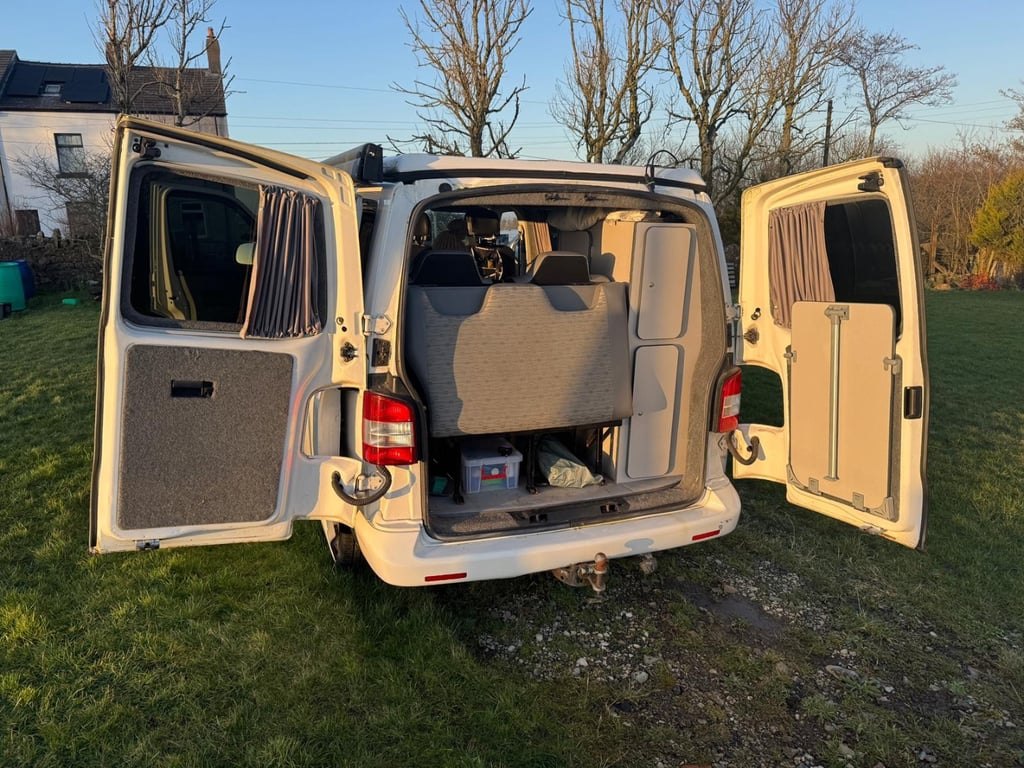
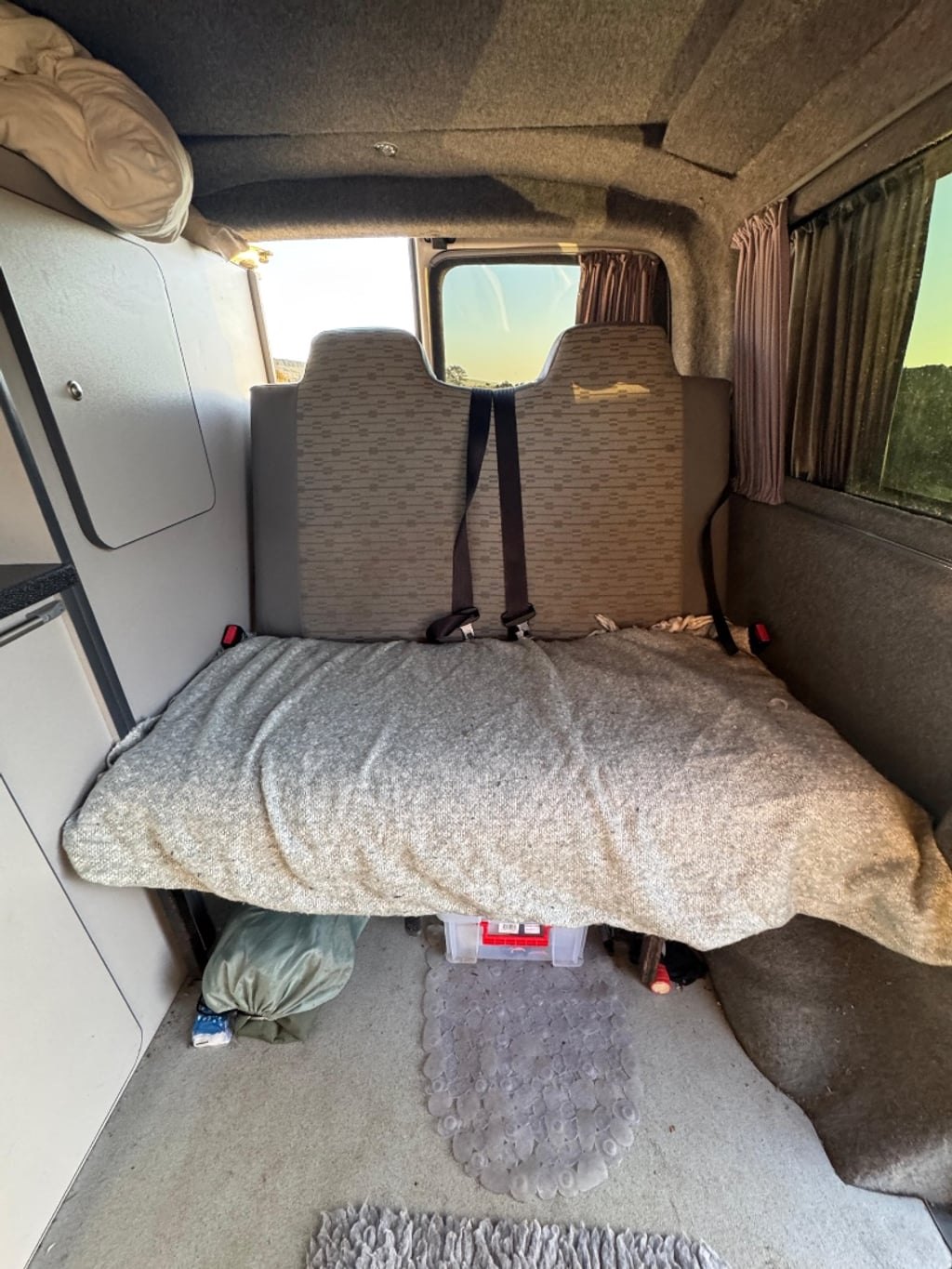
- 4 berths, 5 travelling seats - rock-and-roll bed downstairs, pop-top roof bed above
- Mileage
- 136,000 miles
- Weight
- 2,800 kg - drives on a standard car licence
- Registered as
- A motor caravan (light goods vehicle); road tax £360 a year
- Notable kit
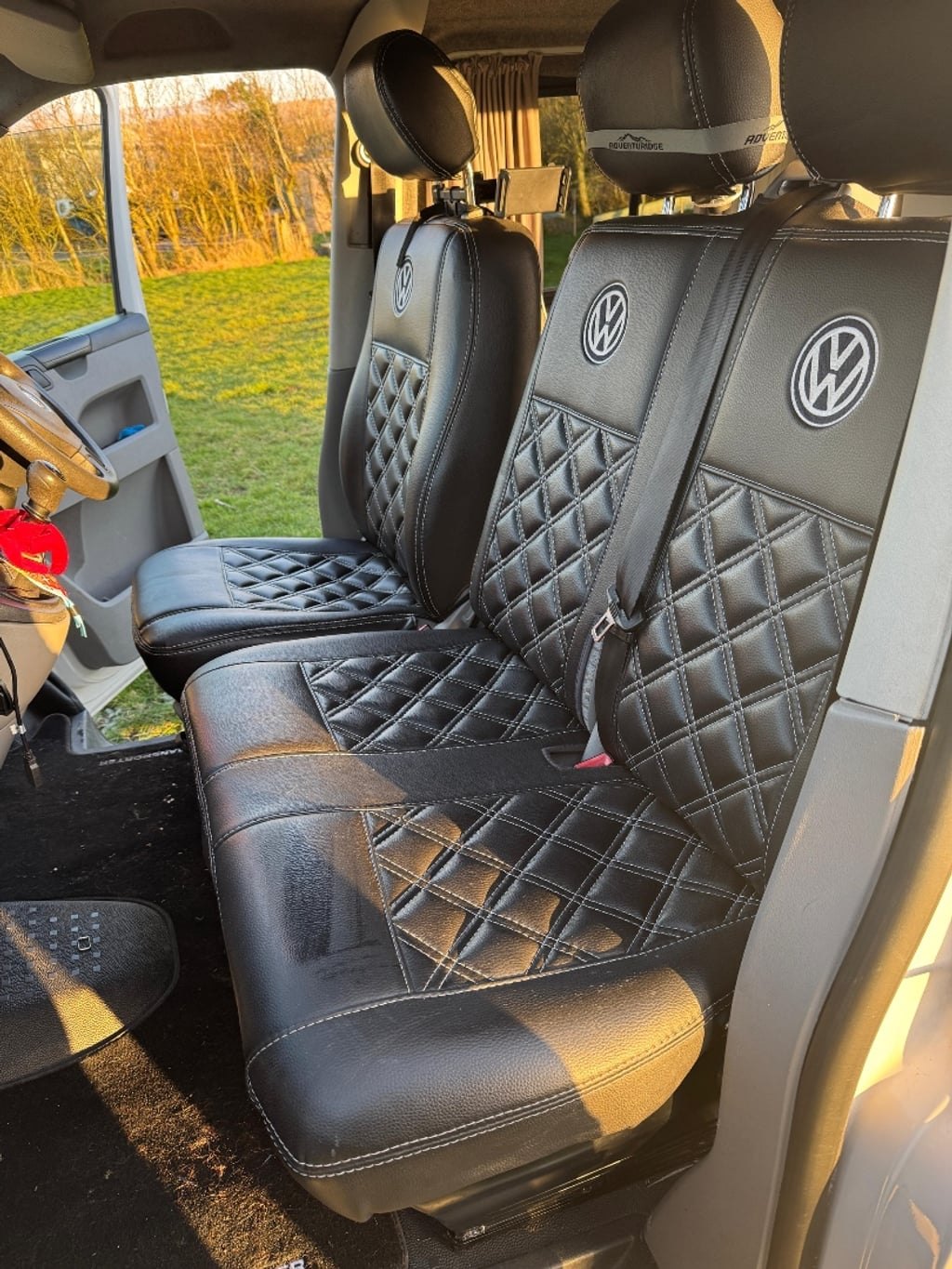
- Wind-out Dometic awning, roof solar panel, inverter, tow bar, alloy wheels, swivel cab seats, quilted VW seat covers
- History
- Timing belt and water pump replaced January 2024 by a Cumbrian garage; new leisure battery; full service history and MOT February 2026
- Declared condition
- Age-related corrosion to the bottom of the doors and around the windscreen, with no water ingress - disclosed to buyers in writing
- Location
- Workington, on the west Cumbrian coast
The deal
- First enquiry
- 1 April 2026, via our sell-my-motorhome form
- Valued at
- 3 April 2026 - a £20,000 assisted-sale return
- Agreement signed
- 12 April 2026 (90-day brokerage agreement)
- Opening position
- £22,000 - a £20,000 return to Helen with our £2,000 fee on top
- First adjustment
- 3 May 2026, at Helen's request - to £17,999 (£15,999 return)
- Second adjustment
- 12 July 2026, at Helen's request - to £14,995 (£12,995 return)
- Offers in the final bracket
- 8, across three weeks
- Buyers who saved the listing
- 18 by the point of sale
- Sold for
- £14,000, agreed at a viewing on 3 August 2026
- Brokerage fee
- £2,000 (success-only, fixed by price band, unchanged throughout)
- Helen received
- £12,000
Wondering which bracket your motorhome belongs in? That's a quick conversation.
Sell my motorhomeThe challenge: three headwinds at once
This was a genuinely demanding brief. A fourteen-year-old vehicle, at 136,000 miles, in one of the most remote corners of mainland England. Any one of those is manageable. Together they meant the positioning had to be exactly right, because there was no margin for a vague advert or an optimistic bracket.
Age and mileage. A 2011 plate with 136,000 miles sits well outside the comfort zone of buyers who filter on those numbers first. The counterweight was a genuinely strong maintenance record: timing belt and water pump replaced in January 2024 at a Cumbrian garage, a new leisure battery, full service history and an MOT to February 2026. That evidence is what makes high mileage a price consideration rather than a deal-breaker.
Location. Workington is on the west Cumbrian coast, roughly three hours from Manchester and further from almost everywhere else that buyers cluster. A locally advertised vehicle here has a very small addressable market. This is precisely the problem national distribution exists to solve.
Honest condition notes. Helen disclosed age-related corrosion to the bottom of the doors and around the windscreen, with no water ingress, and we put it in front of buyers rather than waiting to be asked. Disclosure narrows your audience slightly and converts the audience you keep - but it does mean the price has to reflect what you have said.
Against those three, the assets were real: a well-executed conversion with a pop-top roof and rock-and-roll bed, four berths and five travel seats, a wind-out Dometic awning, roof solar with an inverter, a tow bar, alloys and swivel cab seats - all on a 2,800 kg platform anyone can drive on a standard car licence.
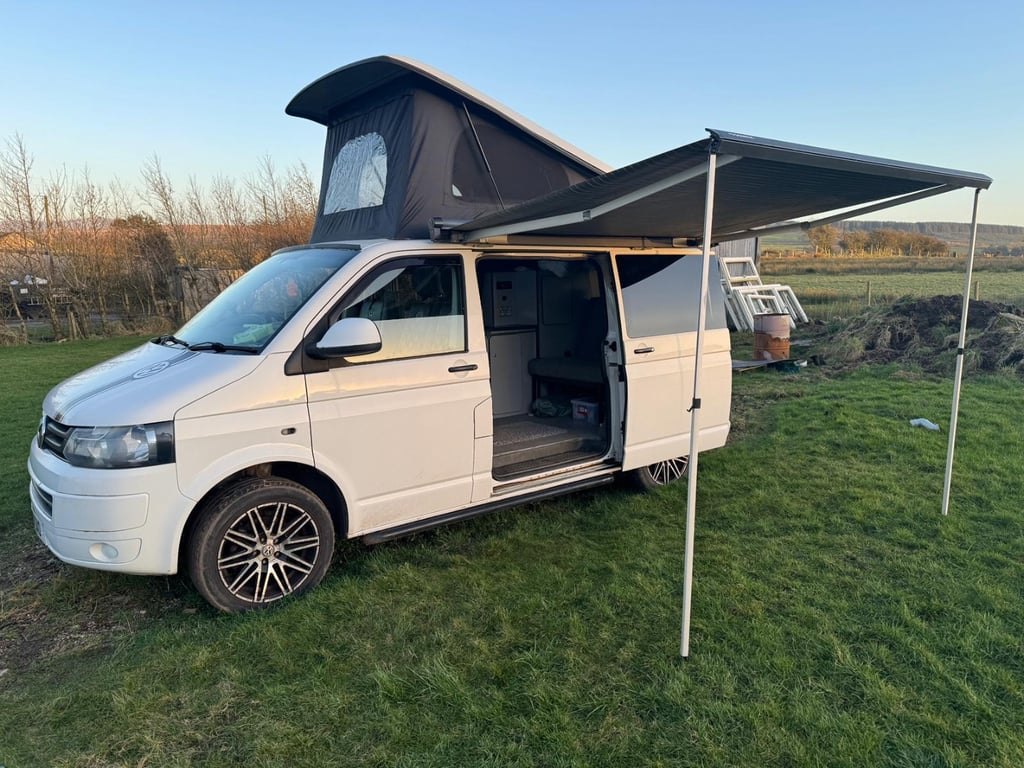
Positioning move one: £22,000 to £17,999
The opening position was £22,000, built on a £20,000 return with our £2,000 fee on top. Three weeks in, Helen requested a move to £17,999 - an 18% adjustment. We approved it the same day. It was the right direction and a well-judged step, and it taught us where the real threshold was.
At £17,999 the van spent seventy days in the £15,000-£20,000 band. It produced one offer, at £15,000 in early June, from a buyer who accepted, booked a viewing and then did not proceed. That is a meaningful signal in its own right: an offer at £15,000 against a £17,999 advert is a buyer telling you, quite precisely, which bracket they think the vehicle belongs in.
Meanwhile the advert was doing everything else correctly. Buyers asked whether it started from cold and what the February 2026 MOT advisories were; Helen answered and we relayed. One asked the annual road tax and she confirmed £360. Another asked whether the control panel monitored the water tank as well as the battery; she explained that it monitored the battery only. When the private plate came off and the van reverted to its original registration, she told us and we updated the listing so buyers running their own history checks had the right details.
None of that work is wasted - a well-answered advert is what converts interest once interest arrives. But conversion machinery only matters if the advert is being seen by the right audience, and at £17,999 it was being shown to buyers whose next click was a lower-mileage van.
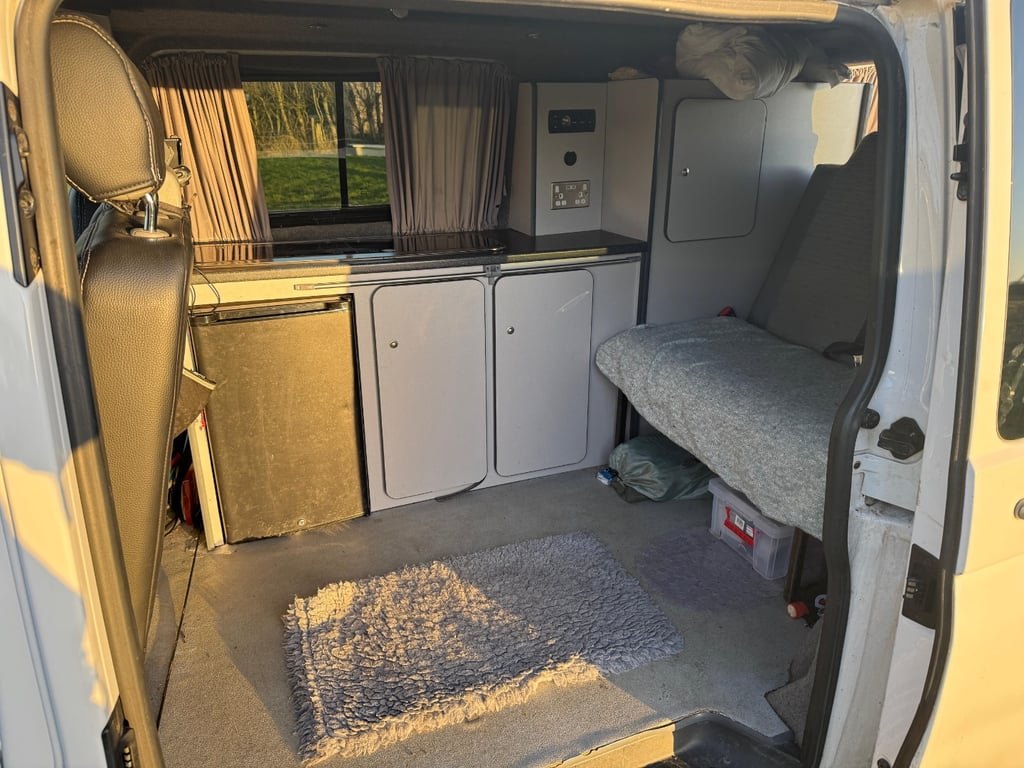
The breakthrough: crossing £15,000
On 12 July, Helen requested a second adjustment: £17,999 to £14,995, taking her return to £12,995. Approved the same day. That £3,004 move crossed the £15,000 search threshold - and the response was immediate and sustained.
Within days the advert was generating enquiries faster than they could be answered, arriving through AutoTrader, eBay Motors and our own marketplace simultaneously. The shortlist counter, which is the earliest reliable indicator that a bracket is right, climbed past eleven within a week and reached eighteen by the point of sale.
The offers followed, and their spread is instructive. Across three weeks the van attracted eight: a speculative £1,300, an £11,000, two at £12,500, one at £13,000, one at £14,000 and one at the full asking £14,995. Helen declined the low ones through her dashboard without needing to discuss them. A bracket producing offers across that range, including one at the asking price, is a bracket where the vehicle is being valued rather than filtered out.
The strategic point is worth stating plainly, because it is easy to misread this as simply “the price came down”. Between £17,999 and £14,995 there is a filter boundary. On one side, Helen's van was the highest-mileage option in a set of newer conversions. On the other, it was among the best-equipped and best-documented vehicles a sub-£15,000 buyer could find. Both statements were true of the same van on the same day.
£15,000 is the ceiling a large share of first-time and budget-conscious campervan buyers set, so it appears as a standard step in portal price filters. An advert at £14,995 enters every one of those searches; an advert at £17,999 enters none of them. That is a distribution difference, not a three-thousand-pound difference - which is why crossing the line produced a step change in demand rather than a gradual improvement.
What each bracket actually produced
Three prices, three brackets, three completely different demand profiles - with the vehicle, the photographs, the description and the distribution held constant throughout. This is the evidence for the whole strategy.
| Advertised | Bracket | Days | Offers | Outcome |
|---|---|---|---|---|
| £22,000 | £20,000-£25,000 | 21 | 0 | No offers |
| £17,999 | £15,000-£20,000 | 70 | 1 (at £15,000) | Accepted; buyer did not proceed |
| £14,995 | Under £15,000 | 22 | 8 | 18 saves; sold at £14,000 |
Read across the bottom row and the case makes itself: roughly a third of the time on market, eight times the offers, and a completed sale. The second table shows the commercial consequence for Helen, and one detail worth noting - our fee was a fixed £2,000 by price band and did not move at any point, so her net position was visible and predictable at every stage.
| Stage | Advertised | Our fee | To Helen |
|---|---|---|---|
| Opening position - 12 April 2026 | £22,000 | £2,000 | £20,000 |
| First adjustment - 3 May 2026 | £17,999 | £2,000 | £15,999 |
| Second adjustment - 12 July 2026 | £14,995 | £2,000 | £12,995 |
| Sold - agreed 3 August 2026 | £14,000 | £2,000 | £12,000 |
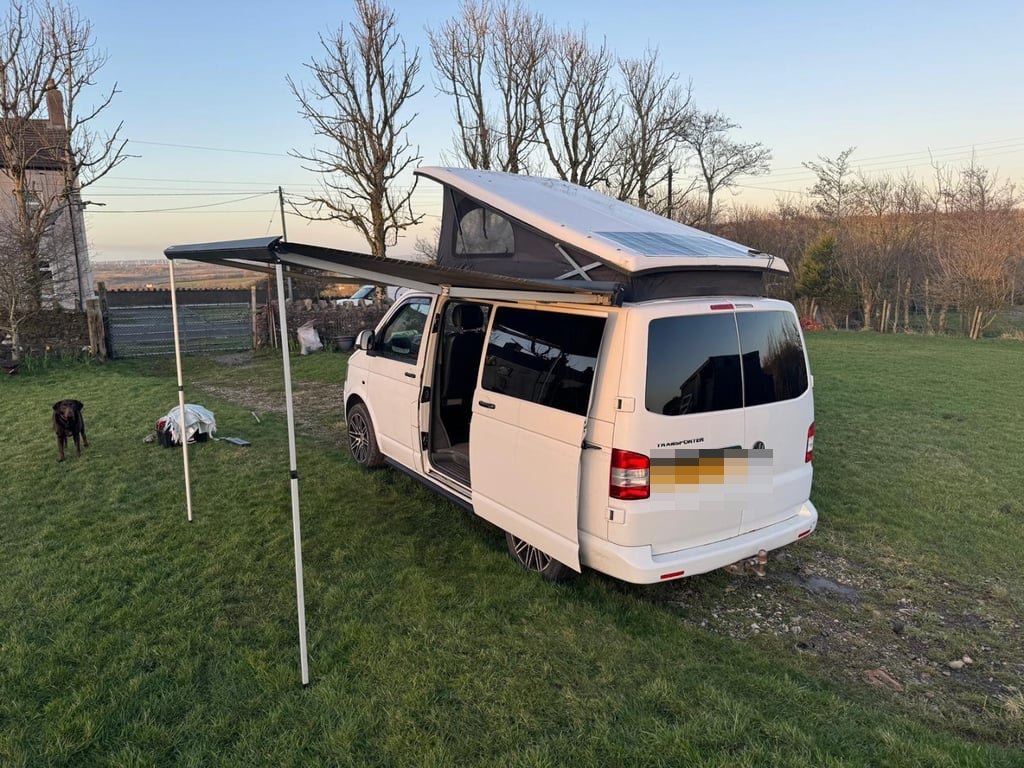
National reach, and the local buyer paradox
Correct bracketing only works if the advert has somewhere to be seen. Helen's ran across Motorhome Pig, AutoTrader, eBay Motors and the wider portal network from day one, all inside the single success-only fee. The enquiries it generated came from North Wales, Suffolk, Scotland and across the north-west - and the buyer who won it lived eleven miles away.
That last fact is not an argument against national marketing; it is the clearest argument for it. The winning buyer found the van through the advert, not through a neighbour or a local noticeboard. What national distribution creates is a pool of simultaneous, competing interest - and once that pool exists, the geography of whoever moves fastest is simply a matter of odds. Advertise to eleven miles and you get the buyers within eleven miles, which in west Cumbria is close to none.
The pool was real. In the final three weeks the van drew enquiries and offers from a buyer in North Wales who travelled 176 miles to view it, a buyer in Suffolk asking about immediate collection, buyers exploring part-exchanges, and several asking detailed technical questions before committing to a journey. Three separate viewings were booked and attended in that window.
For a vehicle in a remote location, that breadth is the entire value proposition. It is also why the bracket decision and the distribution decision have to be taken together: national reach into the wrong bracket shows your advert to a large audience that will never buy it.
Motorhome Pig's own marketplace, AutoTrader, eBay Motors and the wider portal network - bundled into the one success-only fee, with no upfront cost and nothing owed unless and until the vehicle sold. Enquiries were consolidated into a single stream so Helen dealt with one team rather than four inboxes.
Full service: answering the technical questions
Demand generated is not demand converted. Between April and August the team relayed and answered a steady stream of technical questions on Helen's behalf - the specific, sceptical ones that decide whether a buyer commits to a three-hour drive.
Over the listing, buyers asked about cold starting, the February 2026 MOT advisories, annual road tax, damp and damage, tyre condition, paintwork quality, when the cambelt was last changed, whether there was a current gas safety certificate, service history, previous owners, and the registration so they could run their own history checks. One asked for a photograph of the dashboard so they could see the cab controls and layout; Helen took one and it went straight over.
Each of those went to Helen and came back the same day. It is the part of the service she singled out in her review, and the reason she initially assumed our AI assistant was a person working improbably long hours.
'Alison' the AI assistant gives Motorhome Pig a very personal feel as a reply to any query is answered very quickly. I actually thought initially that Alison was a person and I thought how absolutely committed she must be to Motorhome Pig when queries were answered so efficiently.
Cold starting. MOT advisories and what they cost. Annual road tax. Damp and water ingress. Tyre condition and paintwork. Cambelt date and evidence. Gas safety certification. Previous owners. The registration, for an independent history check. Answer these openly and quickly and a distant buyer will travel; leave them vague and they will not.
Persistence: the mechanical setback
On 21 July a verified buyer drove 176 miles from North Wales intending to drive the van home. While he was looking at it, the fan belt snapped. Helen offered to have it repaired and to drive the van halfway to Wales to meet him; he reconsidered on the journey home, having costed the outstanding MOT advisories at over £900.
It is the sort of thing no seller can plan for, and Helen's response is the reason it did not derail the sale. Rather than treat it as bad luck, she treated it as information: on Friday 24 July she had the fan belt replaced, the outstanding MOT advisories cleared and the coil springs renewed - all in one garage visit, at her own cost.
She also made a shrewd commercial call in the middle of it. A different buyer had by then offered the full £14,995, and she asked us to hold that viewing until after the Saturday repairs so the van was right when they saw it. We did. Her own summary of the effect is the most useful sentence in the whole interview.
It did spur me on to get the advisories done while I was getting the fan belt done - the advisories on the MOT. So I got those fixed, and then I felt more confident about selling it.
The arithmetic behind that instinct is consistently one-sided. Work costing a few hundred pounds at a local garage gets valued by a wary buyer at four figures, because they are pricing uncertainty as well as parts. Clearing it converts a negotiation about risk into a negotiation about price - and ten days later the van sold.
- Cheap fixes are almost always worth it. Buyers inflate the cost of anything outstanding and use the figure as a reason to walk rather than a reason to negotiate.
- Bundle the work. Belt, advisories and coil springs in one visit is cheaper than three trips and gives you a single clean story to tell.
- Keep the paperwork.A dated receipt turns “it has been done” into evidence, and evidence is what supports your position in the bracket.
- Tell your broker immediately. Helen messaged the moment the work was finished, and the advert and every live buyer conversation were updated the same day.
Verified buyers only
Generating national demand means fielding enquiries from strangers. Helen was selling from her own home, on her own, on the Cumbrian coast - so her address and phone number were never published and were never released to a buyer who had not been spoken to and verified first.
The mechanism is the same on every sale. A buyer requests a viewing; the seller approves a time; we then have to reach that buyer by phone, and they must read back a one-time PIN before the address goes anywhere. Until that happens the seller is told explicitly not to prepare the vehicle. Helen went through that process across nine viewing requests, including reschedules and cancellations, and only buyers who verified ever learned where she lived.
- The buyer requests a time through the listing. Nothing about you is shared at this point.
- You approve or suggest another time from your dashboard. Still nothing shared.
- We phone the buyer and take a one-time PIN back from them. A PIN that is never read back means an address that is never released.
- Only then do we send the green light - and only then does the buyer receive your address and number. We explicitly tell you not to prepare the vehicle before that message arrives.
My privacy was well respected and it is an excellent system of only releasing my details when a potential buyer has been verified and checked. This made me feel very secure.
The close, and a clean fee transfer
The buyer viewed at half past six on Monday 3 August and agreed £14,000 on the spot. She transferred £7,000 that evening - her bank would not release the full amount in one payment - and sent the balance the following morning. The fee was settled inside the hour after that.
The booking itself needed a light touch. The buyer, keen and in the area, submitted several requests for different times and cancelled one of them by accident. Daniel on our sales desk spotted the inconsistency, rang Helen within the hour to say he suspected a mistake, called the buyer back and confirmed within twenty minutes that the 6.30pm viewing was still on. It was, and it converted.
On the part-payment, we flagged the risk the same evening. A split transfer with the balance to follow is usually a straightforward bank limit, but it is also a recognised scam pattern, so the guidance is identical either way: hold the vehicle until the full amount has cleared. Helen did, the balance arrived the next morning, and the van changed hands.
Because the buyer had paid Helen the full £14,000 directly, Helen then settled our £2,000 fee herself. She rang in slightly concerned she had done it the wrong way round; Malachy reassured her that it works either way and that we understood a buyer often cannot send more than one payment. When the payment link would not load on her mobile banking he texted the bank details across instead, and it was done within the hour. Her own description of it was “very straightforward”.
Do not release the keys or the V5C until the full amount is showing as cleared in your own account.
- Check your own banking app - never a payment confirmation the buyer shows you on their phone.
- Expect part-payments. Most banks cap a single faster payment well below the price of a campervan, so “half now, half tomorrow” is usually genuine - and it costs nothing to treat it as though it might not be.
- A real buyer will not mind waiting a day. Pressure to release the vehicle early is the signal to act on.
- Tell your broker. We would far rather hear from you at nine at night than find out afterwards.
In Helen's own words
Two days after the sale completed, Adam from the Motorhome Pig media team rang Helen to ask how the process had felt from her side. The conversation is reproduced below, lightly edited for length and clarity and published with her consent. She was offered anonymity and declined it; she did ask us not to use any audio, so no clip from that call is published.
AdamMotorhome Pig media team
HelenSeller · 2011 VW Transporter campervan
AdamMotorhome Pig media team
HelenSeller
AdamMotorhome Pig media team
HelenSeller
AdamMotorhome Pig media team
HelenSeller
AdamMotorhome Pig media team
HelenSeller
AdamMotorhome Pig media team
HelenSeller
AdamMotorhome Pig media team
HelenSeller
Edited for length and clarity from a recorded post-sale telephone interview between Helen Whelan and Adam of the Motorhome Pig media team, 6 August 2026, published with Helen's consent. No audio from the call is published, at her request.
Helen's review
Helen also wrote us a review after the sale. It is reproduced in full below, in her own words and unedited.
Photos were displayed well and the advertisement was accurate and well written. 'Alison' the AI assistant gives Motorhome Pig a very personal feel as a reply to any query is answered very quickly. I actually thought initially that Alison was a person and I thought how absolutely committed she must be to Motorhome Pig when queries were answered so efficiently. It was only when I researched the company that I discovered that she was AI. My privacy was well respected and it is an excellent system of only releasing my details when a potential buyer has been verified and checked. This made me feel very secure. Contact with a person is easy and straightforward when it is needed. Overall I had a very positive experience selling my van with Motorhome Pig.
The repositioning playbook
The transferable lesson from this sale, in the order we would apply it to any vehicle that is generating less interest than its specification deserves.
- Diagnose distribution before you doubt the vehicle. A strong advert producing no enquiries is almost never an advert problem. Establish which searches it appears in first.
- Choose the bracket you can lead. Trailing a band is expensive; leading the band below is efficient. Helen's van was transformed by moving from the bottom of one to near the top of the other.
- Cross the threshold in one move. £3,004 was what it took to clear £15,000. An adjustment that does not change which filter you appear in has bought you nothing.
- Read saves as your leading indicator. Shortlist counts moved before the offers did - from eleven to eighteen - confirming the bracket was right ahead of any negotiation.
- Pair bracketing with genuine national reach. Motorhome Pig, AutoTrader, eBay Motors and the wider portals, in one success-only fee. Correct pricing into a small audience achieves very little.
- Convert the demand you generate. Same-day answers on cold starts, advisories, road tax, damp, tyres, cambelt and gas certification are what turn a distant enquiry into a three-hour drive.
- Clear known work before the next viewing. Belt, advisories and coil springs in a single visit removed the one argument a buyer had used against the van.
- Keep your net figure in view, and your details private. A fixed £2,000 fee throughout, and an address released only to verified buyers - so the strategy could change without the terms or the safety changing with it.
Generating less interest than your motorhome deserves? Let's look at the bracket.
Sell my motorhomeFull timeline
From first enquiry to cleared funds - two positioning moves, one garage visit, nine viewing requests and a national portal footprint, step by step.
1 April 2026
First enquiry
Helen submits a quote request through our sell-my-motorhome form: a 2011 VW Transporter T28 campervan, 4 berths, 136,000 miles, Workington, Cumbria, £20,000 in mind.3 April 2026
Intake and valuation, same day
Billy takes the vehicle details - full service history, MOT to February 2026, rock-and-roll bed, no outstanding finance. Max rings back the same morning with a £20,000 assisted-sale return, advertising at £22,000 with the £2,000 fee on top. The 90-day agreement goes out.12 April 2026 - Day 0
Signed, and live nationally at £22,000
The advert goes live across Motorhome Pig, AutoTrader, eBay Motors and the wider portals with Helen's own photographs and a description covering the mileage and the door-bottom corrosion openly.3 May 2026
Positioning move one - £22,000 to £17,999
Helen requests an 18% adjustment through her dashboard, taking her return to £15,999. Approved the same day. It moves the van into the £15,000-£20,000 band.6 June 2026
A bracket signal - one offer at £15,000
The only offer at £17,999, and a precise indication of where buyers placed the van. It's accepted and a viewing booked for 13 June, but the buyer doesn't proceed.9-16 June 2026
Advert kept accurate
Helen confirms the private plate is coming off and the van reverting to its original registration; we update the listing so buyers can run their own history checks. Questions on cold starting, MOT advisories and the £360 annual road tax are relayed and answered.12 July 2026
The breakthrough - £17,999 to £14,995
A second adjustment at Helen's request, taking her return to £12,995. Approved the same day. The £3,004 move crosses the £15,000 search threshold and repositions the van from the bottom of one bracket to near the top of the one below.13-20 July 2026
Demand steps up immediately
Enquiries arrive daily through AutoTrader, eBay Motors and our own site. Viewings are booked. The shortlist counter climbs past eleven within a week, and offers start landing across the range.21 July 2026
A 176-mile viewing, and a snapped fan belt
A verified buyer travels from North Wales intending to drive the van home. The fan belt goes while he's looking at it. Helen offers to repair it and meet him halfway to Wales; he reconsiders on the journey home, costing the advisories at over £900.22 July 2026
A full-asking offer, and a tactical pause
An offer at the full £14,995 arrives from a different buyer. Helen asks us to hold that viewing until after Saturday's garage visit so the van is right when they see it. We do.24 July 2026
Fan belt, advisories and coil springs cleared
One garage visit removes every outstanding item, at Helen's own cost. 'Then I felt more confident about selling it.' The advert and every live buyer conversation are updated the same day.1-2 August 2026
Converting the demand
A buyer asks for a photograph of the dashboard; Helen sends one and it goes straight over. Others ask tyre condition, paintwork, cambelt date and gas safety certification. The shortlist count reaches eighteen.3 August 2026
Viewed at 6.30pm, sold on the spot - £14,000
A buyer eleven miles away books, accidentally cancels a duplicate request, and is re-confirmed within twenty minutes by Daniel on the sales desk. She views that evening and agrees £14,000. £7,000 is transferred the same night - her bank won't send the full amount at once - and we advise Helen to hold the van until it has all cleared.4 August 2026
Balance cleared, fee settled, sale closed
The remaining £7,000 lands. Helen settles our £2,000 fee by bank transfer, having been paid in full directly by the buyer, and Malachy has it resolved inside the hour. Her net: £12,000.6 August 2026
Post-sale interview
Adam from the media team interviews Helen - praise for Malachy and JJ, a straight account of the fan belt and the payment, and consent to be named here.
Frequently asked questions
What is price bracketing when selling a motorhome?
Price bracketing is positioning your advert inside the price band that buyers actually filter on, rather than at a number that feels right. Buyers search in round steps - up to £15,000, £15,000 to £20,000, £20,000 to £25,000 - so a vehicle advertised at £17,999 and one advertised at £14,995 are not three thousand pounds apart in practice, they are in two completely different result sets seen by two different audiences. Helen's 2011 VW Transporter campervan produced one offer in seventy days at £17,999, and eight offers plus eighteen saved listings in twenty-two days at £14,995. The van, the photographs and the description were identical.
How do I know which price bracket my motorhome should be in?
Work backwards from the buyer, not from the vehicle. Ask which search a realistic buyer for your specification would run, then check whether your advert appears in it. On a high-mileage older campervan the decisive threshold is usually £15,000, because it is the ceiling most first-time and budget-conscious campervan buyers set. Helen's van at £17,999 was competing against lower-mileage stock in a bracket its specification could not win; at £14,995 it was a well-equipped, honestly-described option near the top of a bracket it could lead. Position to lead a bracket rather than to trail one.
How much should I adjust my motorhome's price by?
Enough to cross a threshold, not enough to be noticed by nobody. Helen made two adjustments: £22,000 to £17,999, then £17,999 to £14,995 - roughly 18% and then a further 17%. A few hundred pounds off costs you real money and changes which searches you appear in not at all. The test is not 'does this feel like a big drop', it is 'does this put me on the other side of a filter'. Both moves were Helen's own decision, requested through her seller dashboard and approved by us the same day.
Can you sell a high-mileage campervan?
Yes - the mileage has to be answered openly and reflected in the bracket you choose, not argued with. Helen's T5.1 had 136,000 miles on a 2011 plate. What made it a strong proposition once it was correctly positioned was everything around that number: a timing belt and water pump replaced in January 2024, a new leisure battery, a full service history, a solar panel, inverter, tow bar and Dometic awning, and a frank note about age-related corrosion on the door bottoms with no water ingress. Buyers in the sub-£15,000 bracket are not looking for low mileage; they are looking for honest, well-equipped and well-maintained.
Does it matter where in the country my motorhome is?
It matters far less than sellers fear, provided the advert has national distribution. Helen was in Workington on the west Cumbrian coast - about as far from the UK's population centres as mainland England gets. Her advert ran across Motorhome Pig, AutoTrader, eBay Motors and the wider portal network, and the enquiries that followed came from North Wales, Suffolk, Scotland and the north-west. National reach is what generates competing interest; where the winning buyer happens to live is then simply a matter of odds.
How much does Motorhome Pig charge to sell a campervan?
A success-only fee with nothing to pay upfront, and nothing owed at all if it never sells. Helen's fee was a fixed £2,000 by price band rather than a percentage, and it stayed at £2,000 through both price adjustments. Her advertised price was always simply her return plus that fee, so she could see her exact net position at every stage: £20,000 at £22,000 advertised, £12,995 at £14,995 advertised, and £12,000 on the £14,000 she accepted.
What does a broker actually do while a motorhome is listed?
On this sale: relayed and answered buyer questions on cold starting, MOT advisories, annual road tax, damp and damage, tyre condition, paintwork, cambelt history, gas safety certification and the registration for HPI checks; requested and passed on an extra dashboard photograph a buyer asked for; updated the advert when the registration changed; processed both price adjustments the same day they were requested; verified every buyer by phone before releasing Helen's address; managed nine viewing requests including reschedules and cancellations; flagged a payment-safety risk on the night of the sale; and settled the fee transfer inside an hour the next morning.
A buyer wants to pay half now and half tomorrow - is that safe?
It is common and usually innocent, because most banks cap a single faster payment well below the price of a campervan. It is also a known scam pattern, so the rule is the same either way: do not release the keys or the V5C until the full amount has cleared in your own account. Helen's buyer transferred £7,000 on the evening of the viewing because her bank would not release the whole £14,000 at once, and sent the balance the following day. We flagged the risk to Helen the same evening and advised her to hold the van until everything had landed. She did, and it completed without a problem.
How does Motorhome Pig protect my privacy from buyers?
Your address and phone number are not published and are not shared when a viewing is requested. We contact the buyer by phone first and they must read back a one-time PIN before your details are released, and we tell you not to prepare the vehicle until we have sent you that green light. Helen singled this out in her review: her privacy was well respected, and only releasing her details once a buyer had been verified and checked made her feel very secure.
Is this case study and the review genuine?
Yes. It is built from Motorhome Pig's own CRM and database records for this sale - the signed agreement, both approved price-adjustment requests, every offer and its outcome, the appointments, the invoice and the closed sale - plus recorded calls with Helen and a recorded post-sale interview conducted by Adam of our media team on 6 August 2026. Helen consented on that call to being named and to her experience being published, and separately supplied the written review quoted here. She declined the use of a voice snippet, so no audio is published. Her registration, address, phone number and email are omitted, the number plate is digitally obscured in the photographs, and no buyer is named.
About this case study
This case study is built from Motorhome Pig's own CRM and database records for this sale - the signed brokerage agreement, both price-adjustment requests and their approvals, every offer and its outcome, the viewing appointments, the invoice and the closed sale - together with recorded calls between Helen and our team, and a recorded post-sale telephone interview conducted by Adam of our media team on 6 August 2026. Every figure - the prices, the offers, the saved-listing counts, the fee, the dates - is stated as recorded at the time. Quotes have been lightly edited for filler and false starts without changing their meaning.
The bracket analysis is our interpretation of that recorded demand data, not a measured attribution: portals do not report which filter a buyer used, so the £15,000 threshold is inferred from the step change in enquiries, saves and offers either side of it, together with the round-number price steps portals present to buyers.
Helen Whelan consented on that recorded call to being named and to her experience being published here, and separately supplied the written review quoted above. She asked that no audio from the call be used, so none is published. To protect privacy we have omitted her registration (digitally obscured in the photographs), her address, phone number and email address, and we do not name the buyer, any of the other bidders, or any appointment PIN. The photographs are Helen's own, published with her consent. Published 6 August 2026.
How selling with Motorhome Pig works
The step-by-step version of everything Helen went through.
What a motorhome brokerage actually does
Success-only fee, no upfront cost - and your net figure agreed before you sign.
More customer case studies
Other real motorhomes sold - and bought - through Motorhome Pig.
Meet the team
The people behind this sale - including Billy, Max, Malachy, JJ and Daniel.
Is your motorhome in the right price bracket?
One central UK team advertises nationally across Motorhome Pig, AutoTrader and eBay Motors, answers every buyer question the same day, keeps your address private until a buyer is verified, and charges a fixed success-only fee - nothing at all unless it sells.
No upfront cost · No sale, no fee · One central UK team, 7 days a week